Written by Tanya — Yoga Alliance RYS 200 (ID 252157), trained at Devvrat Yoga School, Varkala, India (December 2025). Tanya teaches Hatha and Yin yoga at Your Ritual Yoga in Golders Green, NW11.
Yoga for digestion is not a new idea. In classical Hatha yoga, many postures were described as having specific effects on the abdominal organs — on the liver, kidneys, intestines, and the complex network of tissue and nerve that governs digestion. What classical texts understood intuitively, modern physiology is now beginning to map in detail.
The relationship between movement, breath, stress, and gut function is real, measurable, and — crucially — something you can begin to work with directly through a simple, consistent yoga practice.
This post covers the underlying mechanism that connects yoga to digestion, the specific poses most useful for gut health and bloating, a short practice you can use after meals, and what to avoid.
1. The Gut-Vagus Nerve Axis
Why stress shuts down digestion
The vagus nerve is the longest cranial nerve in the body. It runs from the brainstem down through the throat, chest, and abdomen, connecting the brain directly to the heart, lungs, stomach, intestines, and more. It is the primary pathway of the parasympathetic nervous system — the “rest and digest” branch that counterbalances the stress response.
When the body is under stress — whether from a genuine emergency or simply from a relentlessly full schedule — the sympathetic nervous system dominates. Blood and neural resources are redirected towards the muscles and the brain. Digestion is deprioritised. The gut slows down. Gastric acid secretion changes. The gentle, rhythmic muscular contractions that move food through the intestines (peristalsis) are reduced.
This is why stress reliably produces digestive symptoms: bloating, constipation, acid reflux, IBS flares, nausea. The gut is not malfunctioning. It is responding exactly as designed — it simply cannot run digestion and fight a threat at the same time.
Yoga addresses this directly. Slow movement, extended exhale, and held postures activate the vagus nerve and shift the autonomic balance towards parasympathetic. When the nervous system settles, the gut can do its work.
Beyond the nervous system, the specific physical actions in yoga — twisting the torso, compressing the abdomen, and then releasing — create a kind of massage effect on the digestive organs. Circulation to the gut wall increases. The organs are gently mobilised. The lymphatic system, which runs closely alongside the digestive tract, benefits from the alternating compression and release.
2. Poses That Aid Digestion
Wind-relieving pose (Pavanamuktasana)
Lie on your back. Draw one knee in towards your chest and hold it gently with both hands. Hold for five to eight breaths, then switch sides. For the full version, draw both knees in together. The name says it plainly: this pose applies gentle, direct compression to the ascending and descending colon, and it is specifically useful for bloating and trapped gas.
Seated twist (Ardha Matsyendrasana)
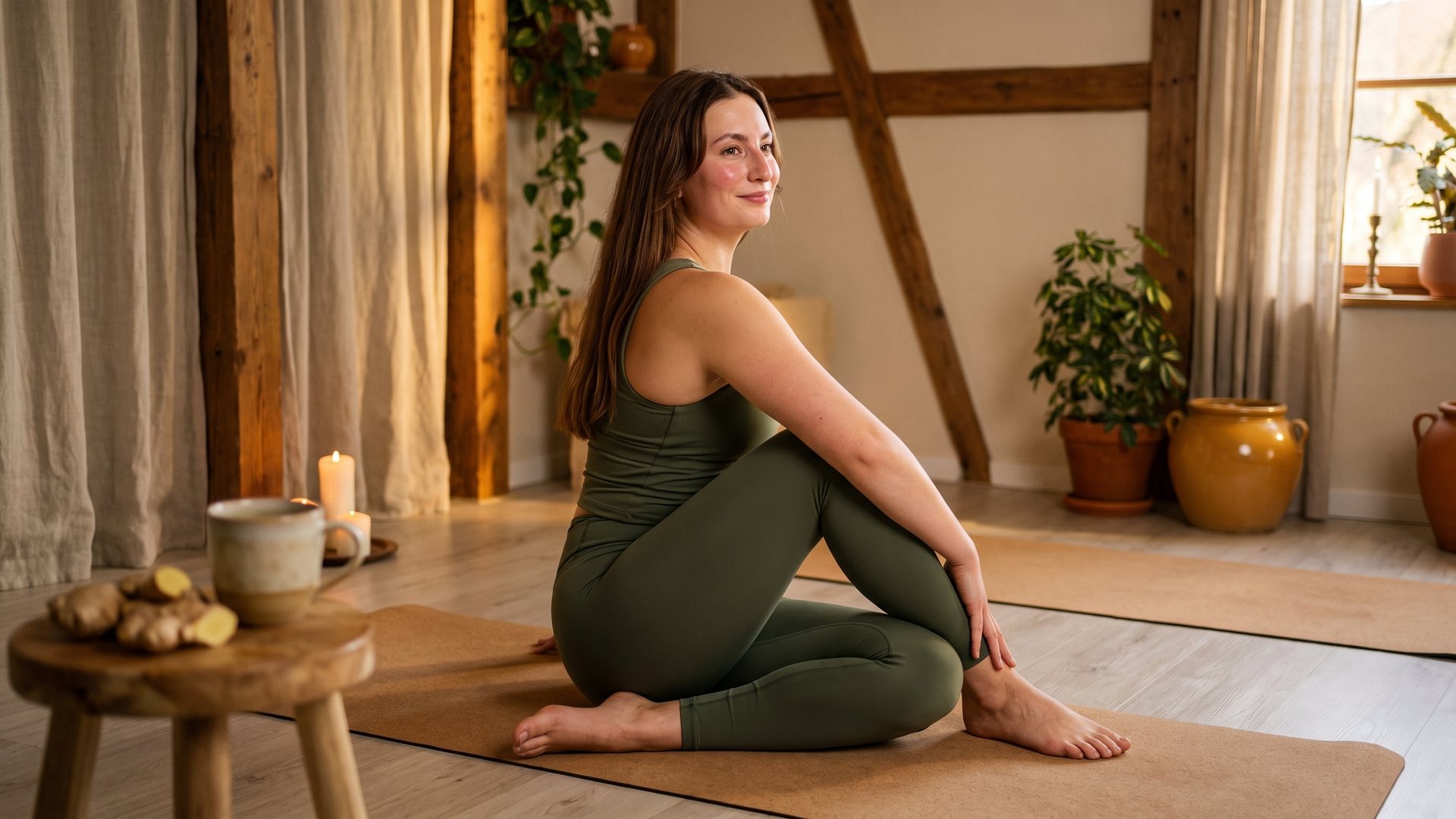
Sit with your legs extended. Bend your right knee and plant your right foot on the floor beside your left knee or thigh. Inhale to lengthen the spine. Exhale to rotate the torso to the right, placing your right hand behind you for support and your left elbow or upper arm outside the right knee.
Twists are among the most useful poses for digestion. As the torso rotates, the abdominal organs are gently compressed — and as you release the twist, fresh blood flows back in. This alternation of compression and release is thought to support both circulation and peristalsis.
Hold for five breaths on each side. Do not force the depth of the twist. Length in the spine matters more than how far you rotate.
Supine twist (Supta Matsyendrasana)
Lie on your back. Draw your right knee to your chest, then let it cross over to the left, guiding it gently with your left hand. Extend your right arm out to the side and turn your gaze to the right if that is comfortable for the neck. Hold for one to three minutes on each side.
This is the Yin version of the seated twist: more passive, more sustained, and often more deeply releasing. It targets the outer hip and lower back while the gentle rotational compression works through the digestive tract.
Cat-cow (Marjaryasana-Bitilasana)
Begin on hands and knees, wrists under shoulders, knees under hips. On the inhale, drop the belly, lift the chest and tailbone into cow pose. On the exhale, round the spine upward, drawing the navel in and the chin towards the chest into cat pose. Move slowly between the two, letting the breath lead.
Cat-cow creates gentle, rhythmic compression and extension of the abdomen. It also mobilises the spine and stimulates the digestive organs directly. It is one of the most accessible starting points for anyone new to movement-based gut support.
3. A 10-Minute Post-Meal Practice
This sequence is designed for 30 to 90 minutes after eating — not immediately after a large meal, but once the most acute phase of digestion has begun.
-
Lie on your left side for 3 minutes. The stomach and small intestine have a slight left-sided orientation. Lying on the left side after eating may support gastric emptying.
-
Gentle cat-cow — 10 slow rounds (approximately 2 minutes). Keep the breath leading the movement.
-
Wind-relieving pose — right side, then left, then both (approximately 2 minutes). Hold each variation for 5–6 breaths.
-
Supine twist — left side, then right (approximately 3 minutes total). Rest in the twist rather than pushing into it.
The total practice takes around 10 minutes. It requires no equipment beyond a mat or a carpeted floor. It is quiet enough to do in a spare room during a lunch break.
4. What to Avoid
A few things that can interfere with digestion or cause discomfort when combining yoga and gut concerns:
Avoid strong inversions when digestion is active. Full shoulderstand or headstand while the digestive system is processing a meal can create discomfort and is generally best saved for an empty stomach.
Avoid very deep forward folds immediately post-meal. Intense compression of the abdomen (as in a very deep seated forward fold) can cause nausea or reflux if there is food still in the stomach.
Avoid rushing the breath. Fast, forceful breathing techniques — like kapalabhati (breath of fire) — are stimulating and are best practised on an empty stomach. For digestion support, slow breath is the goal.
Avoid holding the breath. Kumbhaka (breath retention) is not appropriate in this context. Let the breath flow continuously.
Beyond yoga: tight waistbands during practice compress the abdomen in ways that work against both comfort and circulation. Wear something loose and comfortable.
5. Pairing Yoga with Eating Habits
Yoga is not a substitute for thoughtful eating, but the two influence each other more than most people expect.
The mindfulness that yoga cultivates tends to carry into meals. Students who have been practising for a few months often notice that they eat more slowly, taste food more fully, and recognise satiety before they have overeaten. This is not a discipline imposed from outside — it is a natural extension of the attention that yoga trains.
A few small habits that pair well with a digestion-focused yoga practice:
Eating without screens. The parasympathetic state that supports digestion is undermined by the mild stress and alertness triggered by scrolling or watching. A meal eaten with attention — even partial attention — is digested differently than one eaten distracted.
Allowing a pause after eating before returning to work. Even five minutes of quiet, perhaps a few rounds of slow breath, gives the body a signal that rest and digestion are now the priority.
The Yin yoga classes at Your Ritual Yoga are well-suited to this kind of nervous-system work. The long holds, the stillness, the extended breath — they create the conditions that the gut needs to function well. The Hatha classes integrate twists and abdominal work that directly support digestive health.
Frequently Asked Questions
How soon after eating can I do yoga?
As a general guide, allow at least 30–60 minutes after a light meal, and two hours or more after a substantial meal. The gentle post-meal practice described above is an exception — it is specifically designed for gentle, low-effort movement in the post-meal window.
Can yoga help with IBS?
Some people find that a regular yoga practice supports IBS symptom management, particularly through stress reduction and nervous system regulation. However, IBS varies considerably between individuals. Please consult your GP or gastroenterologist for personalised guidance.
Which style of yoga is best for gut health?
Yin and gentle Hatha yoga are particularly well-suited, because they prioritise the parasympathetic activation that digestion depends on. Fast-flow or high-intensity yoga may increase cortisol in the short term, which can temporarily suppress digestive function.
I have acid reflux. Are there poses to avoid?
Yes. If reflux is active or recent, avoid strong inversions, deep forward folds, and any pose that places significant pressure on the upper abdomen. Speak to your teacher before class so that appropriate modifications can be offered.
Does the herbal tea served after class have any digestive benefit?
The seasonal herbal blends served at Your Ritual Yoga are chosen partly for their digestive and settling qualities — ginger, chamomile, peppermint, and fennel all have long traditions of use as digestive herbs. They are a gentle, pleasant way to close a practice.
Twists and breath work are part of every Hatha class at Your Ritual Yoga. If you are working with a specific digestive concern, Tanya is happy to offer modifications and to discuss what might serve you best.
About the author
Tanya is a Yoga Alliance RYS 200 certified yoga teacher (ID 252157), trained at Devvrat Yoga School in Varkala, India (December 2025). She teaches Hatha and Yin yoga at Your Ritual Yoga in Golders Green, NW11 — a small, intentional studio where every class includes sound healing with Himalayan singing bowls and a post-class herbal tea ritual. www.ritual-yoga.co.uk