Written by Tanya — Yoga Alliance RYS 200 (ID 252157), trained at Devvrat Yoga School, Varkala, India (December 2025). Tanya teaches Hatha and Yin yoga at Your Ritual Yoga in Golders Green, NW11.
A sun salutation is the most recognisable sequence in yoga — and also one of the most misunderstood. Many students encounter it first in a fast-paced class where the sequence is already in motion before anyone has explained what it is or why the breath matters. They end up approximating a shape they half-recognise, losing the thread of the movement before it has a chance to teach them anything.
This guide is for anyone who wants to understand a sun salutation from the ground up: its origins, its classical form, its breath pattern, and how to modify it for the body you have today rather than the body you think you should have.
1. The History and Meaning
Surya Namaskar — from the Sanskrit surya (sun) and namaskar (greeting, salutation) — is a devotional practice as much as a physical one. The earliest references to a formalised sun-salutation sequence appear in texts from the early twentieth century, though the underlying postures and the practice of facing the rising sun in reverence are far older.
In its traditional context, the sequence was practised at dawn as an offering to the sun — the source of light, warmth, life, and prana (life-force energy). Each position corresponds to one of the twelve sun-deity mantras. The physical sequence was the vehicle for the prayer.
Modern yoga has largely stripped this devotional context. What remains is an extraordinarily well-designed movement sequence: it lengthens and strengthens the entire body, links breath to movement in a clear one-to-one ratio, and creates heat through continuous flowing action. Whether you relate to it as a devotional practice or a functional warm-up, the intelligence of the sequence is intact either way.
What matters, in the context of this guide, is that the sequence was not designed to be rushed. Even the name — a greeting, a salutation — implies a quality of care and presence. That tone is worth carrying into the practice itself.
2. Classical Hatha Sun Salutation, Step by Step
12 traditional positions
The classical Hatha Surya Namaskar contains twelve positions. Each position connects to a breath — either an inhale or an exhale — and together they form one complete round. A full practice consists of two rounds: one beginning with the right leg, one with the left.
Position 1 — Pranamasana (Prayer Pose)
Stand at the front of the mat in Tadasana (mountain pose). Bring the palms together at the chest in anjali mudra (prayer position). Exhale fully. This is the point of gathering before movement begins.
Position 2 — Hasta Uttanasana (Raised Arms Pose)
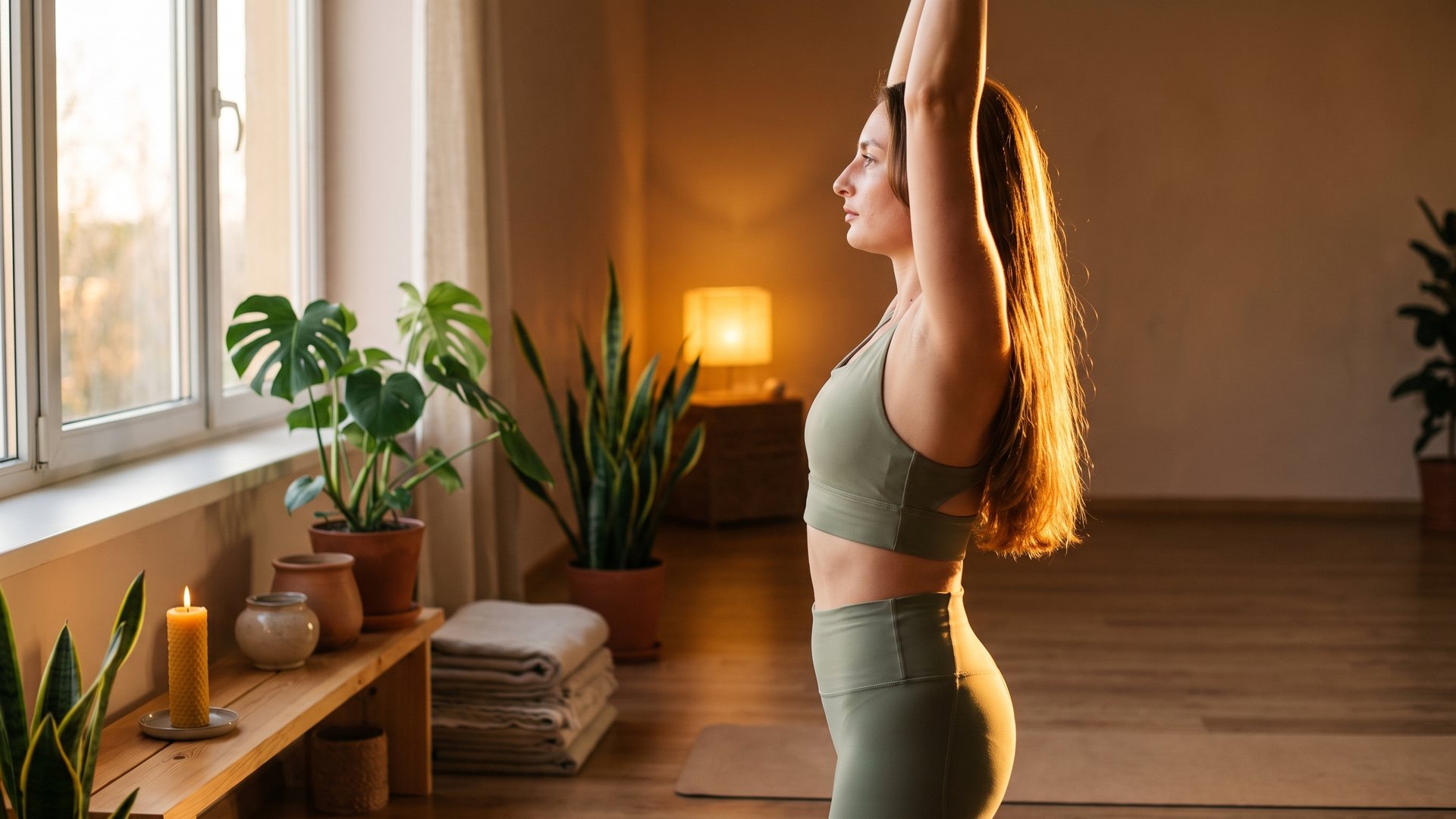
Inhale. Sweep the arms wide and overhead, gently arching the back. The pelvis stays neutral — this is a lift, not a deep backbend. Gaze softly upward.
Position 3 — Uttanasana (Standing Forward Fold)
Exhale. Hinge at the hips and fold forward. Bend the knees generously if the hamstrings are tight. The goal is a long spine, not straight legs. Let the crown of the head hang.
Position 4 — Ashwa Sanchalanasana (Equestrian/Low Lunge)
Inhale. Step the right foot back into a low lunge. The left knee is directly over the left ankle. The back knee may rest on the floor. Lift the chest. This is the first asymmetrical position — notice how it feels different on each side.
Position 5 — Parvatasana (Mountain/Plank or Downward Dog)
Exhale. Step the left foot back to meet the right, arriving in either a plank or downward-facing dog. In classical Hatha, this position is often held as downward dog for a breath or two.
Position 6 — Ashtanga Namaskara (Eight-Limbed Salutation)
Exhale (continuing). Lower the knees, chest, and chin to the floor. Eight points of contact: toes, knees, chest, chin, hands. The hips remain lifted. This position is the classical alternative to chaturanga in Vinyasa-style flows.
Position 7 — Bhujangasana (Cobra Pose)
Inhale. Slide the body forward and press up into cobra. Keep the elbows slightly bent, the shoulders away from the ears, the pelvis gently pressing into the mat. This is not a full backbend — the chest lifts, not the hips.
Position 8 — Parvatasana again (Downward Dog)
Exhale. Press back to downward-facing dog. Press the heels towards the mat. Spread the fingers wide. Take two to three breaths here if needed.
Position 9 — Ashwa Sanchalanasana (Low Lunge, second side)
Inhale. Step the right foot forward between the hands, returning to low lunge. This mirrors position four but on the opposite leg.
Position 10 — Uttanasana (Forward Fold)
Exhale. Step the left foot forward to meet the right. Return to the forward fold, knees bent as needed.
Position 11 — Hasta Uttanasana (Raised Arms)
Inhale. Rise slowly to standing, sweeping the arms wide and overhead. Reverse the fold with a long spine rather than a jerking motion.
Position 12 — Pranamasana (Prayer Pose)
Exhale. Return the palms to the chest. Stand quietly for a breath before beginning the second round, this time leading with the left leg in positions four and nine.
3. Differences from Vinyasa Sun A and B
The classical Hatha sun salutation and the Vinyasa Surya Namaskar A and B share the same ancestry but have diverged significantly in pace, structure, and purpose.
Pace — Hatha moves slowly. Each position is held for at least one full breath, often more. Vinyasa synchronises one breath to one movement, creating a flow that generates heat quickly but leaves little time to settle into individual shapes.
Position 6 — Classical Hatha uses ashtanga namaskara (eight-limbed salutation), where the knees, chest, and chin touch the floor. Vinyasa uses chaturanga dandasana (four-limbed staff pose), which requires significantly more upper-body strength and is a common source of shoulder injury when taught without proper preparation.
Sun B — Surya Namaskar B is unique to the Ashtanga Vinyasa tradition and includes Warrior I, utkatasana (chair pose), and a longer sequence overall. It does not appear in classical Hatha practice.
Breath — In Hatha, the breath leads. In Vinyasa, movement and breath are ideally simultaneous. In practice, faster Vinyasa classes often see students sacrificing breath quality for movement speed.
For beginners, classical Hatha is the better starting point precisely because its slower pace allows you to learn where your body is in space before adding the complexity of continuous movement.
4. Modifications for Stiff or Sore Mornings
Lunge knee down, plank to knees-chest-chin
The two positions that most commonly cause difficulty for stiff or new students are the low lunge and position 6.
For the low lunge: keep the back knee on the mat throughout. Place a folded blanket under the knee if it is sensitive on a firm floor. This significantly reduces the demand on the hip flexors and makes the position accessible for students with tight hips, weak quads, or lower-back concerns.
For position 6: if ashtanga namaskara (knees-chest-chin) feels awkward, simply lower the entire body to the mat in one movement — a straight drop from plank to lying prone. You lose the specificity of the eight-limbed position, but you arrive at cobra (position 7) from the same place and the sequence can continue without interruption.
Forward fold with bent knees — always permitted, always worth choosing when needed. A deeply bent knee with a long spine is anatomically preferable to a straight-legged fold with a rounded back.
Skipping the vinyasa between rounds — if the transition through downward dog and cobra feels like too much, simply step to the front of the mat and begin the second round from prayer pose. The sequence still delivers its value. You are not failing at sun salutations by taking the gentler path.
5. How Many to Do, and When
3 rounds vs 12 rounds
Traditional Ashtanga practice includes a set number of sun salutations as a fixed opening sequence. Classical Hatha is more flexible.
For beginners: three to four rounds, moving slowly, is a complete warm-up practice. This takes approximately ten to fifteen minutes at a Hatha pace and prepares the body for standing poses or deeper floor work.
For a standalone morning practice: six rounds — three leading with each leg — creates enough heat and movement to function as a complete short practice when time is limited.
Twelve rounds is the traditional full-circle number, corresponding to the twelve solar months and the twelve mantras of the sun deity. This takes twenty-five to thirty minutes at a Hatha pace and constitutes a substantial practice in its own right.
When to practise — traditionally at dawn, facing east. Practically, any time before a large meal works well. Morning practice on an empty or light stomach tends to create the clearest experience of the sequence. Evening practice is possible but generates heat, which some students find activating rather than grounding before sleep.
A sun salutation practised three times a week as a consistent anchor — at whatever hour suits you, in whatever number suits your energy — will produce more change than twelve rounds practised once a month in an enthusiastic burst.
The sequence rewards regularity more than intensity.
Frequently Asked Questions
Do I need to be flexible to practise sun salutations?
No. Every position has a modification, and forward folds can be done with deeply bent knees. Flexibility develops through consistent practice; it is not a prerequisite.
Why does the breath matter so much?
The breath is the thread that connects each position to the next. Without it, sun salutations become calisthenics. With it, they become a moving meditation — each inhale creates space, each exhale grounds the movement.
Can I practise sun salutations if I have lower back pain?
With modifications, often yes — but this depends on the nature and severity of the pain. A teacher can help you adapt positions 3, 4, and 7 for lower-back sensitivity. Always mention back pain before class.
What is the difference between a round and a cycle?
One round leads with one leg in the lunge positions. A full cycle consists of two rounds — one leading right, one leading left — which brings the body back to its starting symmetry.
Is it normal to feel tired after sun salutations?
Yes, particularly when you are new to the sequence or practising slowly. The Hatha pace builds heat gradually; the effort is real even when the movement appears simple.
Ready to learn sun salutations with proper breath cues and personal guidance? Join a beginner-friendly Hatha class at Your Ritual Yoga in Golders Green, NW11.
About the author
Tanya is a Yoga Alliance RYS 200 certified yoga teacher (ID 252157), trained at Devvrat Yoga School in Varkala, India (December 2025). She teaches Hatha and Yin yoga at Your Ritual Yoga in Golders Green, NW11 — a small, intentional studio where every class includes sound healing with Himalayan singing bowls and a post-class herbal tea ritual. www.ritual-yoga.co.uk