Written by Tanya — Yoga Alliance RYS 200 (ID 252157), trained at Devvrat Yoga School, Varkala, India (December 2025). Tanya teaches Hatha and Yin yoga at Your Ritual Yoga in Golders Green, NW11.
Weekend yoga in London has a different quality to weekday yoga. The commute is not looming, the screen has been set aside (or at least could be), and there is — at least in principle — a little more room for the practice to breathe.
Most people find weekday classes work as a pressure valve: a structured release of the week’s accumulated tension before returning to the schedule. Weekend yoga can offer something else entirely. Not escape, but orientation. A chance to close one chapter of the week and begin another from a quieter place.
This post is about how to build that ritual — and why it might matter more than it sounds.
The weekend nervous system needs a different practice
By the time Friday evening arrives, most people are running on stress hormones and willpower. The sympathetic nervous system has been engaged for five days of deadlines, decisions, commuting, and the low-grade vigilance that modern office life demands. Friday night is often not rest — it is collapse.
A Saturday morning yoga class catches the body at a particular transition point. The stress hormones from the working week are still metabolically present, but the immediate pressures are (usually) removed. This is a physiologically meaningful moment: the body is poised between patterns, receptive to a different signal.
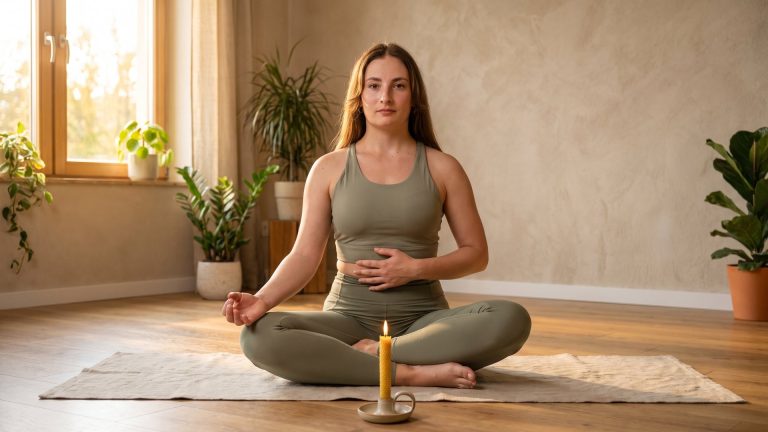
A class that begins with breath, moves through sequenced asanas, and closes with Shavasana tells the nervous system: we are shifting modes now. It is not just relaxation — it is a registered neurological transition. Students who practise on Saturday mornings consistently report that the rest of the weekend feels qualitatively different from those who spend Saturday morning in front of a screen.
Sunday has its own nervous-system signature — which we will come to.
Saturday: clearing the week
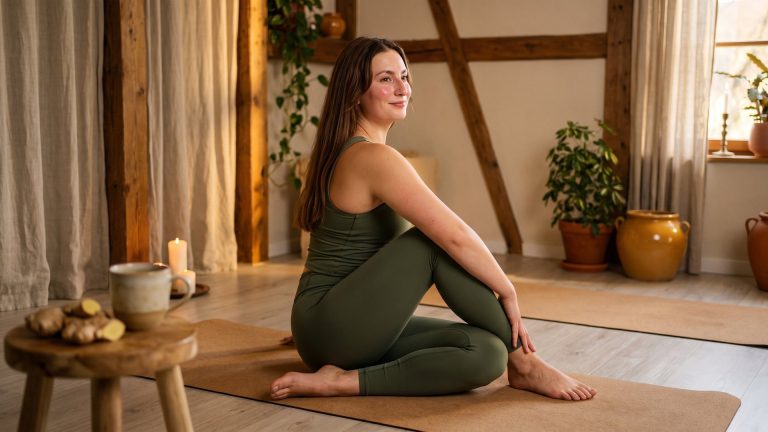
Saturday morning is the best window for a practice that has some movement in it. The body benefits from the warmth of Hatha yoga — longer holds, alignment focus, deliberate breath, a sense of working through the residual physical tension of the week.
A 90-minute Saturday morning routine that includes class
A Saturday morning ritual does not require the entire day. Ninety minutes, structured well, provides the nervous-system reset that allows the rest of the weekend to feel like genuine rest rather than compressed recovery.
7:30–8:00am: Wake gently. No phone for the first thirty minutes. Make tea. Move around the house in a slow, unhurried way. Allow the body to arrive at wakefulness rather than being yanked into it by notifications.
8:00–8:20am: A short walk to the studio, used as breath practice — slow pace, extended exhale, attention on the feet and the morning air.
8:20am (class begins): A Hatha class, moving through the body methodically. The week held in the shoulders and hips begins to soften.
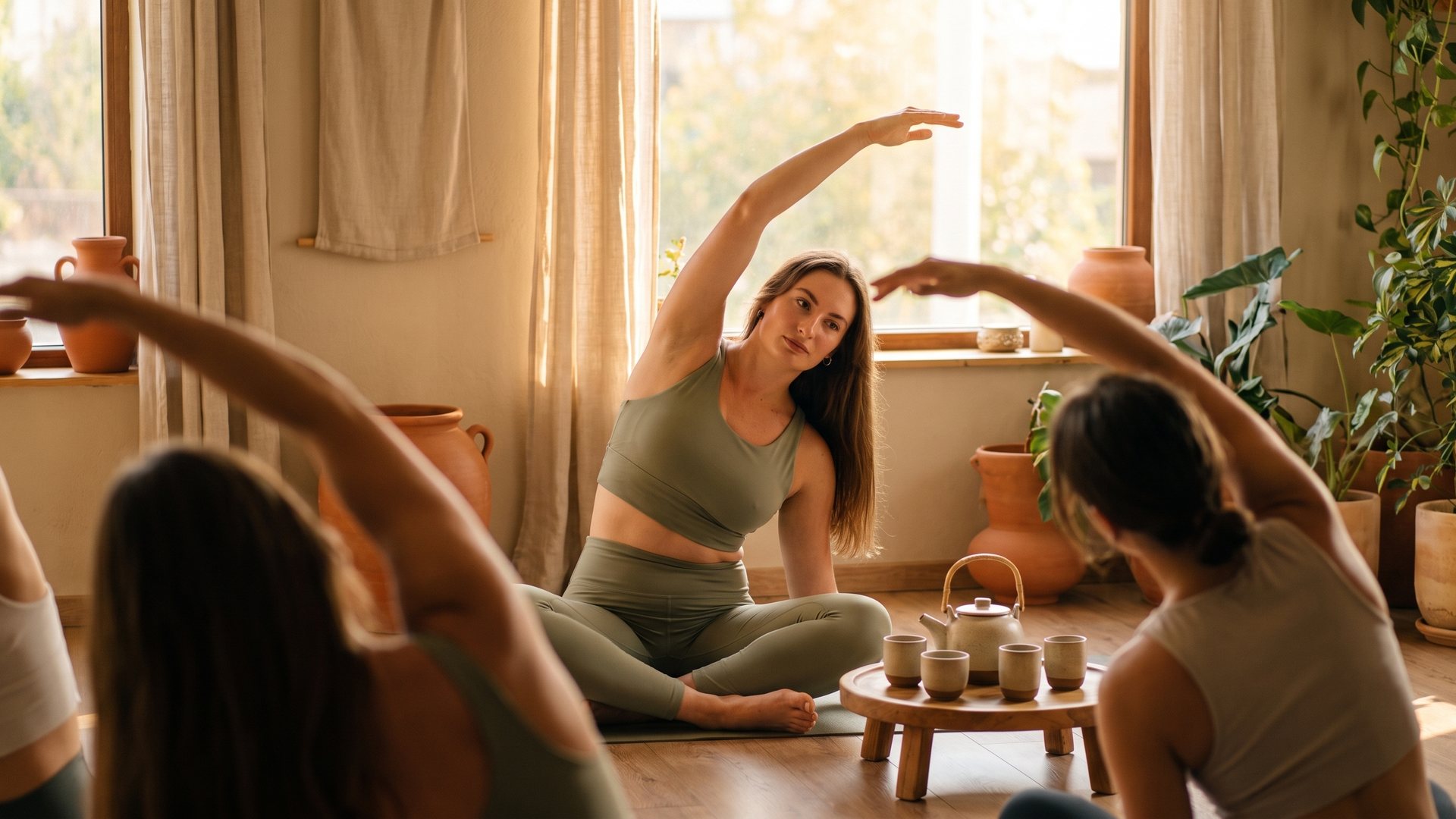
Post-class: Stay for the herbal tea. Let the transition back into the day happen slowly. Do not immediately pick up the phone.
By 10:00am, you have moved, breathed, rested, and already done something genuinely kind for yourself. The rest of Saturday is not recovery — it is enjoyment.
Sunday: setting the next one
Why Sunday-night dread responds to Yin
Sunday has a particular emotional character that many people quietly recognise: the background hum of anticipatory anxiety about the week ahead. Sunday-night dread is common enough to have its own name, and the research behind it is straightforward — the brain, having partially downregulated from work mode, begins to re-engage with future threats on Sunday afternoon, anticipating Monday.
This is a nervous-system pattern, not a character flaw. And Yin yoga addresses it directly.
Yin’s long, passive holds — three to five minutes in deep stretches, with full attention on the breath — activate the parasympathetic nervous system in a sustained, deliberate way. Where Hatha clears the physical residue of the week, Yin provides something closer to a long exhale for the entire system. The effect is cumulative: students who practise Yin on Sunday evenings often find that the week feels less like something to brace against and more like something to move through.
A Sunday Yin class does not prevent the busy week from arriving. But it changes the posture from which you meet it.
Pairing yoga with weekend rituals (walks, tea, journaling)
Yoga is more powerful when it is not a standalone event but part of a composed weekend that intentionally alternates activity with rest. A few pairings worth considering:
A walk before or after class. Golders Green’s proximity to Golders Hill Park and Hampstead Heath Extension means a thirty-minute walk in genuine green space is accessible from the studio. Green exercise — movement in natural settings — compounds the nervous-system benefit of yoga rather than diluting it.
Journaling after class. The post-yoga state — the quality of mind that follows Shavasana — is often unusually clear and honest. Five minutes of writing in that state can surface things that ordinary thinking does not reach: what you actually need this week, what you are carrying unnecessarily, what you want to let go of.
The tea ritual, extended. Post-class herbal tea at the studio is one thing. Continuing that habit at home — sitting without a screen, with a warm cup and a few minutes of deliberate quiet — brings the studio quality into the rest of the day. The ritual holds its effect even in a kitchen.
An afternoon rest. The British Sunday traditionally included some version of an afternoon pause — a walk, a rest, an absence of productivity. There is neurological wisdom in that structure. A Yin class in the morning followed by an afternoon of low-demand activity — reading, cooking slowly, a gentle visit somewhere — creates a day that the nervous system receives as genuinely restorative.
The weekend yoga ritual is not about filling the days with healthy activities. It is about designing the days so that Monday arrives at a rested person, not an already-depleted one.
Frequently Asked Questions
What is the difference between a weekday and a weekend yoga class at Your Ritual Yoga?
The content of the class is the same — same sequencing, same sound healing, same herbal tea ritual. What differs is who you are when you arrive. Weekend students often drop into stillness more readily because the day’s pressures are lighter.
Should I do Hatha on Saturday and Yin on Sunday, or vice versa?
The pairing described above — Hatha on Saturday to clear physical tension, Yin on Sunday to settle the nervous system before the week — works well for many students. But the inverse works too: a vigorous Hatha on Sunday morning can be excellent if anxiety is high, and the movement helps. Observe what your body asks for across several weeks.
Is it worth attending if I can only make it once at weekends?
Yes. One class is significantly better than none. Even a single weekly practice produces measurable change in nervous-system baseline over four to six weeks. Start with what is manageable.
Can I book weekend classes in advance?
Yes. Booking in advance is recommended for weekend classes, as they tend to fill quickly. See the schedule and pricing page for availability.
Is there parking near the studio on weekends?
Golders Green has on-street parking and nearby car parks. Weekend restrictions are generally lighter than weekdays. Check current signage when you arrive.
Join us for Saturday morning Hatha or Sunday Yin in Golders Green, NW11. Small classes, sound healing, herbal tea — and a weekend that feels different. Book a weekend class →
About the author
Tanya is a Yoga Alliance RYS 200 certified yoga teacher (ID 252157), trained at Devvrat Yoga School in Varkala, India (December 2025). She teaches Hatha and Yin yoga at Your Ritual Yoga in Golders Green, NW11 — a small, intentional studio where every class includes sound healing with Himalayan singing bowls and a post-class herbal tea ritual. www.ritual-yoga.co.uk