Written by Tanya — Yoga Alliance RYS 200 (ID 252157), trained at Devvrat Yoga School, Varkala, India (December 2025). Tanya teaches Hatha and Yin yoga at Your Ritual Yoga in Golders Green, NW11.
Yoga for migraines is a subject that requires care. Migraines are not simply bad headaches — they are a neurological condition with a range of triggers, severities, and presentations, and any yoga practice for migraine sufferers needs to be approached with honesty about what it can and cannot offer.
This guide draws a clear line between migraine and tension headache, explains why yoga during an acute attack is usually not appropriate, and focuses on where yoga may genuinely help: in the preventive space between attacks, as a tool for reducing the frequency and intensity of episodes over time.
A note before we begin: persistent, worsening, or unusual headaches should always be assessed by a GP. New or sudden severe headaches — particularly those described as “the worst headache of my life” — require immediate medical attention. This guide is for people who already have a diagnosis and are looking for complementary supportive practices.
Migraine vs Tension Headache
Understanding the difference matters because the yoga approach differs significantly.
A tension headache typically presents as a dull, pressing or tightening pain — often described as a band around the head or pressure at the temples or back of the skull. It is frequently associated with postural tension in the neck and shoulders, stress, dehydration, poor sleep, or prolonged screen use. Many people experience tension headaches regularly and find they respond to stretching, hydration, and stress management.
A migraine is a neurological event. It may include a throbbing or pulsating pain (often one-sided), nausea or vomiting, extreme sensitivity to light and sound, and — in about a third of sufferers — an aura (visual disturbances, numbness, or speech changes in the period before the headache begins). Migraines can last four to seventy-two hours. Triggers vary by individual and may include hormonal changes, specific foods or drinks, sleep disruption, bright lights, strong smells, or stress.
The distinction matters because a practice appropriate for tension headache management is not necessarily appropriate during a migraine attack.
Yoga During an Attack: Usually No
Avoiding Inversions and Rapid Breath During Attacks
During an active migraine, the most appropriate response is almost always rest in a quiet, dark room. The nervous system is in a highly sensitised state, and almost any additional stimulus — movement, light, sound — tends to worsen the experience.
Yoga during a migraine attack is not recommended as a general rule. This includes:
Inversions. Poses where the head is below the heart — downward-facing dog, forward folds with the head hanging, shoulder stand, headstand — increase intracranial blood flow. During a migraine, when the blood vessels in and around the brain are already involved in the neurological event, this additional change in blood pressure can worsen the pain significantly.
Rapid breathing techniques. Kapalbhati (breath of fire), rapid diaphragmatic breathing, or any pranayama technique involving vigorous or rapid breath cycles can exacerbate migraine symptoms. The nervous system does not need additional activation during an attack.
Bright rooms and strong smells. If the studio environment includes strong incense or essential oils, alert your teacher before class. During a prodrome (the warning period before a migraine) or at the first signs of an attack, leave class and rest.
The best yoga response during an attack is to stop. This is not failure — it is wisdom.
Preventive Yoga Between Attacks
This is where yoga has the most to offer migraine sufferers. A consistent practice in the days and weeks between attacks may, over time, support a reduction in frequency and severity for some people.
The mechanisms are plausible. Yoga practice has been associated with reductions in perceived stress, lower cortisol levels, and improved sleep quality — and stress and disrupted sleep are among the most commonly cited migraine triggers. Addressing these upstream contributors through a regular practice is a reasonable preventive strategy.
Additionally, many tension-type headaches and some cervicogenic migraines (those related to neck and upper-back tension) have a postural component. Long hours at a desk compress the cervical spine and shorten the muscles at the back of the skull. Yoga poses that address these areas can relieve a contributing factor.
Cervicogenic Factors
Cervicogenic headache — pain that originates in the cervical spine and refers into the head — is distinct from migraine but often co-exists or is confused with it. Common sources include tension in the suboccipital muscles (the small muscles at the base of the skull), the upper trapezius, and the sternocleidomastoid.
Gentle neck and shoulder work in a yoga class — slow lateral neck stretches, supported shoulder releases, upper-back opening — can directly address these contributors. Many desk workers who experience frequent headaches find that a weekly Yin or Hatha class that includes attention to the upper body offers noticeable relief over time.
Specific Poses and Breathing
Supported Child’s Pose, Legs Up the Wall, Nadi Shodhana
These three practices form a useful preventive toolkit for migraine sufferers, appropriate on headache-free days or during very mild tension headaches (not during an active migraine).
Supported child’s pose. With a bolster or folded blankets supporting the torso, this gentle forward fold relaxes the muscles of the neck, upper back, and jaw. The light pressure of the forehead against a support (if that is comfortable) can feel grounding. The parasympathetic effect of the position — body folded forward, eyes closed, breath slowing — is a gentle contrast to the sustained activation of a desk-heavy day. Hold for three to five minutes, breathing slowly.
Legs up the wall (Viparita Karani). Lying on the back with the legs resting against the wall requires no muscular effort and produces a gentle reversal of the downward pooling of blood in the legs. More relevantly, it strongly activates the parasympathetic nervous system. After ten minutes in this position, most people feel measurably calmer. For migraine sufferers whose attacks are triggered by stress or overactivation, this practice — done regularly on headache-free evenings — may support a reduction in trigger frequency over time.
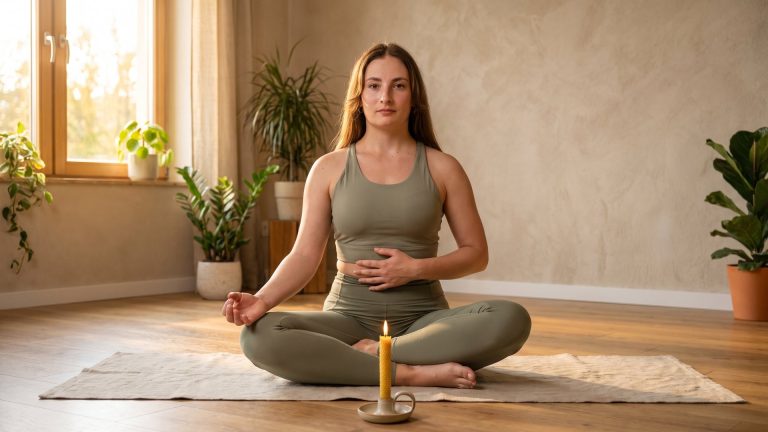
Nadi Shodhana (alternate nostril breathing). This pranayama technique involves alternating the breath between the left and right nostrils using the fingers of the right hand. It is traditionally described as balancing and calming. Research on its effects is limited but suggests it may reduce sympathetic nervous-system activation. For migraine sufferers, it is best practised as a preventive tool on good days. Do not practise it during an attack or prodrome.
When Yoga Isn’t Enough
Yoga is a supportive practice, not a medical treatment. For people whose migraines are frequent, severe, or significantly affecting quality of life, the appropriate first step is a comprehensive assessment with a GP or neurologist.
Evidence-based medical interventions for migraine prevention include certain medications, dietary modifications (tracking and managing personal triggers), and psychological approaches such as cognitive behavioural therapy for chronic pain. Yoga may sit alongside these interventions — it is not a replacement for them.
If you are finding your migraines are increasing in frequency, changing in character, or accompanied by neurological symptoms (vision changes, weakness, speech difficulty, confusion), see a doctor promptly.
A private yoga session with Tanya can be a useful space to explore a practice that is genuinely tailored to your specific history — including adjustments for migraine-related sensitivities, trigger awareness, and a pace that honours the unpredictability of your condition. This is a more appropriate format for significant migraine histories than a group class.
Frequently Asked Questions
Can yoga trigger a migraine?
For some people, certain yoga practices can act as triggers — particularly hot yoga, practices involving vigorous breathing, or sessions in strongly scented rooms. Pay attention to your individual triggers and choose the style and environment accordingly. Slower, cooler, quieter practices are lower-risk.
Is the sound healing in Shavasana safe for migraine sufferers?
Himalayan singing bowls produce sound at moderate volume in the low-frequency range. Many people find this deeply calming. However, during a prodrome or active migraine, sound sensitivity can be extreme, and this would not be the right environment. On headache-free days, most migraine sufferers find sound healing beneficial rather than triggering. If you are unsure, speak to your teacher before class.
Which class type is more suitable for migraine management — Hatha or Yin?
Yin yoga tends to be more directly appropriate for migraine-related preventive practice, given its parasympathetic emphasis, slow pace, and long passive holds. Hatha yoga can also be valuable, particularly for addressing the postural contributors to tension headaches. If your migraines are stress-related, Yin is often the more immediately effective choice.
How long before I notice any effect on migraine frequency?
Individual responses vary significantly. Some people notice a change in tension patterns and sleep quality within four to six weeks of regular practice. Measurable changes in migraine frequency, if they occur, tend to emerge over three to six months of consistent practice.
Should I tell the teacher about my migraines?
Yes. Sharing this information before class allows the teacher to offer modifications — particularly around inversions, breathing intensity, and scent — that make the class safer and more appropriate for you. In a small class, this kind of communication is easy and welcomed.
A private session with Tanya may be the safest starting point if your migraines are unpredictable or your history with them is complex. Get in touch to discuss a personal training session tailored to your needs.
About the author
Tanya is a Yoga Alliance RYS 200 certified yoga teacher (ID 252157), trained at Devvrat Yoga School in Varkala, India (December 2025). She teaches Hatha and Yin yoga at Your Ritual Yoga in Golders Green, NW11 — a small, intentional studio where every class includes sound healing with Himalayan singing bowls and a post-class herbal tea ritual. www.ritual-yoga.co.uk