Written by Tanya — Yoga Alliance RYS 200 (ID 252157), trained at Devvrat Yoga School, Varkala, India (December 2025). Tanya teaches Hatha and Yin yoga at Your Ritual Yoga in Golders Green, NW11.
Yoga or Pilates in NW11 is one of the more common questions I hear from people who are new to movement practice and trying to make a considered choice. Both disciplines have studios in and around Golders Green. Both are widely recommended. Both will be described to you, with complete sincerity, as exactly what your body needs.
What nobody tells you is that they are quite different, and that the answer genuinely depends on what you are trying to address.
This is an honest guide. I teach yoga, so I have an obvious interest in the outcome. I have tried to acknowledge that and present the comparison as fairly as I can.
1. Yoga and Pilates: What’s Actually Different
The surface similarities are real: both are practised on a mat (or with equipment, in the case of reformer Pilates), both emphasise controlled movement, both are suitable for a range of fitness levels, and both are popular with a similar demographic.
The deeper differences are worth understanding.
Origin and philosophy. Yoga is a several-thousand-year-old system that encompasses physical practice, breathwork, philosophy, meditation, and ethical living. Pilates was developed by Joseph Pilates in the early twentieth century, initially to rehabilitate injured dancers, and is fundamentally a physical conditioning system. One has a rich metaphysical framework; the other does not pretend to.
Breath. Both use breath deliberately, but differently. In yoga, the breath is the primary vehicle — pranayama is a practice in itself, and the breath leads the movement. In Pilates, breath is a technique used to facilitate core engagement and movement efficiency. One is meditative; the other is mechanical. Both are valuable, but they produce different internal experiences.
Fascia and connective tissue. Yoga, particularly Yin yoga, targets the fascia and connective tissue through long, held positions. Pilates targets the muscular system — specifically the deep stabilising muscles of the core, spine, hips, and shoulder girdle — through controlled repetition.
The fascia question
This distinction matters more than it initially appears. Fascia — the web of connective tissue that surrounds and interpenetrates every muscle, organ, and bone in the body — responds to sustained, low-load stretching rather than muscular contraction. If you have chronic stiffness, long-held postural patterns, or the kind of deep tissue restriction that accumulates over years of desk work, the Pilates repertoire of muscular exercise is unlikely to reach it. Yin yoga, which holds positions for three to five minutes, can.
Conversely, if your issue is weakness and instability — joints that feel uncontrolled, a core that does not reliably support the spine, a history of postural collapse — Pilates is likely to address this more directly than yoga, which (in many classes) does not emphasise isolated strengthening to the same degree.
2. When Pilates Is the Better Choice
Post-surgical or post-injury rehabilitation — Pilates has a long, evidence-supported history in rehabilitation settings, particularly for lower back injury, knee surgery, shoulder instability, and hip replacement recovery. Clinical Pilates (supervised by a physiotherapist) is a formal rehabilitation tool. This is a genuine strength that yoga cannot match.
Core instability as the primary complaint — if your physiotherapist or GP has specifically identified poor core activation or spinal instability as a problem, Pilates addresses this more directly.
Scoliosis management — Pilates has established protocols for scoliosis that yoga teachers without specialist training should not attempt to replicate.
You want primarily physical results — if your goal is toning, postural correction through strengthening, or a very body-focused practice without philosophical dimensions, Pilates is a more transparent fit.
Core stability, post-surgical rehab — Pilates’ edge
The Pilates edge here is not a small difference. The system was designed for exactly this context, the teacher training reflects it, and the results for appropriate clients are well documented. Be honest with yourself about whether this is primarily what you are looking for.
3. When Yoga Is the Better Choice
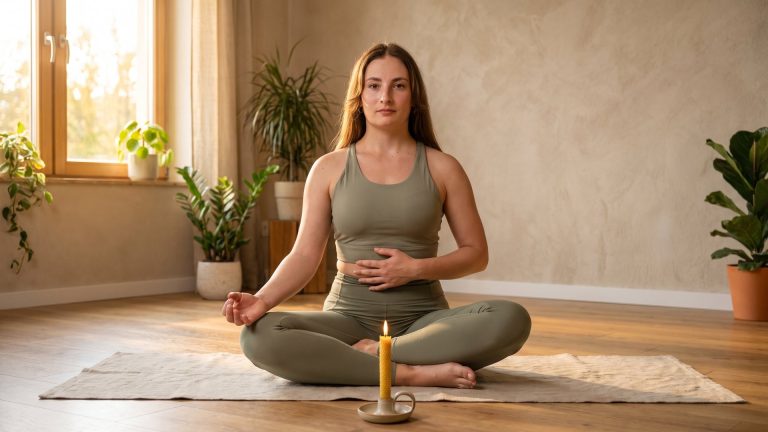
Anxiety, sleep, and hormonal balance — yoga’s edge. This is where yoga has a clear advantage that Pilates cannot replicate through physical conditioning alone. The breathwork, the philosophy, the quality of attention, the sound healing, the extended rest at the end of practice — these combine to produce a parasympathetic response that is not achievable through Pilates, however well taught.
For someone whose primary complaint is a nervous system that will not settle, a mind that will not quiet, or a body that cannot sleep, yoga is the more appropriate intervention.
Seeking philosophy, meaning, or a contemplative dimension. Pilates does not offer this. Yoga contains an entire framework — the eight limbs, the yamas and niyamas, the philosophical texts — that has been refined over millennia to support the examined life. If that matters to you, yoga is the answer regardless of what your body needs.
Chronic tension in deep tissue. Yin yoga reaches places that Pilates, operating primarily through muscular contraction, does not. Long holds in the hips, inner groins, lower back, and thoracic spine release restrictions that exercise-based approaches leave intact.
Community and ritual. The studio environment in yoga — particularly in a small, intimate setting — tends to create a different kind of community from a Pilates class. The shared silence before Savasana, the tea ritual, the philosophical thread that runs through good teaching — these contribute to something that can feel genuinely meaningful, not just physically beneficial.
4. What to Do If You Can’t Decide: A Trial Month Structure
The most honest answer to the yoga-or-Pilates question is: try both.
A month is enough time to feel the difference in your body and to know which environment and approach resonates. Here is a structure that gives both a fair hearing:
Weeks 1 and 2 — attend two Hatha or Yin yoga classes. Note your physical state the morning after, your quality of sleep in the days following, and whether the internal experience of the class (the breath, the stillness, the philosophy) feels accessible or alienating.
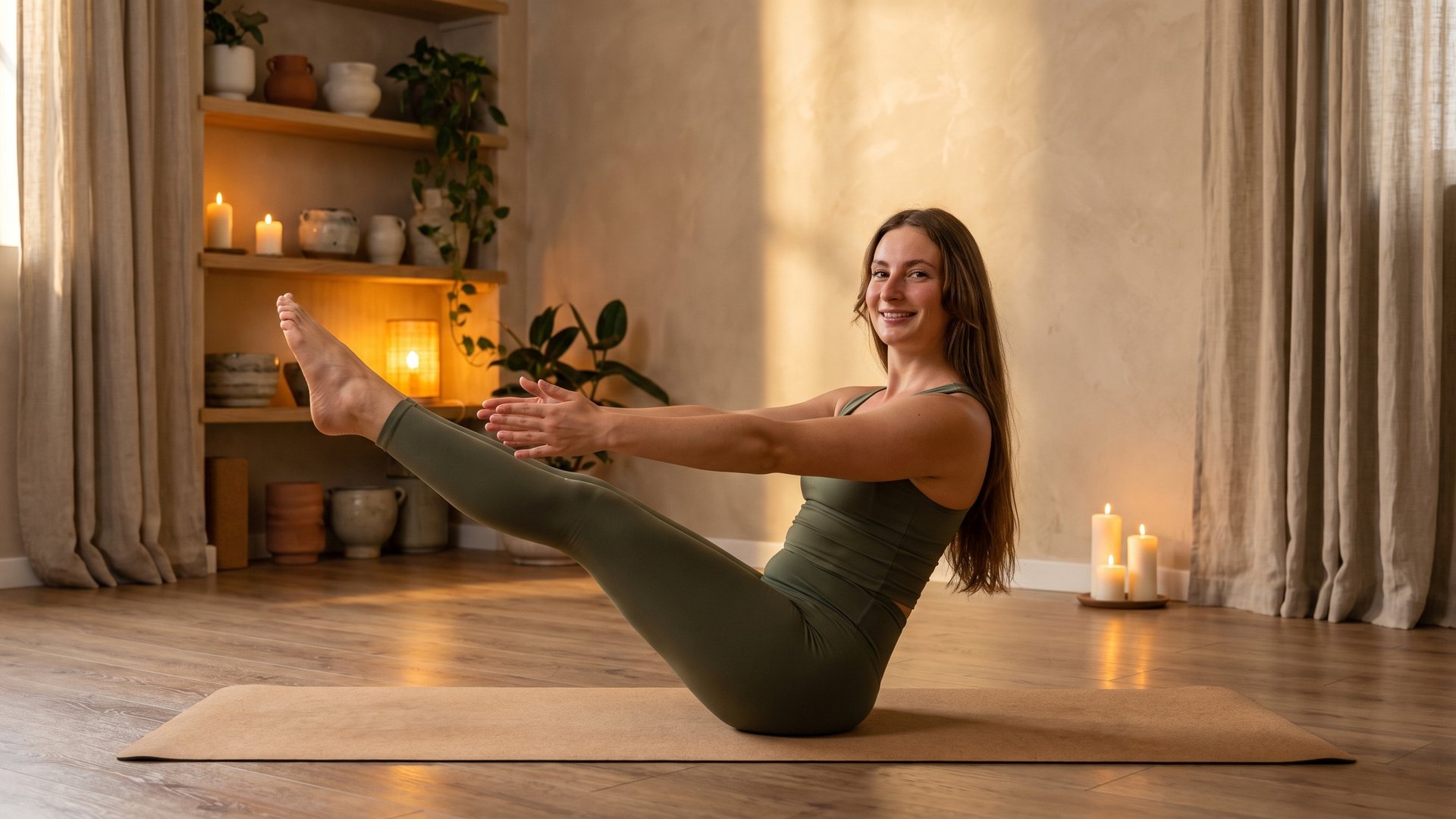
Weeks 3 and 4 — attend two Pilates classes (mat Pilates is the closest comparison to yoga; reformer is a different beast). Again, note physical recovery, sleep, and whether the emphasis on muscular precision and repetition feels satisfying or mechanical.
At the end of the month, the choice is usually clear. If it is not, you have probably found two practices that serve different needs — in which case doing both, in a sustainable rotation, is not a wrong answer.
5. Local NW11 Options for Both
Golders Green and the surrounding NW11 area have several options for both practices.
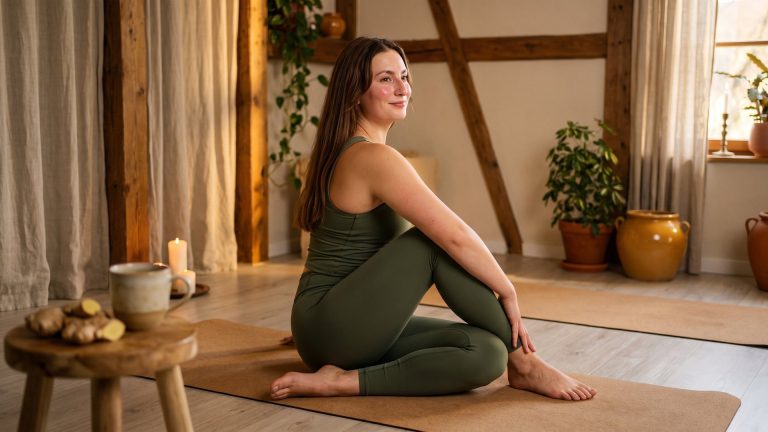
For yoga, Your Ritual Yoga offers Hatha and Yin classes in a small, intentional studio setting. Classes are all-levels, regularly scheduled, and deliberately small to allow the teacher’s attention to reach every student. The experience includes Himalayan singing bowls in Savasana and a post-class herbal tea ritual — which distinguishes it from a purely physical yoga offering.
For Pilates, the Finchley and Golders Green area has several mat and reformer Pilates studios. Look for a small-group or clinical setting if you have specific rehabilitation or postural concerns; large group reformer classes can be valid fitness practice but may not address specific structural needs.
When choosing any studio, in either discipline:
- Attend a trial class before committing to a package
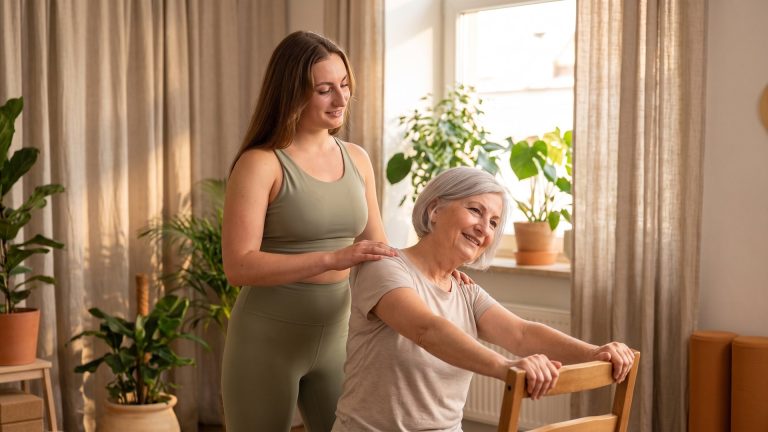
- Ask the teacher about their training and what they specialise in
- Notice how the teacher responds to questions about injuries or limitations — an evasive answer here is a meaningful signal
- Observe whether the class is genuinely appropriate for all levels present, or whether beginners are expected to keep up with experienced students
Both yoga and Pilates, at their best, are practices that respect the individual body and adapt to it. At their worst, they impose a template and expect the body to conform. You deserve the former.
Frequently Asked Questions
Is yoga or Pilates better for weight loss?
Neither is primarily a weight-loss intervention, and both are better suited to other goals. If weight loss is the primary aim, cardiovascular exercise and nutritional awareness are more directly relevant. That said, both support the hormonal balance and stress reduction that can indirectly support a healthy weight.
I have lower back pain. Which is safer?
Both can be practised safely with lower back pain when taught well. Pilates has a stronger clinical track record for acute rehabilitation; yoga (particularly Yin) is well suited to the chronic, long-held tension patterns that often underlie non-specific lower back pain. Ideally, ask your physiotherapist before starting either.
Can I do both?
Yes, and for many people this is the best answer. Pilates for structural stability and strength; yoga for nervous-system regulation, deep tissue release, and the contemplative dimension. They are complementary rather than competing.
Which is more beginner-friendly?
Both can be beginner-friendly when taught well and poorly accessible when taught without regard for varying experience levels. A small class with an attentive teacher is more important than the discipline itself.
Is there a significant cost difference in NW11?
Costs vary by studio and format. Mat Pilates classes tend to be comparable to yoga classes in price. Reformer Pilates is usually more expensive due to equipment costs. Yoga packages (like the eight- or twelve-class packages at Your Ritual Yoga) can reduce the per-class cost considerably.
If yoga sounds like the right fit for where you are now, book a Hatha trial class at Your Ritual Yoga — or explore our Yin yoga classes for the most restorative option. Small groups, expert guidance, Golders Green, NW11.
About the author
Tanya is a Yoga Alliance RYS 200 certified yoga teacher (ID 252157), trained at Devvrat Yoga School in Varkala, India (December 2025). She teaches Hatha and Yin yoga at Your Ritual Yoga in Golders Green, NW11 — a small, intentional studio where every class includes sound healing with Himalayan singing bowls and a post-class herbal tea ritual. www.ritual-yoga.co.uk