Written by Tanya — Yoga Alliance RYS 200 (ID 252157), trained at Devvrat Yoga School, Varkala, India (December 2025). Tanya teaches Hatha and Yin yoga at Your Ritual Yoga in Golders Green, NW11.
Yoga for neck and shoulder tension is one of the most searched-for practices in the UK — and for good reason. For anyone who spends significant time at a desk, a laptop, a phone, or even a steering wheel, the upper body becomes a reservoir for physical and emotional stress. The tension accumulates quietly, day after day, until it is simply the background hum of how your body feels.
Fifteen minutes, practised consistently, begins to change that.
This sequence is not a cure for chronic pain, and it is not a substitute for working with a teacher who can assess your specific posture and patterns. But it is a repeatable daily reset — something you can do before work, at your desk, or before bed — that gently releases what builds up through the course of an ordinary day.
1. Why Neck and Shoulders Carry Your Stress
Before moving, it is worth understanding why this particular area holds so much.
Tech Neck and Forward-Head Posture
The average human head weighs between 4.5 and 5.5 kilograms. When it rests in a neutral position, directly above the spine, the neck muscles support that weight easily. But as the head drifts forward — which happens when we look at screens, hunch over a phone, or drive — the effective load on the cervical spine increases dramatically. Research suggests that for every 2.5 centimetres of forward head position, the effective weight felt by the neck and upper back roughly doubles.
Over an eight-hour working day, this sustained forward position creates chronic muscular shortening in the chest and front of the shoulders, and chronic lengthening (and eventual weakening) in the muscles of the upper back and neck. The trapezius, levator scapulae, and rhomboids work overtime. The result is that familiar ache across the tops of the shoulders and into the base of the skull.
The emotional component matters too. In many body-oriented approaches to yoga, the upper chest, throat, and shoulders are understood as places where unexpressed emotion — particularly stress, anxiety, and unspoken feelings — tends to accumulate. Whether or not you engage with this framing, most people notice that a stressful day tightens the shoulders in a way that a relaxed day does not.
The practice below addresses both: the postural and the emotional.
2. The 15-Minute Sequence
Move slowly through each pose. Allow the breath to lead the movement. If anything causes sharp or shooting pain, stop and consult a healthcare professional before continuing.
Gentle Neck Rolls (2 minutes)
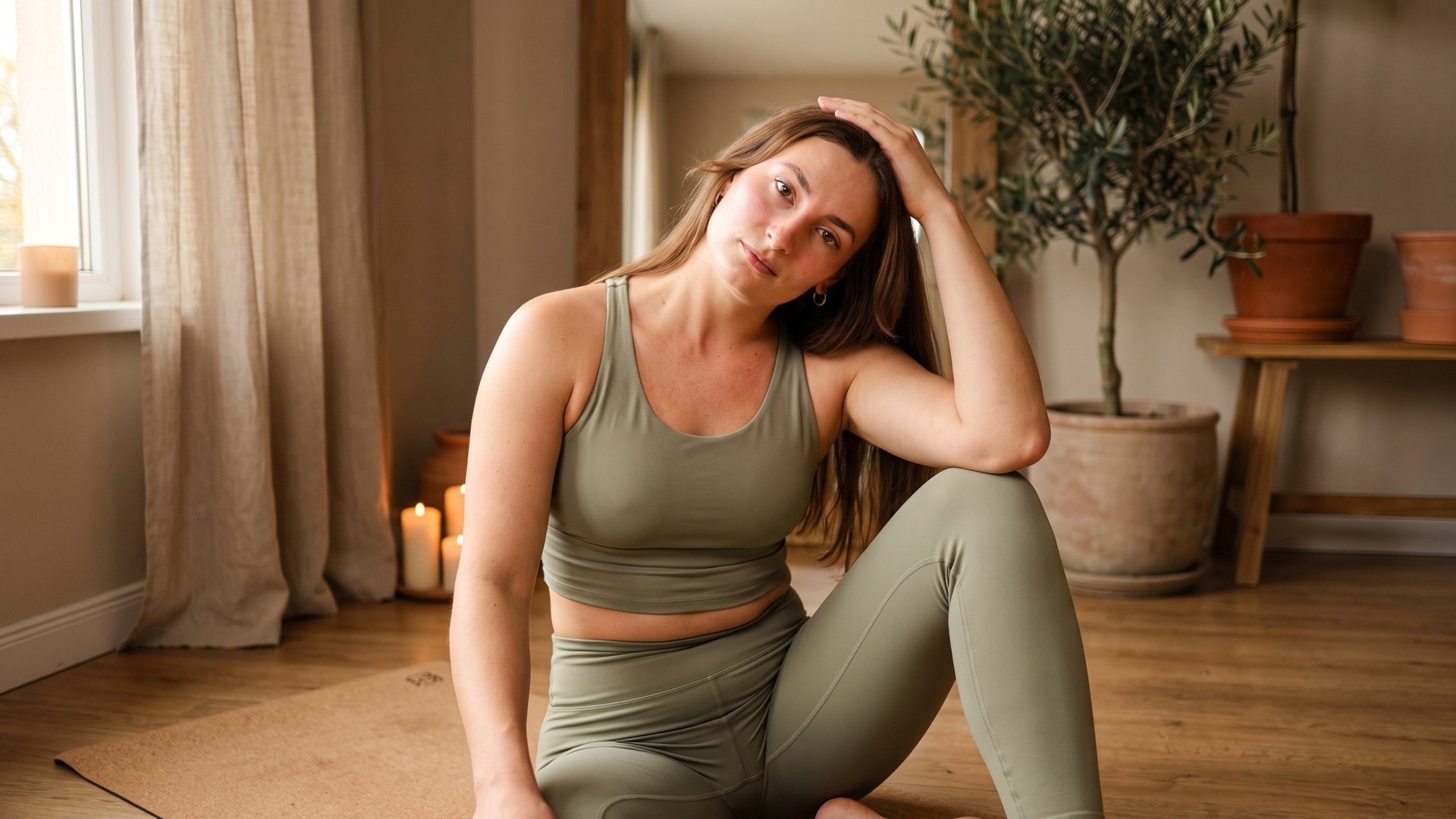
Begin seated, spine tall but not rigid. Inhale to lengthen. On the exhale, let the right ear drop towards the right shoulder — no force, simply the weight of the head. Breathe here for four or five breaths, noticing where you feel the stretch (often along the left side of the neck, into the upper trapezius). Slowly draw the chin towards the chest, breathing through the back of the neck, then let the left ear move towards the left shoulder. Breathe there equally. Return to centre.
Do not roll the head backwards. The cervical spine is not designed for unsupported weight-bearing extension, and for many people this increases compression rather than releasing it.
Thread the Needle (3 minutes each side)
Come onto all fours — hands under shoulders, knees under hips. On an exhale, slide the right arm along the mat under the left arm, allowing the right shoulder and right cheek to rest on the floor. The left hand can walk further forward to deepen the stretch across the back of the right shoulder.
This pose targets the rhomboids, the rear deltoids, and the rotator cuff — all areas that tighten with prolonged desk posture. Breathe into the back of the right shoulder. Stay for eight to ten slow breaths before returning to all fours and repeating on the other side.
Eagle Arms (Garudasana Arms) (2 minutes)
Seated or standing, extend both arms forward at shoulder height. Cross the right arm under the left, bending both elbows and wrapping the forearms so the palms face each other (or touch, if available). Lift the elbows slightly while drawing the shoulder blades away from the spine. This is a particularly effective pose for releasing the muscles between the shoulder blades — the area that tends to ache after hours at a keyboard. Hold for six breaths, then switch the crossing of the arms and hold again.
Supported Fish Pose (3 minutes)
Place a folded blanket, a rolled towel, or a firm cushion horizontally across your mat at the level of your mid-back. Lie back over it so that the support sits between your shoulder blades, allowing the chest to open gently upwards. Arms rest out to the sides, palms facing up.
This is a quiet, restorative counterpose to the forward-rounded position of desk work. It opens the chest and the front of the shoulders, allowing the upper spine to extend passively. Breathe slowly and let the weight of the body do the work. Stay for at least three minutes — longer if it feels helpful.
Seated Forward Fold with Shoulder Release (2 minutes)
Return to sitting. Interlace the fingers behind the back (or hold a strap between the hands if that is not available). On an inhale, lengthen the spine; on the exhale, fold forward over the legs while lifting the hands away from the back, moving them upward and towards the head. This stretches the chest and front of the shoulders simultaneously. Hold for six to eight slow breaths.
Final Rest (3 minutes)
Lie flat on your back, arms slightly away from the body, palms facing up. Let the shoulders release fully into the floor. Breathe naturally. Notice the difference between how the upper body feels now and how it felt when you began.
3. Best Times of Day to Practise
Morning — practising before desk work sets a physical baseline of openness. The body begins the day already released rather than spending the first hours accumulating tension.
Midday — a short sequence between work sessions interrupts the build-up before it becomes entrenched. Even ten minutes away from the screen makes a measurable difference to how the body feels by 3:00 PM.
Evening — releasing the tension of the day before sleep tends to improve sleep quality. The sequence above, practised slowly in the evening, can also serve as a transition ritual from the working day to genuine rest.
Any time is better than none. The most effective time is simply the one you will actually use.
4. What Changes After 2 Weeks
Consistency matters more than perfection here. Practised daily (or five days a week), most people begin to notice changes within ten to fourteen days:
- A broader resting range of motion in the neck — turning to look over the shoulder feels easier
- Reduced end-of-day headaches that originate at the base of the skull
- A subtler, more ongoing awareness of when the shoulders have crept up towards the ears (and the ability to consciously lower them)
- Improved sleep quality, particularly in students who held tension in the jaw, neck, and upper back
These are gentle, cumulative changes rather than dramatic transformations. They are also the kind of changes that tend to persist — because the body has learned a new pattern, not simply had the old one briefly interrupted.
5. When to Add 1-on-1 Work
A daily home sequence is a beginning. But for patterns that have been forming for years — chronic neck pain, a history of whiplash, significant forward-head posture, or tension that is accompanied by headaches, tingling, or numbness — working with a teacher in a small group or one-on-one setting offers something a home sequence cannot: personalised assessment, adjustment, and a practice that evolves with you.
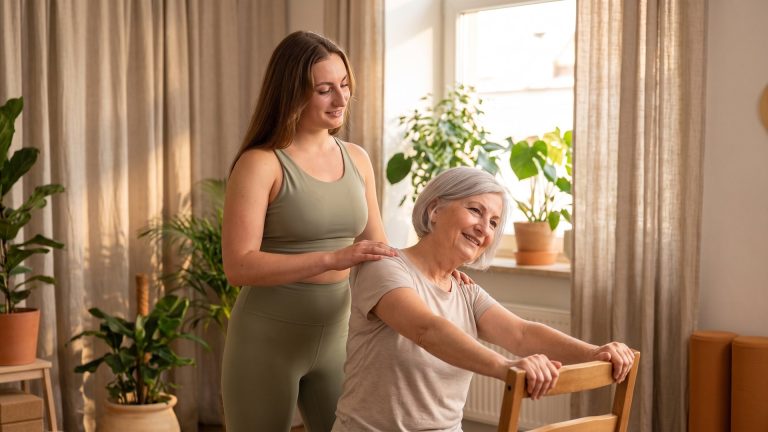
In a Hatha yoga class, your teacher can observe your alignment in standing and seated poses and guide you into positions that specifically address your patterns. Over time, this builds a much more nuanced awareness of your body than a sequence viewed on a screen.
For students with more significant postural concerns, chronic pain, or injury, personal training with Tanya offers a fully tailored programme — one that moves at your pace, respects your history, and builds on what your body specifically needs, rather than a generic sequence designed for an average person.
The home practice and the studio practice support each other. One gives you consistency; the other gives you depth.
Frequently Asked Questions
Q: Is it safe to do this sequence if I have a neck injury?
A: If you have a current neck injury, a history of disc herniation, or you experience pain, tingling, or numbness in your arms, please consult a GP or physiotherapist before practising any neck-focused yoga. Some poses in this sequence can be modified; others may need to be avoided temporarily. A one-on-one session with a yoga teacher allows for the kind of personalised adaptation that a general sequence cannot provide.
Q: How long before I notice a difference?
A: For mild everyday tension, many students notice some improvement after the first session. Consistent daily practice typically produces more lasting change over two to four weeks. Patterns that have built up over years take longer to shift, but they do shift.
Q: Can I practise this at my desk?
A: The neck rolls, Eagle arms, and even a modified seated thread-the-needle can be adapted to a desk environment. The floor poses (supported fish, thread the needle fully) are best done on a mat. Even two or three minutes of desk-based movement at midday supports the fuller home practice.
Q: I get headaches at the base of my skull — will yoga help?
A: Tension headaches that originate at the base of the skull are often related to tight suboccipital muscles and upper trapezius — the exact areas targeted in this sequence. Many students find that a consistent practice may help reduce their frequency. However, if headaches are severe, frequent, or accompanied by other symptoms, please seek medical advice.
Q: Should I feel pain during the poses?
A: No. These poses should produce sensation — a stretch, a release, a gentle pulling — but not sharp, shooting, or intense pain. If you feel pain, ease out of the pose. Yoga for tension relief works through gradual, gentle release, not force.
Ready to practise with a teacher who understands upper-body tension? Join a Hatha yoga class at Your Ritual Yoga, or explore personal training for a fully tailored practice targeting upper body tension.
About the author
Tanya is a Yoga Alliance RYS 200 certified yoga teacher (ID 252157), trained at Devvrat Yoga School in Varkala, India (December 2025). She teaches Hatha and Yin yoga at Your Ritual Yoga in Golders Green, NW11 — a small, intentional studio where every class includes sound healing with Himalayan singing bowls and a post-class herbal tea ritual. www.ritual-yoga.co.uk