If you’re considering starting yoga but aren’t sure where to begin, Hatha yoga might be exactly what you’re looking for. It’s the foundational yoga practice that’s been trusted for thousands of years—and it’s remarkably effective for modern life’s challenges, from stress and anxiety to poor sleep and chronic tension.
In this comprehensive guide, I’ll walk you through everything you need to know about Hatha yoga: what it actually is, why it’s valuable, the key poses you’ll encounter, the science-backed benefits, and exactly what to expect when you walk into your first class at Your Ritual Yoga in Golders Green.
What Is Hatha Yoga? The Ancient Roots and Modern Meaning
The word “Hatha” comes from two Sanskrit roots: “Ha” (sun) and “Tha” (moon). Hatha yoga is fundamentally about balancing opposite energies—activity and rest, strength and flexibility, pushing and receiving, effort and surrender.
Many people think “Hatha yoga” refers to a specific style of yoga class, but this misses the deeper meaning. In classical yoga texts, Hatha yoga encompasses the entire physical practice of yoga, including postures (asanas), breathing techniques (pranayama), and meditation.
When studios today teach “Hatha yoga,” they’re typically offering what could be called classical yoga—slower-paced, alignment-focused practice that emphasises proper positioning and conscious breathing rather than flowing quickly between poses.
Hatha Yoga vs. Other Yoga Styles
Understanding how Hatha yoga differs from other popular styles can help you choose what’s right for you:
Hatha vs. Vinyasa: Vinyasa flows quickly, linking breath with continuous movement (often set to music). Hatha holds poses longer, allowing deeper understanding and alignment. Hatha is more introspective; Vinyasa is more dynamic.
Hatha vs. Hot Yoga: Hot yoga classes are done in heated rooms (often 105°F+). While heat can feel good initially, Hatha yoga’s slower pace and alignment focus make it safer for most bodies without the intensity of heat.
Hatha vs. Power Yoga: Power yoga emphasises strength and athletic challenge. Hatha emphasises alignment and mind-body connection. Both build strength, but Hatha does so more gently.
Hatha vs. Yin Yoga: Hatha holds poses 5-8 breaths with active engagement. Yin holds poses 3-5 minutes with minimal effort, targeting deeper connective tissues. Hatha is warm and active; Yin is cool and receptive.
The key difference: Hatha yoga invites you to understand your practice deeply. Instead of rushing through 50 poses, you might do 10 poses, but you truly know each one.
Why Hatha Yoga Matters Today
In a world obsessed with speed, optimization, and multi-tasking, Hatha yoga offers something increasingly rare: permission and instruction to slow down, pay attention, and be present with your body.
If you work at a desk, sit for hours, experience chronic stress, or struggle with sleep, Hatha yoga directly addresses the physical patterns created by modern life. It’s not just exercise—it’s nervous system regulation, body awareness, and genuine restoration.
The Science Behind Hatha Yoga’s Benefits
Hatha yoga’s benefits aren’t mystical or esoteric—they’re grounded in how your body actually works:
Nervous System Regulation: Conscious breathing (pranayama) directly signals your parasympathetic nervous system—your relaxation response. This reduces cortisol, the primary stress hormone, and activates the physiological state where healing happens.
Structural Alignment: By learning to move with proper alignment, you reduce chronic pain patterns and prevent future injuries. Desk workers, for instance, develop forward shoulder rolls from sitting. Hatha yoga teaches you to counteract this by opening the chest and strengthening the posterior chain.
Fascia Rehydration: Fascia—the connective tissue surrounding every muscle, organ, and bone—becomes dehydrated and stiff from stress and immobility. Gentle stretching rehydrates fascia and restores mobility.
Nervous System Adaptation: Regular practice literally trains your nervous system to access the relaxation response more easily. Your baseline stress level decreases over time.
Improved Body Awareness: Slow, mindful movement develops proprioception—your body’s awareness of itself in space. This awareness naturally makes you move better in daily life.
Key Hatha Yoga Poses You’ll Learn
One of Hatha yoga’s beauties is that the same foundational poses are used across classes. Learning these core poses gives you a vocabulary for practice anywhere.
Standing Poses (Building Strength & Stability)
Mountain Pose (Tadasana)
This foundational pose looks simple but is profound. Standing with feet hip-width apart, arms at your sides, you learn to distribute your weight evenly and engage your whole body. Mountain pose teaches the alignment foundation for all other standing poses.
Warrior I (Virabhadrasana I)
A powerful pose strengthening the legs, core, and opening the hip flexors. One leg is forward in a lunge position while the back foot is angled down. Your torso faces forward, creating strength and stability. Warrior I also builds mental courage and groundedness.
Warrior II (Virabhadrasana II)
Here your feet are wide apart, one leg bent forward, one straight behind you. Your torso faces to the side, your gaze forward. This pose strengthens the legs powerfully and opens the hips while building warrior-like stability and focus.
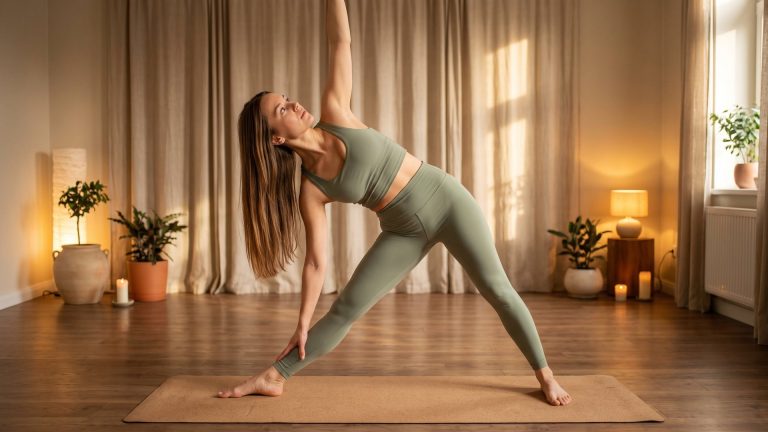
Triangle Pose (Trikonasana)
A deep stretch of the hamstrings, calf, hip, and IT band with gentle twisting. Your feet are wide, one leg bent, and you reach your front arm forward and down while your back arm reaches up. Triangle is excellent for desk workers whose muscles are tight from sitting.
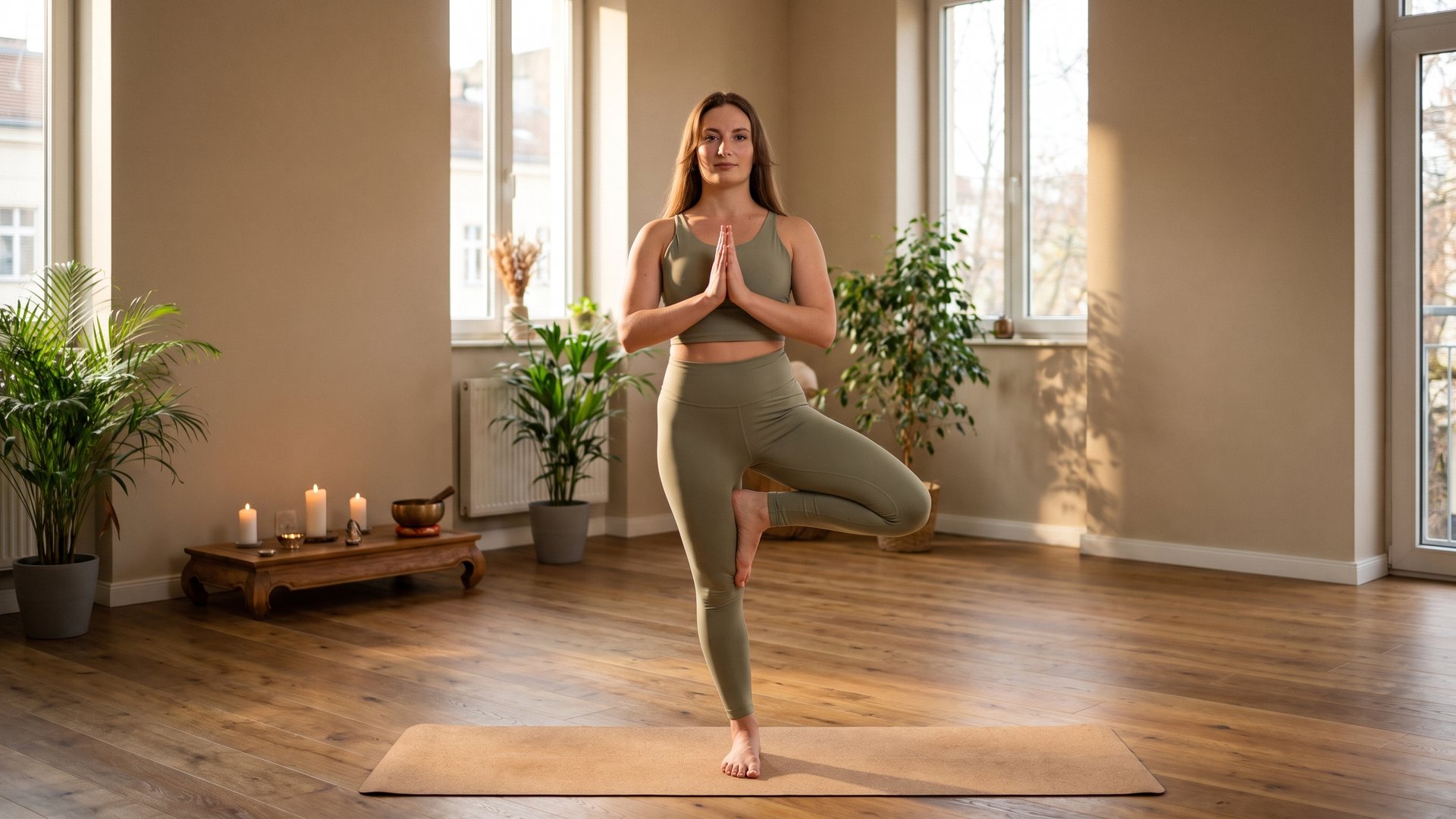
Tree Pose (Vrksasana)
Standing on one leg with the other foot placed on your inner thigh, Tree Pose builds balance, ankle stability, and hip flexibility. It’s also profoundly grounding—literally rooting you like a tree.
Seated & Forward-Folding Poses (Releasing Tension)
Seated Forward Fold (Paschimottanasana)
Sitting with legs extended, you fold forward from the hips, creating a deep stretch of the entire back body. This is enormously helpful for releasing lower back tension and hamstring tightness.
Butterfly Pose (Baddha Konasana)
Sitting with the soles of your feet together and knees out to the sides, you gently fold forward. This deep hip opener releases the inner thighs, groins, and emotional tension stored in the hips.
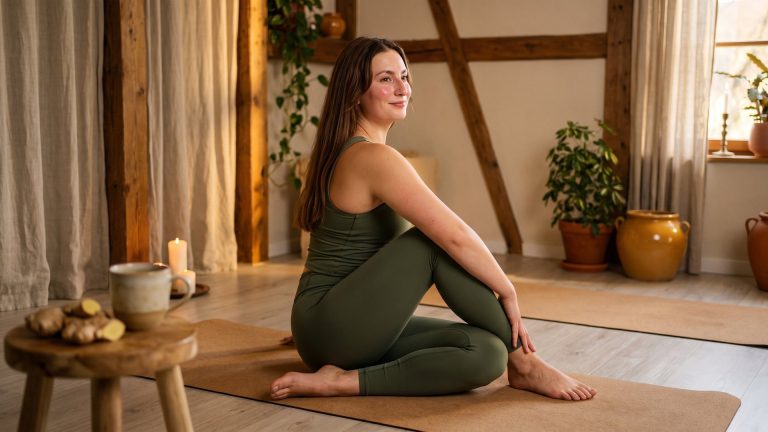
Seated Spinal Twist (Ardha Matsyendrasana)
A gentle twist that wrings out spinal tension, massages the internal organs, and supports digestion. These twists are particularly valuable for people sitting in chairs all day.
Child’s Pose (Balasana)
Kneeling with your forehead to the ground and arms extended, Child’s Pose is simultaneously a restorative pose and a gentle backbend stretch. It’s safe to return to anytime during class if you need a break.
Backbend Poses (Opening the Front Body)
Locust Pose (Salabhasana)
Lying on your belly, you lift your chest and legs off the ground, strengthening the entire back body—posterior chain, glutes, lower back—and opening the front body. Backbends are energising and mood-elevating.
Bridge Pose (Setu Bandha Sarvangasana)
Lying on your back with knees bent and feet hip-width apart, you press your feet down to lift your hips. This strengthens glutes and hamstrings, opens the chest and hip flexors, and is particularly valuable for counteracting the anterior pelvic tilt created by sitting.
Camel Pose (Ustrasana)
A deep backbend where you kneel and reach your hands back towards your heels, opening the front body intensely. Camel Pose is energising, opens the chest profoundly, and releases emotions stored in the heart area.
Inversion Poses (Fresh Perspective)
Downward-Facing Dog (Adho Mukha Svanasana)
Perhaps yoga’s most iconic pose. From a hands-and-knees position, you press your hands into the ground and lift your hips high, creating an inverted V-shape. This pose stretches the hamstrings, calves, and shoulders while strengthening the arms and core.
Legs-Up-the-Wall (Viparita Karani)
A restorative inversion where you lie on your back with your legs up a wall. This pose drains lymphatic fluid, calms the nervous system, and activates the parasympathetic response—ideal before meditation or Shavasana.
Relaxation & Meditation
Corpse Pose (Shavasana)
Lying flat on your back, arms at your sides, legs extended, you surrender into complete relaxation. Though it looks like napping, Shavasana is an active practice of conscious relaxation—the most important pose of your practice.
At Your Ritual Yoga, Shavasana is enhanced with singing bowl sound healing, creating a profound state of restoration.
The Physical Benefits of Consistent Hatha Yoga Practice
When you commit to regular Hatha practice, your body begins changing in predictable, measurable ways:
Increased Strength & Flexibility
Holding poses builds genuine strength without the joint stress of high-impact exercise. You’ll notice increased strength in your legs, core, arms, and back—exactly where modern people are weak from sitting. Simultaneously, as you stretch consistently, your flexibility increases noticeably (often within weeks).
Improved Posture & Alignment
Hatha yoga teaches you how your body should be positioned. You become aware of postural habits (rounded shoulders, anterior pelvic tilt, forward head position) and develop the strength and awareness to correct them. Better posture reduces pain and looks confident.
Reduced Pain
Chronic muscle tension and postural misalignment create pain. As Hatha yoga releases tension and realigns your skeleton, pain often decreases dramatically. Many students with chronic neck, shoulder, or lower back pain report significant improvement after consistent practice.
Improved Digestion & Metabolism
Twists massage your digestive organs. Movement activates your metabolism. Standing poses engage large muscle groups, burning calories and supporting weight management. Hatha yoga isn’t primarily for weight loss, but it often supports healthy metabolism.
Better Sleep Quality
Hatha yoga’s combination of physical exercise, breathing practice, and nervous system regulation creates ideal conditions for sleep. Most students notice better sleep within a week or two of consistent practice. Within a month, sleep improvements are typically substantial.
Greater Mobility & Ease of Movement
Beyond just flexibility in yoga poses, you’ll notice greater ease in everyday movement. Bending, reaching, walking, and sitting become more fluid. You recover more quickly from physical activity. You move through the world with greater grace and ease.
The Mental & Emotional Benefits
The mental benefits of Hatha yoga are often what students find most transformative:
Reduced Stress & Anxiety
Hatha yoga directly reduces cortisol (stress hormone) and increases GABA, a neurotransmitter that promotes calm. Most students feel noticeably calmer after a single class. Consistent practice creates lasting changes in baseline stress levels.
Greater Mental Clarity
The focused attention required in yoga—paying attention to your breath, your alignment, your sensations—naturally quiets mental chatter. Students often report that their mind feels clearer, more organised, and more focused for hours after practice.
Improved Emotional Resilience
Regular practice creates a buffer between life’s stressors and your emotional reactions. You develop the ability to pause, breathe, and respond consciously rather than react automatically. Over time, you become more emotionally resilient.
Better Sleep & Rest
Beyond the physical benefits, Hatha yoga teaches your nervous system how to truly rest. This is profound for people with insomnia or poor sleep. The ability to access genuine relaxation often translates directly to better sleep.
Sense of Presence & Connection
Perhaps most importantly, Hatha yoga develops genuine presence. In a world of constant distraction, yoga offers genuine connection with yourself—your body, your breath, your mind. This presence naturally extends beyond class into daily life.
What to Expect at Your First Hatha Class in Golders Green
Now that you understand Hatha yoga’s foundations and benefits, let me walk you through exactly what your first class at Your Ritual Yoga will be like:
Arrival (5-10 minutes before class)
You’ll arrive at our peaceful studio in Golders Green. Take a moment to settle. You might remove your shoes, sit quietly, or chat with Tanya. Let her know it’s your first class. She’ll ensure you’re comfortable and answer any questions.
Tell Tanya about:
– Any injuries or physical limitations
– Your goals (stress relief, better sleep, pain relief, flexibility, etc.)
– Your experience level
– Any health concerns
This information helps her tailor her instruction for you.
Opening & Centring (5-10 minutes)
The class begins with everyone sitting comfortably. Tanya guides you through:
– Settling into a comfortable seated position
– Conscious breathing to arrive fully
– Brief meditation or body awareness
– Setting an intention for your practice
This opening creates the psychological shift from “busy mind” to “present body.”
Warm-up & Gentle Movement (5-10 minutes)
You begin with gentle, preparatory movements:
– Shoulder rolls and neck stretches
– Gentle twists
– Cat-cow poses
– Easy movements preparing your muscles and joints
This warm-up ensures you’re physically prepared for deeper practice.
Standing Poses (20-30 minutes)
The heart of your practice involves standing poses. You’ll move through:
– Mountain Pose (foundational grounding)
– Warrior I & II (strength and stability)
– Triangle & Extended Side Angle (stretching and strength)
– Balance poses like Tree (focus and stability)
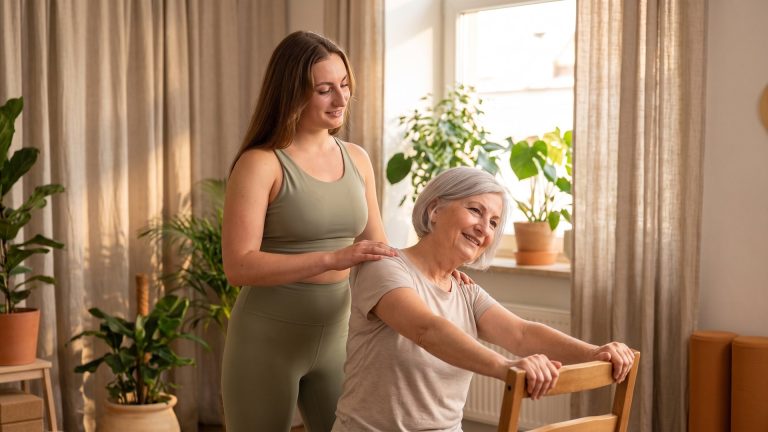
Each pose is held for several breaths (not just one or two). Tanya walks around, observing your alignment carefully. She offers adjustments, modifications, and personalised guidance.
There’s no competition, no performance required. Tanya often reminds students: “Your practice is for you, not for the person next to you.” You’re invited to honour your body’s needs today.
Seated & Floor Poses (10-15 minutes)
Moving to the floor, you explore:
– Forward folds (releasing the back body)
– Hip openers like Butterfly and Pigeon (releasing deep hip tension)
– Spinal twists (wringing out tension and massaging organs)
– Backbends if appropriate (opening the front body)
These poses are deeper and more restorative, preparing you for final relaxation.
Pranayama & Breathing Work (5-10 minutes)
Before Shavasana, Tanya guides you through breathing practices:
– Ujjayi breath (victorious breath)—a breathing technique that naturally calms
– Extended exhale breathing—particularly calming
– Alternate nostril breathing—balancing the nervous system
These techniques are simple but profoundly effective for calming the mind.
Shavasana with Sound Healing (10-15 minutes)
You lie flat on your back, fully supported, arms at your sides, legs extended. You’re invited to let go completely. As your body releases tension and your mind settles, Tanya plays singing bowls—ancient instruments whose vibrations deepen your relaxation.
Many students describe this as the most peaceful experience they’ve had in years. Some fall asleep (which is fine). Others experience profound meditation-like states. All are welcome.
Closing & Tea Ritual (5-10 minutes)
Slowly, you’re invited back to consciousness. You might gently move your fingers and toes, take a few deep breaths, and when ready, slowly sit up.
Then you move naturally to our tea space. Tanya has prepared herbal tea—chosen for its calming or grounding properties. You sit together, sipping tea, perhaps chatting with other students.
This tea ritual is a beautiful transition from the peace of practice back into your day. Many students report that tea time feels like an extension of their practice—the presence and community are part of what makes Your Ritual Yoga special.
How to Prepare for Your First Class
Now that you understand what to expect, here’s how to set yourself up for success:
Physical Preparation
Eat lightly: Ideally 1-2 hours before class. A heavy meal will feel uncomfortable during practice. A light snack (banana, yogurt, toast) is fine.
Dress comfortably: Wear clothes you can move in—yoga pants or leggings and a t-shirt or tank. Nothing restrictive.
Bring water: Stay hydrated, especially if you’re new to yoga.
Arrive early: Come 5-10 minutes before class to settle and let Tanya know it’s your first time.
Mental Preparation
Release expectations: Let go of ideas about what yoga “should” look like. Your practice is uniquely yours.
Embrace beginner mind: Curiosity is better than judgement. Approach each pose with genuine exploration rather than evaluation.
Remember: it’s not performance: You’re not being judged. There’s no right way to do poses. Your body is your guide.
Come with intention: Why are you here? Stress relief? Better sleep? Flexibility? Having an intention helps focus your attention.
What to Bring
- Comfortable clothes
- A water bottle
- Your mat (or we’ll provide one)
- An open mind and heart
That’s it. You don’t need anything else.
Tips for Success in Your First Class
1. Listen to Your Body, Not Your Ego
Your body is your best teacher. If a pose feels wrong, don’t push through. Tell Tanya, and she’ll offer a modification. Using modifications isn’t “easier”—it’s smarter.
2. Use Props Without Hesitation
Props (blocks, blankets, bolsters) aren’t for “less advanced” students—they’re for intelligent practitioners. Using props allows you to practise safely and effectively.
3. Ask Questions
Before, during, or after class, ask Tanya anything. There’s no such thing as a silly question about yoga.
4. Breathe Consciously
More important than achieving a perfect pose is maintaining conscious breathing. If your breath becomes laboured, ease back.
5. Stay for the Whole Class
Especially stay for Shavasana and tea. These are integral to the full experience, and that’s often where the deepest benefits happen.
6. Be Patient with Yourself
Real change takes consistent practice. Most students notice benefits after one week. Significant transformation develops over weeks and months. Trust the process.
Common Concerns Addressed
“I’m not flexible. Will I be able to do this?”
Flexibility comes from practice. Start where you are. Use modifications. Within weeks, you’ll notice improvement. Remember: you don’t need to be flexible to practise yoga; you practise yoga to become flexible.
“I’ll be the only beginner in class.”
Everyone in the class is a beginner at something. Our classes welcome all experience levels. There’s no shame in being new—we all started there.
“I might feel silly doing some of these poses.”
The beauty of Hatha yoga is that every pose has value. You won’t be doing anything frivolous. And within minutes, you’ll be too focused on your body and breath to worry about how you look.
“What if I fall asleep in Shavasana?”
That’s actually fine. Your body might need rest. Sleeping during Shavasana is your body’s way of getting what it needs.
“What if I feel emotional?”
Yoga releases emotions stored in the body. If you feel emotional during or after class, that’s healthy. We create a safe, non-judgemental space for whatever arises.
Moving Forward: Building a Sustainable Practice
Your first class is just the beginning. Here’s how to deepen your practice:
Consistency Matters More Than Intensity
Practice 2-3 times weekly for noticeable benefits. Once-weekly practice creates positive change; 2-3x weekly creates significant transformation.
Combine with Other Practices
Hatha yoga pairs beautifully with:
– Yin Yoga – Balances Hatha’s active engagement with deep relaxation
– Meditation – Deepens the mental benefits
– Pranayama – Advanced breathing work
– Philosophy study – Understanding yoga’s deeper teachings
At Your Ritual Yoga, you can explore all of these.
Consider Personal Training
If you have specific goals or challenges, personal training with Tanya offers customised instruction addressing your unique needs.
Develop a Home Practice
Ask Tanya which poses benefit you most. Practice 15-30 minutes daily at home. This deepens your progress between classes.
Join Our Community
Attend tea ritual. Follow us on Instagram (@yourritualyoga). Connect with other practitioners. Community support deepens practice.
The Deeper Purpose of Hatha Yoga
While Hatha yoga offers tremendous physical and mental benefits, its deepest purpose is spiritual: the development of genuine peace, presence, and connection with yourself.
In practising Hatha yoga, you’re not just exercising your body. You’re learning to live with greater awareness, presence, and intention. You’re developing resilience in the face of life’s inevitable challenges. You’re remembering that you’re not just your thoughts—you’re a whole being worthy of care and attention.
This deeper purpose unfolds naturally through consistent practice. You don’t need to understand it intellectually right now. Just show up, practice, and let the transformation happen.
Your First Step
Everything you’ve read here—Hatha yoga’s benefits, the poses, what to expect, tips for success—is information. But information becomes experience only when you actually practice.
Your invitation is simple: come to your first class. Experience Hatha yoga’s transformation for yourself.
Whether you’re seeking stress relief, better sleep, increased flexibility, pain relief, or simply greater peace and presence in your life, Hatha yoga can help. And at Your Ritual Yoga in Golders Green, you’ll find expert instruction, genuine care, and a welcoming community.
Ready to begin your Hatha yoga journey?
View our class schedule | Learn more about Hatha yoga | Book your first class
About Tanya
Tanya is a Yoga Alliance RYS 200-certified Hatha and Yin yoga teacher (Reg. ID 252157), trained at Devvrat Yoga School in Varkala, India (200-hour intensive, December 2025) under Rakesh Kumar. She teaches small-class, ritual-led Hatha and Yin yoga in Golders Green, NW11 London — integrating singing-bowl sound healing in Shavasana and a post-class herbal tea ritual.
Read more about Tanya · See the weekly schedule · Enquire about private sessions