In a world obsessed with speed, achievement, and doing more, Yin yoga offers something radical: permission and guidance for genuine rest.
If you’re overwhelmed, overstimulated, stressed, or struggling with sleep, Yin yoga might be the most important practice you discover. Unlike faster-paced yoga styles that build heat and strength, Yin yoga works with stillness and time to create profound healing at the nervous system and cellular level.
In this comprehensive guide, I’ll explain exactly what Yin yoga is, why it’s so effective for modern stress and tension, what to expect in your first class, and how to get started with confidence.
Understanding Yin Yoga: The Philosophy & Science
Yin yoga emerged in the 1970s when martial artist Paulie Zink brought Taoist yoga to the West. But its roots trace back thousands of years to Chinese medicine and the concept of yin-yang balance.
The Yin-Yang Balance
In Chinese philosophy, yin and yang represent complementary opposites:
Yang qualities: Active, warm, moving, building, masculine, stimulating
Yin qualities: Receptive, cool, still, releasing, feminine, calming
Most of us live predominantly in yang states—constantly active, productive, stimulated. We work long hours, check emails constantly, multitask, exercise intensely. While some yang activity is necessary and healthy, we’ve become severely imbalanced.
Yin yoga restores balance by consciously cultivating yin qualities: receptivity, stillness, surrender, and release.
How Yin Yoga Works Differently
Duration: Yin poses are held for 3-5 minutes (sometimes longer), compared to 5-8 breaths in Hatha yoga or flowing continuously in Vinyasa.
Effort: Yin uses minimal muscular effort. You’re not actively engaging muscles; you’re relaxing into poses and letting gravity do the work.
Target tissues: While other yoga styles work muscles, Yin targets deeper connective tissues—fascia, ligaments, and joints—the structures that hold chronic tension.
Nervous system: Yin poses activate the parasympathetic nervous system (rest-digest response) while other styles balance or activate the sympathetic nervous system (stress response).
Mind state: Yin practice is introspective and meditative rather than focused on physical performance.
The Science of Healing Through Yin Yoga
Yin yoga isn’t mystical—its benefits are grounded in anatomy and neuroscience:
Fascia Release & Rehydration
Fascia is connective tissue wrapping every muscle, bone, organ, and nerve in your body. When you’re chronically stressed or tense, fascia becomes dehydrated and stuck—like a sponge that’s been wrung dry.
Gentle, sustained pressure through Yin poses rehydrates fascia and restores its natural fluidity. This is why Yin practitioners often experience increased flexibility and ease of movement lasting weeks after practice.
Parasympathetic Nervous System Activation
Your nervous system has two primary modes:
Sympathetic (Fight-Flight-Freeze): Activated by stress, danger, or intense activity. Increases heart rate, cortisol, adrenaline. Suppresses digestion and immunity.
Parasympathetic (Rest-Digest-Recover): Activated by safety and rest. Lowers heart rate, cortisol. Promotes digestion, immunity, healing.
Most of us are stuck in sympathetic activation. Our bodies never truly relax. Yin yoga signals your nervous system that it’s safe to rest. Regular Yin practice literally retrains your nervous system to access parasympathetic activation more easily, lowering your baseline stress level.
Emotional Release
Emotions are literally stored in your body. When you experience stress or trauma, your muscles tense to protect you. If the stress continues, this muscular guarding becomes chronic—you literally forget how to relax.
As you hold Yin poses, releasing tension, the emotional content stored in that tension often surfaces. You might cry, feel tingling, or experience emotional waves. This isn’t something to suppress—it’s the body’s natural healing process.
Improved Sleep Architecture
Sleep happens in cycles, moving between light sleep (stages 1-2), deep sleep (stage 3), and REM sleep. Deep sleep is where true restoration happens.
Yin yoga’s parasympathetic activation and emotional release create ideal conditions for deep sleep. Many students report that their sleep quality improves noticeably within a week or two of consistent Yin practice.
Key Benefits of Yin Yoga Practice
Physical Benefits
Release of Chronic Tension – Most people carry decades of chronic tension in the hips, lower back, shoulders, and neck. This tension accumulated from stress, poor posture, and repetitive patterns. Yin yoga specifically targets these areas and releases tension holding patterns.
Increased Flexibility & Mobility – Unlike aggressive stretching that can trigger protective muscle contraction, Yin yoga’s gentle approach allows genuine increases in flexibility. Movements become more fluid and easeful in daily life.
Joint Health – By gently loading connective tissues, Yin yoga promotes synovial fluid circulation (joint lubrication) and prevents age-related stiffness. It’s particularly valuable for people with arthritis.
Improved Circulation – Sustained poses improve blood flow, delivering oxygen and nutrients to tissues. This supports healing and immune function.
Reduced Pain – Whether from old injuries, chronic tension, or postural issues, Yin yoga often significantly reduces pain by releasing the muscular guarding perpetuating it.
Mental & Emotional Benefits
Deep Stress Relief – Yin yoga’s activation of the parasympathetic nervous system creates genuine relaxation—not distraction, but actual nervous system reset.
Anxiety & Overthinking Relief – The quiet, introspective nature of Yin interrupts anxious thought patterns. Baseline anxiety decreases with consistent practice.
Emotional Processing & Healing – As physical tension releases, emotional blockages surface and clear. Many students feel lighter and less emotionally burdened after regular Yin practice.
Better Sleep – Few practices prepare your body for sleep more effectively than Yin yoga. The nervous system regulation and emotional release create ideal conditions for deep, restorative sleep.
Improved Body Awareness – Extended holds create genuine connection with your body. You learn to recognise subtle sensations and develop honest body intelligence.
Spiritual Benefits
Presence & Meditation – The stillness of Yin naturally opens doorways to meditation and spiritual experience.
Self-Compassion – Yin teaches acceptance of your body and limitations—foundational for self-compassion.
Connection to the Present Moment – In an age of constant distraction, Yin practice anchors you powerfully in the present.
Core Yin Yoga Poses
While there are many Yin poses, a few classics appear in most classes:
Hip Openers (Most Common in Yin Classes)
Dragon Pose (Low Lunge): From a lunge position, you sink your hips forward, deeply stretching the hip flexors, quadriceps, and front body. This pose is particularly valuable for desk workers whose hip flexors are chronically tight from sitting.
Butterfly Pose: Sitting with soles of feet together and knees out to the sides, you fold gently forward. This opens the inner thighs and groins—areas where we often hold emotional tension.
Pigeon Pose: From a seated position, one leg is bent in front of you while the other extends behind. This intense hip opener is often where people cry or feel emotional release—a sign of emotional holding being released.
Saddle Pose: Kneeling with feet to either side and leaning back, this extreme quad and hip flexor stretch is held passively. Only advanced Yin practitioners typically attempt this.
Forward Folds
Supported Child’s Pose: With bolsters supporting you, this gentle forward fold releases the entire back body—lower back, hamstrings, upper back—without active effort.
Caterpillar Pose: Sitting with legs extended, you fold forward from the hips, letting gravity do the work. This deep hamstring stretch is held for several minutes.
Straddle Forward Fold: With legs wide, you fold forward, stretching the inner thighs and hamstrings.
Spinal Twists
Reclined Twist: Lying on your back with one knee crossed towards the opposite side, you create a gentle spinal twist. These poses massage internal organs and calm the nervous system.
Supported Twist: Using props for comfort, you can deepen the benefits of twists without strain.
Restorative Inversions
Legs-Up-the-Wall (Viparita Karani): Lying on your back with legs up a wall, this restful inversion drains lymphatic fluid, calms the nervous system, and is profoundly grounding.
Supported Shoulder Stand Variation: Rather than active shoulder stand, supported variations allow the benefits without strain.
Heart Openers
Supported Fish Pose: With a bolster under your back, you gently open the front body—chest, shoulders, hip flexors—releasing the rounded posture from sitting and office work.
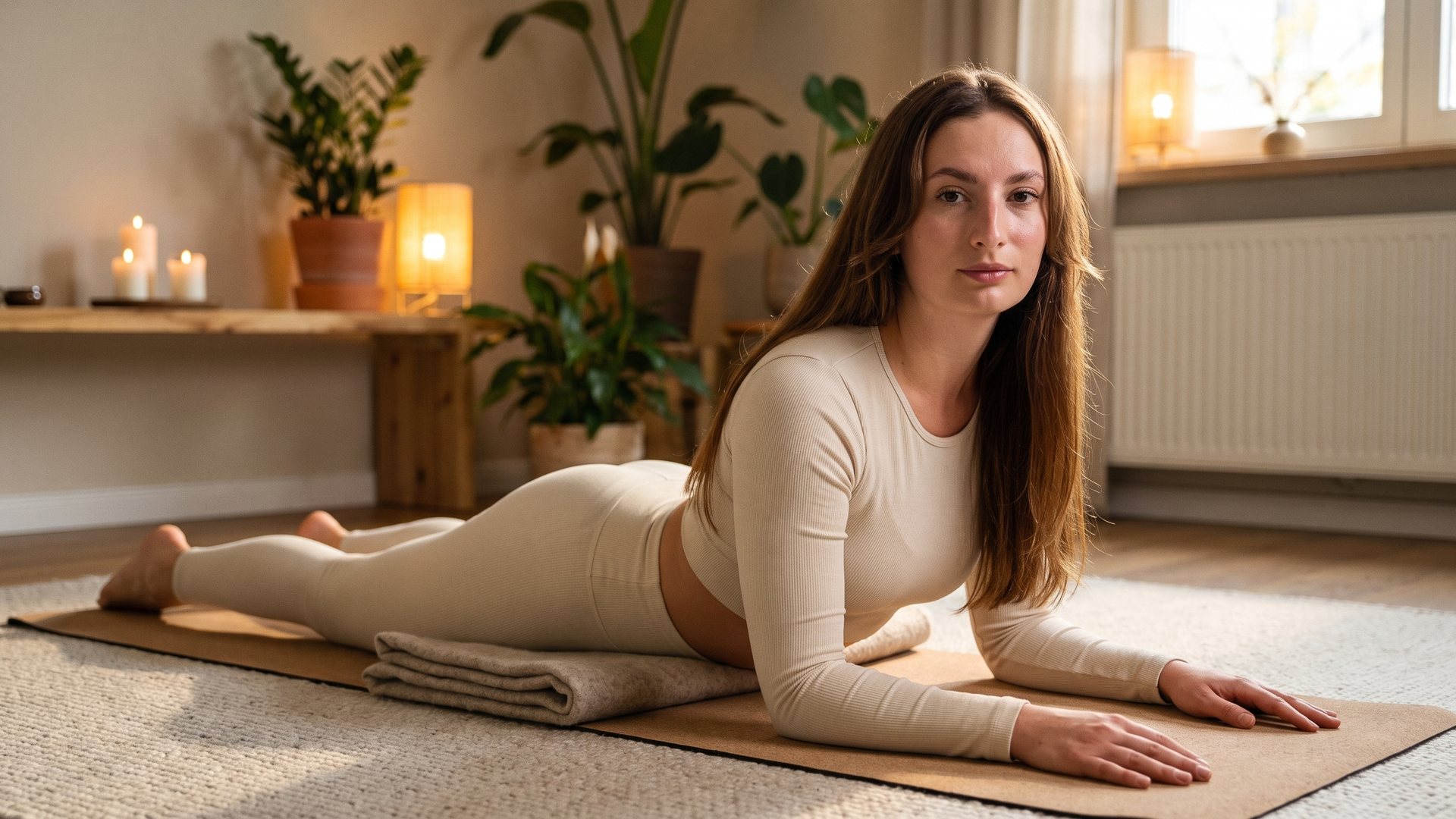
Sphinx Pose: A gentle backbend on your forearms that opens the chest without deep strain.
What to Expect at Your First Yin Yoga Class
Arrival & Opening
You’ll arrive at Your Ritual Yoga and settle into the peaceful space. The studio’s calm atmosphere naturally invites your nervous system to begin relaxing.
Class begins with seated meditation, breathwork, and intention-setting. You’re invited to arrive fully—to notice your current state and open to whatever the practice brings.
Warm-up Movement
Brief, gentle movements prepare your body—cat-cows, shoulder rolls, easy forward folds. The warm-up is minimal because Yin poses are held in a relaxed state.
Main Practice: Extended Pose Holds
Here’s the heart of Yin yoga. You’ll move into 4-6 different poses, each held for 3-5 minutes (sometimes longer).
Here’s what happens in a typical pose hold:
Setup (1-2 minutes): Tanya guides you into the pose with careful attention to alignment. Props (bolsters, blocks, blankets) are placed to make you comfortable.
Settling (1-2 minutes): You’re invited to relax muscles and let gravity do the work. Your job is to surrender effort.
The Hold (2-5 minutes): You rest in the pose, breathing consciously. You might notice:
– Physical sensations—stretching, warmth, release
– Emotional feelings—peace, sadness, release
– Mental states—stillness, meditation, or thought activity
Awareness: Tanya invites you to observe without judgement. You’re learning to be present with whatever arises.
Exiting (1 minute): You slowly come out of the pose, noticing any sensations or feelings that surface.
Unlike fast-paced yoga where you’re constantly moving, Yin’s stillness allows deep awareness. Many students report that extended holds are profoundly meditative.
Breathing & Integration
Before final relaxation, brief breathwork integrates your practice and deepens nervous system calm.
Shavasana with Sound Healing
You lie fully supported in complete relaxation. As your body releases tension and nervous system settles, Tanya plays singing bowls—their vibrations deepen relaxation and create profound peace.
Many students describe this as the most peaceful experience they’ve had.
Tea Ritual
After class, you transition gently to tea time—sharing herbal tea, reflecting on your practice, connecting with community.
Tips for Your First Yin Class
Come with Patience
Yin might feel strange initially—“just lying here” can feel ineffective compared to more active yoga. Trust that stillness creates profound change.
Listen to Your Body
Yin poses are gentle, but you should feel sensation without pain. If anything feels sharp or wrong, adjust or skip the pose. Tell Tanya.
Expect Emotions
Yin releases emotions stored in the body. Crying or emotional feelings are completely normal and healthy. We create safe, non-judgemental space for whatever arises.
Silence Is Welcome
Unlike some yoga classes, Yin classes are quiet. You’re not learning choreography or flowing to music. You’re practising genuine stillness.
Wear Warmer Clothes
Since you’ll be still for extended periods, your body temperature drops. Bring extra layers or wear warmer clothing than in active classes.
Drink Extra Water
Yin’s deep release of tissue and emotions requires hydration. Drink water after class.
Stay for the Whole Class
Especially stay for Shavasana and tea. These are when deepest benefits happen.
Yin Yoga Poses Explained: Finding Your Edge
A key concept in Yin yoga is “finding your edge”—the amount of sensation that creates change without strain.
The Goldilocks Principle
Too little sensation: No change happens. You need some stretching sensation.
Too much sensation: You trigger protective muscle contraction. The tissue tightens rather than releases.
Just right: You feel a gentle, steady sensation of stretching without sharp pain.
Tanya guides you to find your personal edge. It might be different from the person next to you—and that’s perfect. Your practice is uniquely yours.
Breathwork in Yin Poses
As you hold poses, your job is simply to breathe consciously. Extended exhale breathing (exhale longer than inhale) particularly activates the parasympathetic nervous system.
You might count: Inhale for 4, exhale for 6. This simple practice deepens relaxation.
Common Questions About Yin Yoga
Q: Is Yin yoga really a “real” workout?
A: Yes, but differently. While you’re not building cardiovascular fitness or significant muscle, you’re achieving profound tissue release, nervous system regulation, and emotional healing. The effects are often more transformative than intense exercise.
Q: I’m very flexible. Will Yin yoga be too easy?
A: Often, very flexible people discover Yin yoga is surprisingly challenging. Flexibility doesn’t mean emotional release. Many naturally flexible people find intense emotional experience in Yin as their bodies release long-held patterns.
Q: I’m very stiff. Won’t Yin hurt?
A: Props make every pose accessible. You’re never pushed into pain. Over time, stiffness naturally releases.
Q: Can I do Yin and Hatha together?
A: Absolutely. Many practitioners do both—Hatha for strength and heat, Yin for balance and relaxation. This creates complete practice.
Q: How often should I practise Yin?
A: Even once weekly creates benefits. 2-3x weekly creates significant transformation. Consistent practice matters more than frequency.
Creating Your Yin Yoga Practice
Finding Your Practice Rhythm
Beginner: Start with 1-2 Yin classes weekly. Notice how your body and nervous system respond.
Developing: As you experience benefits, increase to 2-3x weekly if possible.
Committed: Many advanced practitioners practice Yin 3-4x weekly, often balancing with other styles.
Home Practice
Yin can be practised at home with minimal equipment. A mat, some pillows, and the willingness to hold poses for several minutes is enough.
Simple home practice:
– Butterfly Pose (3 minutes)
– Dragon Pose each side (3 minutes each)
– Caterpillar Pose (3 minutes)
– Supine Twist (2 minutes each side)
– Legs-Up-the-Wall (5-10 minutes)
– Shavasana (5-10 minutes)
This basic sequence addresses most areas of tension and takes about 35 minutes.
Combining Yin with Other Practices
Yin + Meditation: Extend Shavasana into meditation.
Yin + Journaling: After practice, journal about emotions or insights that surfaced.
Yin + Breathwork: Practice advanced pranayama before or after Yin.
Yin + Nature: Practice outdoors when weather permits, deepening grounding.
The Deeper Purpose of Yin Yoga
While Yin yoga offers tremendous physical and mental benefits, its deepest purpose is learning to receive—to surrender effort and trust that your body knows how to heal itself.
In a culture obsessed with doing, controlling, and achieving, Yin teaches something revolutionary: the power of being still and allowing.
This philosophy extends beyond the mat. Yin practitioners often find themselves more accepting in daily life, less driven to constantly achieve, more able to rest and receive help from others.
Scientific Research on Yin Yoga
While Yin yoga is newer than many yoga styles, research is emerging showing significant benefits:
Stress reduction: Studies show Yin yoga reduces cortisol and increases parasympathetic activation.
Sleep improvement: Research demonstrates Yin yoga improves sleep quality and reduces insomnia.
Anxiety relief: Participants show decreased anxiety after consistent Yin practice.
Flexibility: Despite (or because of) holding poses longer, Yin practitioners develop significant flexibility gains.
Pain reduction: Studies show Yin yoga reduces chronic pain, particularly lower back pain and arthritis pain.
As research continues, Yin yoga’s benefits are becoming increasingly documented.
Getting Started: Your Path Forward
Whether you’re completely new to yoga or an experienced practitioner seeking balance, Yin yoga offers profound healing.
Here’s your path forward:
Step 1: Book your first Yin class at Your Ritual Yoga in Golders Green.
Step 2: Come with curiosity, patience, and willingness to experience stillness.
Step 3: Practice consistently (2-3x weekly) for at least 4-6 weeks to experience real transformation.
Step 4: Notice changes—in sleep quality, stress levels, body tension, emotional state, mental clarity.
Step 5: Deepen your practice through consistent attendance, home practice, and perhaps personal training.
Final Thoughts
Yin yoga is an invitation to remember something our modern world has made us forget: the power of rest, the wisdom of your body, and the profound healing that happens when you stop pushing and start receiving.
Whether you’re seeking relief from chronic stress, healing from trauma, improving sleep, releasing physical tension, or simply finding peace in a chaotic world, Yin yoga offers a clear path forward.
The invitation is simple: come to your first class and experience it for yourself.
About Tanya
Tanya is a Yoga Alliance RYS 200-certified Hatha and Yin yoga teacher (Reg. ID 252157), trained at Devvrat Yoga School in Varkala, India (200-hour intensive, December 2025) under Rakesh Kumar. She teaches small-class, ritual-led Hatha and Yin yoga in Golders Green, NW11 London — integrating singing-bowl sound healing in Shavasana and a post-class herbal tea ritual.
Read more about Tanya · See the weekly schedule · Enquire about private sessions