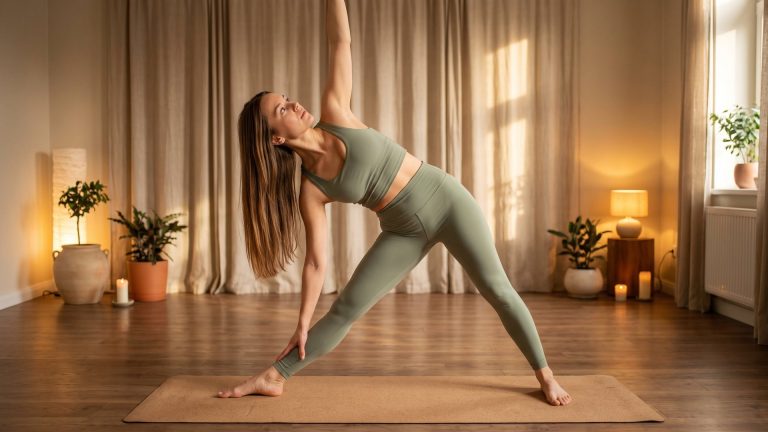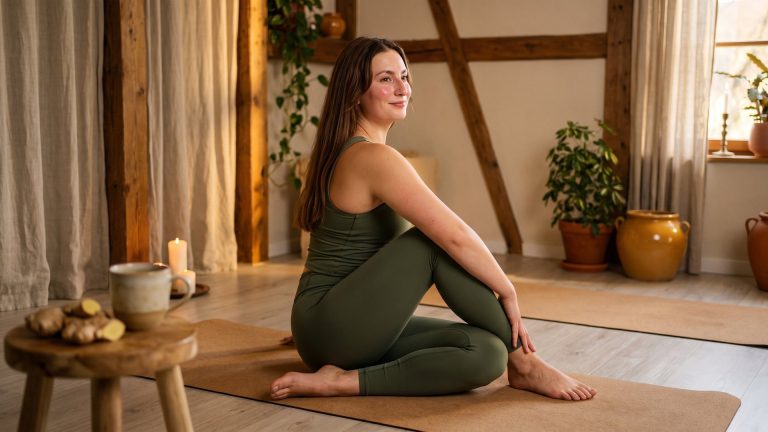
Stress has become the defining challenge of modern life. Work demands escalate. Devices demand constant attention. News cycles amplify fear. Sleep suffers. Mental health declines. Our nervous systems are chronically activated in the fight-flight-freeze response—a state that our ancestors experienced occasionally in genuine emergencies, but we now experience daily from digital and psychological threats.
The consequences are severe: increased cortisol (stress hormone) creates inflammation, weight gain, weakened immunity, poor sleep, and accelerated aging. Chronic anxiety develops. Depression emerges. Burnout follows.
Yet one of the most effective stress-relief tools available is ancient, simple, and free: yoga.
In this comprehensive article, I’ll explain the neuroscience of stress, show exactly how yoga counteracts stress responses, share the research documenting yoga’s effectiveness, and guide you towards using yoga as your primary stress-relief tool.
Understanding Stress: The Nervous System Under Siege
To understand how yoga relieves stress, we must first understand what stress actually does to your nervous system.
The Fight-Flight-Freeze Response
Your nervous system has an ancient mechanism designed for survival in physical danger. When you encounter a threat (real or perceived), your nervous system automatically activates a stress response:
What happens:
– Your sympathetic nervous system activates
– Adrenaline and cortisol flood your bloodstream
– Your heart rate increases
– Your breathing quickens
– Your muscles tense, ready to fight or flee
– Blood diverts from digestion to muscles
– Rational thinking decreases; instinctual response heightens
– Your immune system suppresses (conserving energy for survival)
When it’s helpful: When you face actual danger requiring immediate action, this response is lifesaving.
When it’s destructive: When this response activates daily from email stress, traffic, work deadlines, or news scrolling, it becomes pathological. Your body never relaxes. Cortisol remains chronically elevated. Your nervous system remains stuck in “red alert.”
The Stress Cascade
Chronic stress creates a cascade of physiological dysfunction:
Elevated Cortisol: The primary stress hormone, cortisol suppresses immunity, increases inflammation, promotes fat storage (especially abdominal), disrupts sleep, and accelerates aging.
Impaired Immune Function: Chronic stress suppresses immunity, making you more susceptible to infection and disease.
Inflammation: Stress promotes systemic inflammation—the root of most chronic disease.
Sleep Disruption: Cortisol dysregulation destroys sleep architecture. You might sleep but not deeply, never reaching restorative stages.
Digestive Issues: Chronic sympathetic activation suppresses digestion, creating IBS, constipation, acid reflux, and nutrient malabsorption.
Cognitive Decline: Chronic stress damages the hippocampus (memory centre) and impairs executive function (decision-making, planning).
Mental Health Decline: Anxiety and depression develop as byproducts of chronic nervous system dysregulation.
How Yoga Counteracts Stress: The Science
The remarkable thing about yoga is that it directly addresses the nervous system dysfunction causing stress and anxiety.
Activation of the Parasympathetic Nervous System
While stress activates your sympathetic nervous system (fight-flight-freeze), yoga activates your parasympathetic nervous system (rest-digest-recover).
What the parasympathetic response does:
– Heart rate decreases
– Blood pressure drops
– Breathing deepens and slows
– Digestion activates
– Immune function strengthens
– Cortisol decreases
– Inflammation decreases
– Sleep deepens
– You feel calm and peaceful
Remarkably, your body can’t be in sympathetic activation and parasympathetic activation simultaneously. It’s either-or. By activating parasympathetic response through yoga, you literally turn off stress response.
Breathwork: Hacking Your Nervous System
One of yoga’s most powerful stress-relief tools is conscious breathing (pranayama). Your breath is unique because it’s both automatic and voluntary—you can consciously control something your nervous system usually manages automatically.
How breathing affects nervous system:
Normal stress breathing: Short, shallow, fast. This pattern signals your nervous system that danger is present, perpetuating fight-flight response.
Calm breathing: Deep, slow, with longer exhales. This pattern signals safety, activating parasympathetic response.
Extended exhale breathing: Making your exhale longer than your inhale (e.g., inhale for 4, exhale for 6) is perhaps the most direct nervous system hack available. Extended exhales directly activate your parasympathetic response.
By simply changing how you breathe—lengthening your exhale—you directly signal your nervous system to relax. This is neuroscience applied to your physiology.
Reduced Cortisol & Stress Hormones
Multiple studies demonstrate that yoga directly reduces cortisol and other stress hormones:
Research findings:
– Regular yoga practice reduces cortisol by 25-30%
– A single yoga session decreases cortisol by 11-25%
– Yoga reduces adrenaline and other sympathetic hormones
– These reductions occur within weeks of consistent practice
This isn’t placebo—these are measurable biological changes. Your body literally produces fewer stress hormones with regular yoga practice.
Increased GABA Production
GABA (gamma-aminobutyric acid) is a neurotransmitter that promotes calm and reduces anxiety. Chronically stressed people often have low GABA.
The remarkable finding: Yoga increases GABA production in the brain. After 60 minutes of yoga practice, GABA levels increase by 27%. This increase is comparable to pharmaceutical anxiety medications—but without the side effects.
Improved Heart Rate Variability
Heart rate variability (HRV)—the natural variation in time between heartbeats—is a marker of nervous system health. Low HRV indicates inflexibility and stress; high HRV indicates resilience and health.
Yoga improves HRV, indicating that your nervous system becomes more flexible and resilient—better able to handle stress.
Reduced Inflammation
Chronic stress promotes inflammation, which causes most modern disease. Yoga reduces inflammation markers (C-reactive protein, inflammatory cytokines), addressing the root cause of stress-related disease.
How Different Yoga Styles Support Stress Relief
Different yoga approaches offer complementary benefits for stress relief:
Hatha Yoga for Stress Relief
How it helps:
– Slower pace allows genuine relaxation
– Alignment focus creates body awareness, interrupting anxious thought loops
– Conscious breathing naturally calms nervous system
– Physical practice burns stress hormones and creates catharsis
– Extended holds allow deep parasympathetic activation
Best for: People wanting active practice that simultaneously relieves stress. Hatha provides the “workout” people crave while delivering nervous system benefits.
Typical benefits: Students report feeling noticeably calmer, clearer, and more focused for hours after Hatha practice. Sleep improves within days.
Yin Yoga for Stress Relief
How it helps:
– Extended holds deeply activate parasympathetic response
– Minimal effort allows genuine surrender and release
– Deep relaxation provides nervous system reset
– Often triggers emotional release—stress stored in body releases
– Extremely effective for sleep and deep relaxation
Best for: People with severe stress, anxiety, or sleep issues. Yin’s depth of relaxation is unmatched.
Typical benefits: Students often report profound emotional release and sense of lightness after Yin practice. Sleep quality often improves dramatically.
Combining Styles
Many practitioners find that combining Hatha (for active engagement and strength) and Yin (for deep relaxation and nervous system reset) creates optimal stress relief.
The Research: Yoga’s Effectiveness for Anxiety & Stress
Scientific evidence supporting yoga for stress relief is overwhelming:
Clinical Studies on Anxiety
Harvard study: Yoga reduces anxiety by 27% after 8 weeks of practice, comparable to medication.
NIH review: Analysis of 25 studies showed yoga significantly reduces anxiety across diverse populations.
Military research: The Army now incorporates yoga into stress management and PTSD treatment, based on strong evidence of effectiveness.
Workplace studies: Companies implementing yoga see 30-40% reduction in employee stress and anxiety.
Sleep Improvement
Yale research: 65% of people practising yoga report improved sleep.
Journal of Clinical Sleep Medicine: Yoga increases melatonin production and improves sleep architecture.
Insomnia studies: Yoga rivals pharmaceutical sleep aids in effectiveness for insomnia, without side effects.
Cortisol & Stress Hormone Studies
Journal of Alternative and Complementary Medicine: 16 studies documented yoga’s cortisol reduction.
JAMA Psychiatry: Yoga reduces cortisol by 25% in people with PTSD.
Endocrinology research: Even 10 minutes of daily yoga reduces cortisol over time.
Specific Yoga Practices for Stress Relief
Pranayama: Breathing Practices
Extended Exhale Breathing:
– Inhale for count of 4
– Exhale for count of 6 or 8
– Practice for 5-10 minutes daily
– Creates immediate parasympathetic activation
Alternate Nostril Breathing (Nadi Shodhana):
– Balances left and right hemispheres
– Calms racing mind
– Practice 5-10 minutes
– Ancient practice used in all yoga traditions
Ujjayi Breathing (Victorious Breath):
– Slight constriction in throat creates ocean-like sound
– Naturally calming
– Can be practised throughout day
– Interrupts stress patterns
Asanas: Stress-Relieving Poses
Forward Folds: Invert your head below heart, signalling safety to nervous system. Stretches back body where tension accumulates.
Supported Fish Pose: Opens chest and front body—areas where we hold anxiety—while being supported and safe.
Legs-Up-the-Wall: Restorative inversion that drains stress, calms nervous system, supports parasympathetic activation.
Child’s Pose: Safe, grounding pose that naturally calms. Return to it anytime during practice.
Corpse Pose (Shavasana): Complete relaxation where deepest stress relief occurs.
Meditation: Calming the Mind
Body Scan Meditation: Notice sensations throughout body without judgement. This interrupts anxious thought loops by anchoring attention in present moment.
Breath Awareness Meditation: Simply observe your breath. This naturally calms racing thoughts.
Loving-Kindness Meditation: Cultivate compassion towards yourself and others. Research shows this reduces anxiety and increases emotional resilience.
Creating Your Stress-Relief Yoga Practice
Finding Your Frequency
Minimum: 1-2x weekly yoga creates noticeable stress reduction.
Optimal: 3-4x weekly creates significant transformation. For severe anxiety or stress, daily practice is ideal.
Why consistency matters: Nervous system retraining requires regular signals. Sporadic practice doesn’t create lasting change.
Structuring Your Practice for Maximum Stress Relief
Ideal practice:
1. Opening: 5 minutes centring and intention-setting
2. Pranayama: 5-10 minutes conscious breathing
3. Physical practice: 30-40 minutes of gentle to moderate movement
4. Closing pranayama: 5 minutes extended exhale or alternate nostril breathing
5. Meditation: 10-15 minutes seated or lying meditation
6. Shavasana: 10-15 minutes deep relaxation
This 75-90 minute practice creates comprehensive nervous system reset.
Daily 20-Minute Stress-Relief Practice
For busy people:
– 5 minutes pranayama (extended exhale or alternate nostril)
– 10 minutes gentle poses (forward folds, child’s pose, supported positions)
– 5 minutes Shavasana
Even this brief practice creates measurable stress reduction.
When to practise for Stress Relief
Evening practice: Most effective for sleep support and nervous system settling before bed.
Morning practice: Prepares your nervous system for day ahead, creating resilience for upcoming stress.
Afternoon practice: Resets nervous system in middle of stressful day.
Ideally: Morning practice for resilience, evening practice for sleep.
Beyond the Mat: Integrating Stress Relief into Daily Life
While yoga classes are powerful, integrating stress-relief practices into daily life amplifies benefits:
Conscious Breathing Throughout Day
Whenever you notice stress (tight shoulders, racing thoughts, clenched jaw):
1. Pause
2. Take 5 extended exhale breaths (inhale 4, exhale 6)
3. Notice how your nervous system shifts
This simple practice creates ongoing stress relief.
Body Awareness
Develop sensitivity to where you hold stress (shoulders, jaw, chest, gut). When you notice tension:
1. Consciously relax that area
2. Take deeper breaths
3. Adjust your posture
This interrupt stress patterns throughout day.
Mindfulness
Bring yoga’s awareness to daily activities:
– Eat mindfully, noticing flavors and sensations
– Walk mindfully, feeling your feet contact ground
– Listen mindfully, giving full attention to people
– Work mindfully, maintaining presence with tasks
This practice extends yoga’s benefits throughout your entire life.
Sleep Hygiene
Combine yoga practice with good sleep habits:
– Practice in evening
– Avoid screens 1 hour before bed
– Keep bedroom cool and dark
– Maintain consistent sleep schedule
When to Seek Additional Support
While yoga is powerful, severe anxiety or trauma sometimes requires additional professional support:
- Therapy: Talk therapy (especially trauma-informed therapy) addresses underlying issues
- Medical care: Sometimes medication is necessary and helpful
- Integrated approach: Yoga + therapy + appropriate medical care often creates best results
Yoga is complementary to professional care, not replacement.
The Deeper Truth About Stress & Yoga
Modern stress isn’t a personal weakness or failure—it’s the natural response of your nervous system to contemporary life’s overwhelming demands. You’re not broken; you’re having a normal response to abnormal stress.
Yoga doesn’t ignore stress or minimise it. Instead, yoga provides tools for nervous system regulation—allowing you to respond to stress consciously rather than being overwhelmed by automatic reactions.
Over time, consistent yoga practice creates something remarkable: your baseline stress level decreases. Situations that previously triggered anxiety no longer do. You develop resilience—the capacity to handle challenges without being overwhelmed.
This isn’t positivity or mind-over-matter. It’s nervous system retraining through regular practice.
Getting Started: Your Path to Stress Relief Through Yoga
Step 1: Commit to Consistent Practice
Choose a realistic commitment:
– Beginner: 2 classes weekly
– Developing: 3 classes weekly
– Committed: 4+ classes weekly plus home practice
Consistency matters more than intensity.
Step 2: Choose Your Style
- More active/engaging: Try Hatha yoga
- Deep relaxation: Try Yin yoga
- Both benefits: Combine both styles
Step 3: Show Up
Come to class with intention. Let your teacher know about stress or anxiety so they can personalise guidance.
Step 4: Practice Patience
Real nervous system changes take weeks. After 2-4 weeks of consistent practice, benefits become noticeable. After 2-3 months, transformation is typically significant.
Step 5: Extend Into Daily Life
Practice conscious breathing, body awareness, and mindfulness outside class.
About Tanya
Tanya is a Yoga Alliance RYS 200-certified Hatha and Yin yoga teacher (Reg. ID 252157), trained at Devvrat Yoga School in Varkala, India (200-hour intensive, December 2025) under Rakesh Kumar. She teaches small-class, ritual-led Hatha and Yin yoga in Golders Green, NW11 London — integrating singing-bowl sound healing in Shavasana and a post-class herbal tea ritual.
Read more about Tanya · See the weekly schedule · Enquire about private sessions