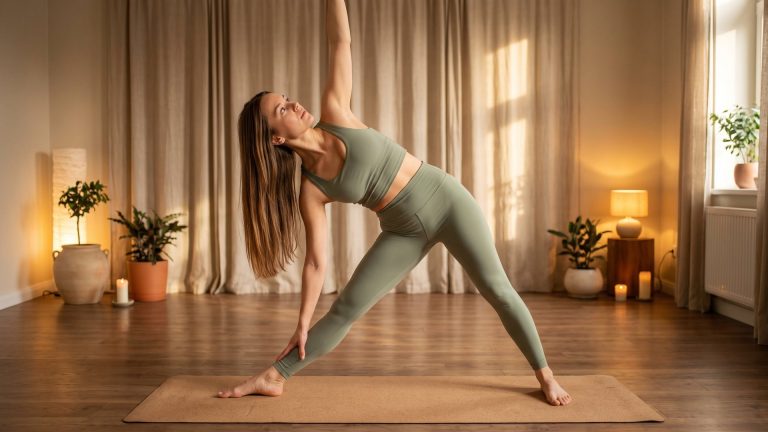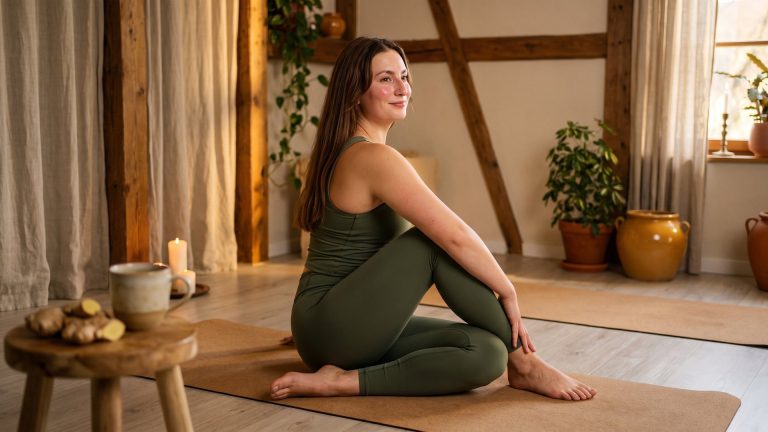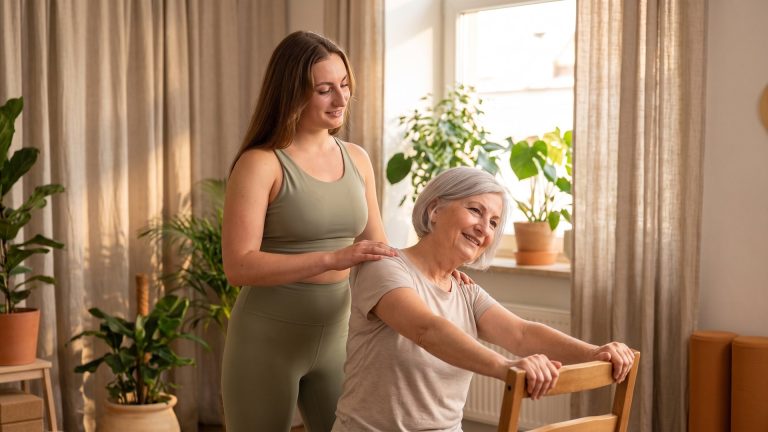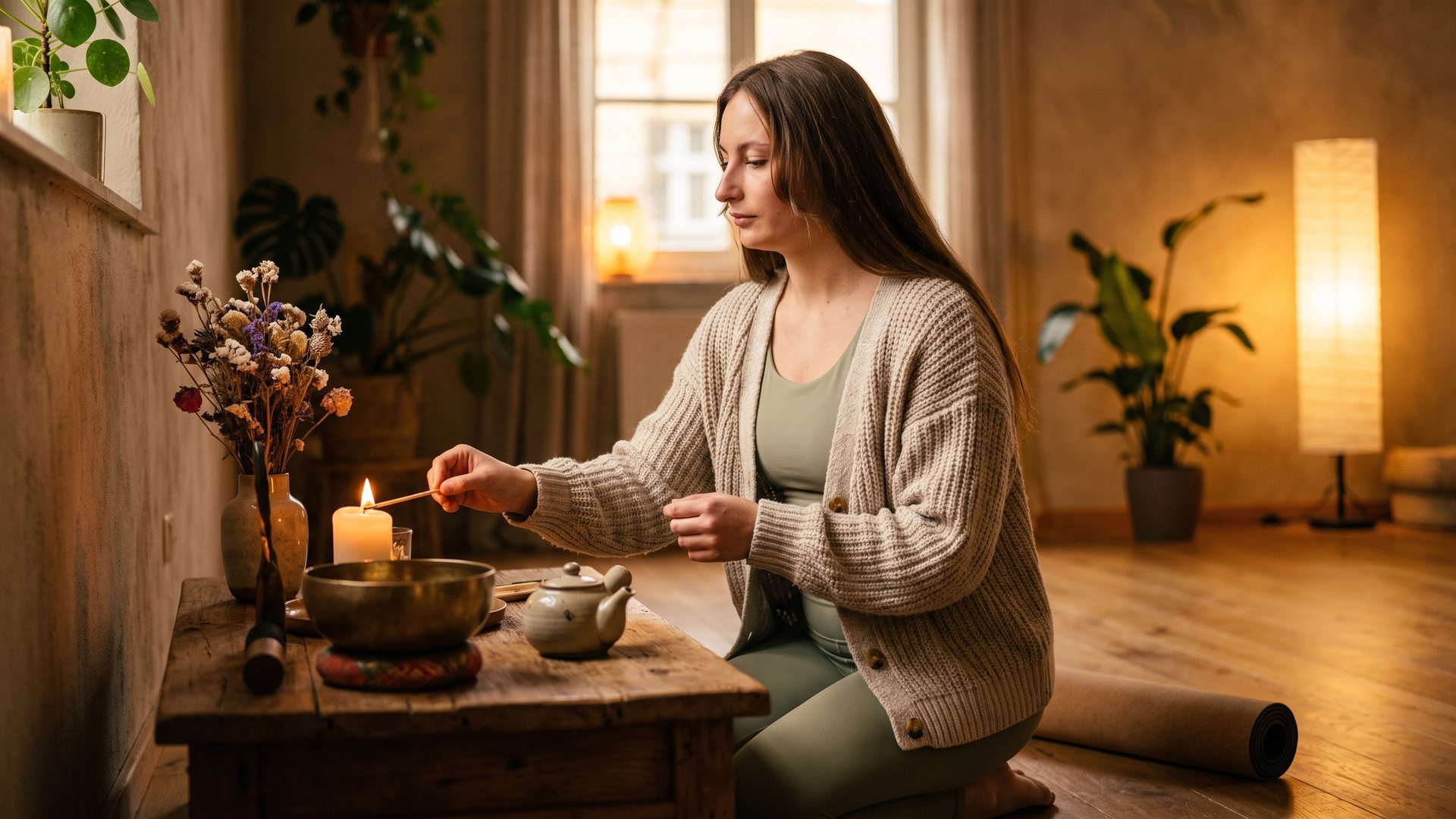
There’s a difference between “doing yoga” and “practising yoga ritual.”
You can execute the same poses, the same breathing techniques, the same relaxation—but approached as exercise versus approached as ritual—and get completely different results.
Ritual transforms yoga from physical activity into transformational practice. It changes how your nervous system responds. It deepens healing. It creates meaning and connection that exercise alone cannot achieve.
In this article, I’ll explain what ritual is, why it matters, and how to turn your yoga practice into sacred ritual that genuinely transforms your life.
What Is Ritual? Ancient Wisdom, Modern Necessity
A ritual is a repeated, intentional action performed with awareness and reverence. Rituals appear in every culture and throughout human history because humans instinctively understand their power.
Why Rituals Matter
Rituals create structure in chaos: In unpredictable lives, rituals provide anchoring points—moments of intentionality and meaning amid randomness.
Rituals activate meaning: The same action performed mechanically versus performed as ritual creates completely different psychological effects. A cup of tea is hydration; tea ritual is medicine for the soul.
Rituals engage the body AND mind: Unlike intellectual understanding, rituals involve your whole being—body, emotions, mind, and spirit.
Rituals create neurological shifts: Repeated rituals literally change your brain structure and function. They create new neural pathways.
Rituals connect us to something larger: Whether spiritual or simply meaningful, rituals connect us to purpose beyond immediate individual needs.
Modern Ritual Deficit
Modern life has largely abandoned meaningful ritual. We’ve replaced sacred rituals with efficiency. We’ve replaced intentional gathering with isolated consumption. We’ve replaced meaning-making with productivity.
The result? Increased anxiety, depression, and disconnection despite unprecedented material comfort.
Yoga ritual—practised with awareness and intention—restores what modern life has stripped away.
How Yoga Becomes Ritual
The Shift from Exercise to Ritual
Exercise approach:
– Goal: Fitness, flexibility, strength
– Mindset: Doing, achieving, checking boxes
– Relationship: Transactional (I do yoga to get results)
– Connection: Often isolated
– Meaning: Health benefits
– Nervous system: Sympathetic activation (achievement mindset)
Ritual approach:
– Goal: Presence, connection, transformation
– Mindset: Being, opening, receiving
– Relationship: Relational (Yoga and I meeting each other)
– Connection: Often communal
– Meaning: Spiritual/existential significance
– Nervous system: Parasympathetic activation (safe, received)
The poses might be identical, but the orientation is completely different.
Key Elements of Yoga Ritual
Intentionality: You practice with clear purpose and awareness. Before practice, you clarify your intention. During practice, you maintain attention on this intention.
Consistency: Rituals are repeated. The consistency creates neurological grooves—the ritual becomes increasingly powerful with repetition.
Sacred space: You create or use a space that feels sacred—clean, beautiful, intentional. Your nervous system recognises this space as different from ordinary life.
Specific timing: Rituals often occur at specific times. This consistency helps your body anticipate and prepare for the ritual state.
Sensory elements: Rituals engage the senses—perhaps incense, candles, music, tea. These sensory anchors deepen the ritual effect.
Community (optional but powerful): Rituals often involve others. Group practice creates energetic amplification and shared meaning.
Closing/integration: Rituals have clear closure, not abrupt ending. The tea ritual after Your Ritual Yoga classes is intentional closure allowing integration.
Creating Your Yoga Ritual
Solo Home Ritual
Step 1: Prepare your space
– Dedicate a corner to your practice
– Clean it thoroughly
– Add elements that feel sacred to you (candles, plants, altar, images, etc.)
– Make it beautiful and intentional
Step 2: Choose your time
– Same time daily creates consistency your nervous system learns to anticipate
– Morning ritual sets the day’s tone
– Evening ritual prepares you for sleep
– Both is ideal
Step 3: Begin with intention
– Light a candle
– Sit comfortably
– Close your eyes
– Clarify your intention: “I practise for peace,” “I practise for healing,” “I practise for strength,” “I practise for connection”
Step 4: Practice with awareness
– Rather than rushing through poses, practice each with full presence
– Notice sensations, breath, emotions
– Let go of performance—this isn’t about achievement
Step 5: Close mindfully
– Don’t jump up after final pose
– Lie in Shavasana for 10-15 minutes minimum
– Meditate or rest in complete surrender
– Slowly return to consciousness
Step 6: Integrate
– Sit quietly for 2-3 minutes after practice
– Journal about your experience
– Drink tea mindfully
– Notice how you carry the practice into your day
This entire ritual—perhaps 60-90 minutes—becomes far more than “doing yoga.”
Studio Ritual (Like Your Ritual Yoga)
practising in a studio designed as sacred space amplifies ritual:
Arrival ritual: You arrive early. You settle. You begin shifting from ordinary consciousness to practise consciousness.
Opening ritual: The teacher guides opening centring, breath work, intention-setting. You’re consciously entering ritual space.
Practice: You practice with full attention, guided by expert instruction.
Sound healing ritual: During Shavasana, singing bowls create profound parasympathetic activation and spiritual opening.
Tea ritual: After practice, you transition slowly through tea ritual—community, reflection, integration.
Departure ritual: You leave slowly, carrying peace with you, consciously re-entering ordinary life.
This entire sequence—from arrival through departure—is intentional ritual.
Weekly Ritual Deepening
Beyond individual practice, create larger rituals:
Weekly practice commitment: Every Monday evening, I attend yoga class. This weekly anchor creates structure and intention.
Monthly ceremonies: Once monthly, gather with other practitioners for deeper practice, perhaps a longer session, perhaps special focus.
Seasonal rituals: Celebrate seasonal changes with specific practices—spring renewal, summer vitality, autumn release, winter rest.
Annual retreat: Once yearly, spend extended time in deep practice—a weekend or week-long yoga retreat where daily rituals deepen.
The Science of Ritual: Why It Works
While rituals feel spiritual and meaningful, they also create measurable neurological changes:
Neuroplasticity & Repeated Practice
Repeated rituals literally change your brain structure through neuroplasticity:
– New neural pathways form
– The ritual becomes increasingly automatic
– Your nervous system learns to anticipate the ritual state
– Over time, entering ritual space becomes easier
Dopamine & Anticipation
Consistent rituals create dopamine release in anticipation of the ritual:
– Weekly yoga ritual becomes something your brain anticipates and rewards
– This creates positive feedback loop—you’re drawn to practise
– Motivation shifts from discipline to desire
Vagal Tone & Parasympathetic Activation
Repeated rituals that activate parasympathetic response (yoga’s breathing, relaxation, community) strengthen your vagus nerve:
– Improved vagal tone means your nervous system more easily accesses relaxation
– Your baseline stress level decreases
– You become more resilient
Meaning-Making & Neurological Reward
Human brains are meaning-making organisms. Rituals create meaning:
– Meaning activates reward centres in your brain
– Meaningful activity creates neurological pleasure and motivation
– This is why ritual practice creates deeper benefits than mere exercise
Common Ritual Obstacles & How to Overcome Them
“I don’t have time for ritual”
Ritual doesn’t require hours. Even 20 minutes of intentional practice is far more powerful than 60 minutes of distracted exercise.
Start with 20 minutes:
– 5 minutes settling and intention
– 10 minutes physical practice
– 5 minutes rest and integration
Consistency matters infinitely more than duration.
“I feel silly with ritual elements like candles or intention”
The awkwardness is temporary. Within weeks, ritual feels natural. The “silliness” is actually ego resistance to slowing down and being present.
Start simple: Just sit quietly before practice with intention. Gradually add other elements as they feel authentic.
“I’m not spiritual, so ritual doesn’t apply to me”
Ritual doesn’t require belief in anything supernatural. Ritual is about intentional presence and meaning-making. Even secular people benefit from ritual’s neurological and psychological effects.
“I can’t stay consistent”
Start smaller:
– 2 times weekly instead of daily
– 15 minutes instead of 60
– One element (just intention) instead of multiple
Consistency with small commitment beats sporadic ambitious commitment.
Ritual as Spiritual Practice
For those interested, yoga ritual can deepen spiritually:
Mantra: Using Sanskrit mantras during practice connects you to ancient yogic tradition and creates vibrational effects.
Pranayama philosophy: Understanding that breath is life force (prana) transforms breathing practice into spiritual connection.
Chakra awareness: Focusing on energy centres during practice deepens spiritual experience.
Philosophy study: Understanding yoga philosophy (Yamas, Niyamas, etc.) gives ritual deeper meaning.
Meditation depth: Moving beyond “stress relief” meditation towards genuine spiritual inquiry.
This deepening is optional—ritual benefits everyone regardless of spiritual beliefs—but available for those drawn to it.
Ritual at Your Ritual Yoga
The studio name “Your Ritual Yoga” reflects our understanding of yoga’s ritual nature:
Our studio design creates sacred space—calm, beautiful, intentional.
Our opening ritual of centring and intention-setting prepares your consciousness.
Sound healing ritual with singing bowls amplifies parasympathetic activation and spiritual opening.
Tea ritual creates intentional transition and community.
Our teaching approach honours yoga’s sacred dimensions.
Every element is designed to support your practice as genuine ritual, not mere exercise.
Rituals Beyond the Mat: Life Integration
The power of yoga ritual extends beyond classes. As you deepen practice, ritual naturally extends to daily life:
Morning ritual: Begin each day with intention, breathwork, or brief meditation. This transforms your entire day.
Mindful transitions: Use conscious breathing and presence as ritual between activities.
Eating ritual: Transform meals into mindful rituals—gratitude, awareness, presence.
Sleep ritual: Create evening ritual preparing your nervous system for sleep—dimmed lights, tea, gentle stretches, meditation.
Weekly gathering: Make your weekly yoga class non-negotiable ritual anchor.
Connection ritual: Regular practice creates friendships. Intentional time with these community members becomes meaningful ritual.
These life rituals, rooted in your yoga practice, transform how you move through existence.
Getting Started: Your Ritual Practice
Week 1: Establish Space & Time
- Choose your practice time (morning or evening)
- Prepare a dedicated space
- Commit to 3x this week
Week 2: Add Intention
- Before practice, sit quietly and set your intention
- Practice with awareness of this intention
- Notice how this shifts your practice
Week 3: Deepen Closure
- Add Shavasana after every practice (minimum 10 minutes)
- Slowly return to consciousness
- Sit in quiet reflection before moving on
Week 4: Add Community
- Join a studio class (like Your Ritual Yoga)
- Experience group ritual’s amplification
- Participate in post-class tea ritual if available
Week 5: Expand Integration
- Extend ritual elements into daily life
- Morning intention-setting
- Mindful transitions
- Evening sleep ritual
Week 6+: Deepen
- Notice how ritual transforms your practice and life
- Explore deeper elements (philosophy, mantra, chakras) if drawn
- Commit to long-term practice
The Ultimate Promise of Ritual
Ritual doesn’t just improve your yoga practice. It transforms how you live.
When you approach yoga (and life) with ritual—with intention, presence, and meaning—everything changes. Stress transforms into practice fuel. Challenges become teachers. Ordinary moments become sacred.
This isn’t mysticism. It’s the neurological and psychological reality of how humans thrive: through meaning, intention, and sacred practice.
About Tanya
Tanya is a Yoga Alliance RYS 200-certified Hatha and Yin yoga teacher (Reg. ID 252157), trained at Devvrat Yoga School in Varkala, India (200-hour intensive, December 2025) under Rakesh Kumar. She teaches small-class, ritual-led Hatha and Yin yoga in Golders Green, NW11 London — integrating singing-bowl sound healing in Shavasana and a post-class herbal tea ritual.
Read more about Tanya · See the weekly schedule · Enquire about private sessions