You lie awake at 2 AM, mind racing. You fall asleep, then wake at 4 AM and can’t return to sleep. You wake exhausted despite “sleeping” 8 hours. Your sleep is fractured, unrefreshing, exhausting.
Sleep deprivation is the silent epidemic of modern life. We’ve normalised sleeplessness as a badge of productivity. We’ve sacrificed rest for work. The result? Epidemic levels of insomnia, sleep apnea, and chronic sleep deprivation affecting our health, cognition, mood, and immunity.
Yet one of the most effective solutions is available, free, and waiting for you: yoga.
Regular yoga practice—especially evening yoga designed specifically for sleep—is remarkably effective for insomnia. Within weeks, sleep quality typically improves dramatically. Many people report that yoga solved sleep problems that persisted for years despite medication.
In this article, I’ll explain why yoga is so effective for sleep, share the specific practices supporting deep sleep, and guide you towards nights of genuinely restorative sleep.
Sleep Crisis: Why Modern Sleep Is Broken
Before understanding yoga’s sleep benefits, understand what’s gone wrong with modern sleep.
The Sleep Deprivation Epidemic
Current reality:
– 30-40% of adults report inadequate sleep
– Insomnia affects 10-15% of population (even higher in stressed populations)
– Average sleep has declined from 9 hours in 1910 to 6.5-7 hours today
– We accept sleep deprivation as normal
The consequences:
– Cognitive decline and impaired memory
– Mood disorders (depression, anxiety)
– Weakened immunity and increased infection risk
– Weight gain and metabolic dysfunction
– Cardiovascular disease
– Accelerated aging
– Increased accident and injury risk
– Shortened lifespan
Sleep isn’t luxury—it’s biological necessity equal to food and water.
Why Modern Sleep Is Disrupted
Work culture: Long hours, stressful environments, always-on expectations keep nervous system activated.
Digital overstimulation: Screens suppress melatonin. Email and social media activate the brain before bed.
Chronic stress: Our nervous systems remain in fight-flight response from stress hormones, making relaxation impossible.
Poor sleep habits: We’ve abandoned sleep rituals, sacrificed sleep for productivity, and treated sleep as negotiable.
Anxiety: Racing thoughts, worry, and anxiety prevent sleep onset and cause early awakening.
Physical tension: Chronic muscle tension makes sleep uncomfortable.
Misaligned circadian rhythms: Irregular schedules and artificial light disrupt natural sleep-wake cycles.
The result: A population that’s sleep-deprived, exhausted, and suffering consequences we don’t even recognise as sleep-related.
How Yoga Restores Sleep: The Mechanisms
Yoga addresses every factor disrupting sleep:
1. Parasympathetic Nervous System Activation
Sleep requires parasympathetic nervous system activation. Yet chronic stress keeps most people in sympathetic activation (fight-flight).
Yoga directly activates parasympathetic response through:
– Breathing practices: Especially extended exhale breathing
– Relaxation poses: Deep relaxation in supported poses
– Meditation: Calming mental activity
This nervous system shift is prerequisite for sleep. Yoga creates it reliably.
2. Reduced Cortisol
Cortisol (stress hormone) should be high in morning, low at night. In stressed people, cortisol remains elevated at night, preventing sleep.
Yoga reduces cortisol measurably—both immediate session reduction and long-term baseline reduction.
3. Increased Melatonin Production
Melatonin is the sleep hormone. Light suppresses it; darkness enhances it. Modern life—screens, bright lights, artificial stimulation—suppresses melatonin.
Yoga practice increases melatonin production. Evening yoga, especially with attention to light and calming, further supports melatonin.
4. Reduced Physical Tension
Chronic muscle tension makes comfortable sleep impossible. Yoga releases this tension.
Yin yoga, particularly, releases deep tissue tension allowing true physical relaxation necessary for sleep.
5. Temperature Regulation
Your body naturally cools before sleep. Some yoga, particularly restorative poses, supports healthy temperature drop.
6. Mental Quieting
Racing thoughts prevent sleep onset. Yoga’s combination of physical practice, breathwork, and meditation naturally quiets the mind.
This quieting is essential for sleep, particularly for people with anxiety or racing thoughts.
7. Improved Sleep Architecture
Beyond just falling asleep, yoga improves sleep’s internal architecture. You spend more time in deep sleep (restorative stages) and less time in light sleep or waking.
This leads to waking more refreshed—not just sleeping longer, but sleeping better.
The Research: Yoga’s Sleep Effectiveness
Scientific evidence is compelling:
Harvard study: Yoga users report 65% improved sleep quality.
NIH review: Yoga is as effective as some sleep medications for insomnia.
Journal of Clinical Sleep Medicine: Yoga increases melatonin production and improves sleep onset.
JAMA: Participants practising yoga had significant sleep improvements within 2-3 weeks.
Effectiveness comparison: Yoga rivals pharmaceutical sleep aids in effectiveness, without side effects.
Best Yoga Practices for Sleep
Style: Yin Yoga for Sleep
Yin yoga is ideal for sleep because:
– Deep parasympathetic activation
– Extended relaxation in supported poses
– Emotional release (stress stored as emotion often prevents sleep)
– Nervous system reset at deepest level
A single Yin yoga class often improves sleep that night and for nights following.
Timing: Evening Practice
Best timing for sleep-supporting yoga:
– 30-60 minutes before bed: Allows nervous system settling without losing alertness
– After dinner but before bed: Avoid practising with full stomach or immediately before bed
Ideal: 6-7 PM evening practice for 9-10 PM bedtime.
Sequence: Evening Yoga for Sleep (60-75 minutes)
Warm-up (5 minutes):
– Gentle stretches
– Shoulder rolls
– Cat-cows
– Gradual nervous system calming
Standing poses (15 minutes):
– Forward folds (calming)
– Gentle backbends (opening)
– Balance poses (focus/grounding)
– Build some heat initially, then cool down
Hip openers (15 minutes):
– Pigeon Pose (releases hip tension where stress stored)
– Butterfly Pose (deep opening)
– Dragon Pose (releases hip flexors)
– These deeply calm as hips release
Cooling poses (15 minutes):
– Supported Fish Pose (opens, inverts, calms)
– Legs-Up-the-Wall (drains, calms, powerful parasympathetic)
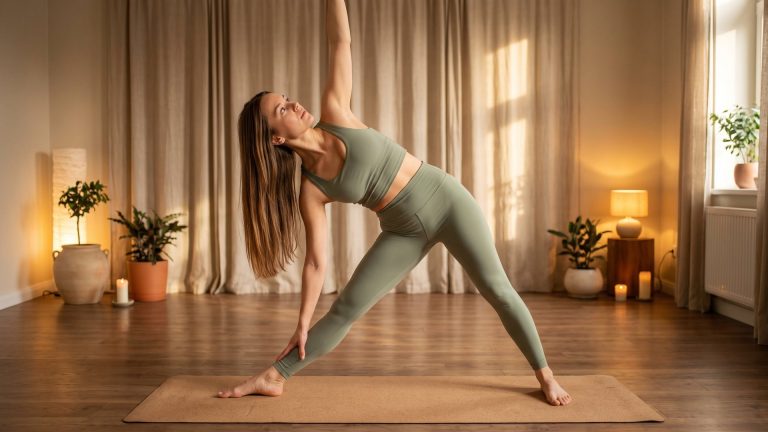
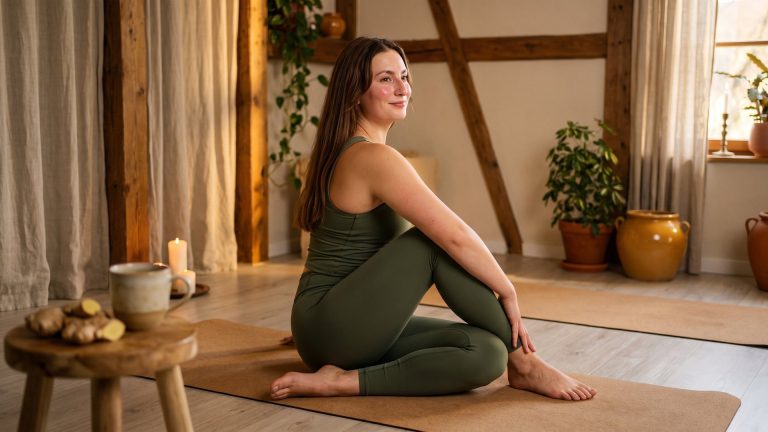
– Supine Twist (wringing release, calms)
Pranayama (10 minutes):
– Extended exhale breathing (inhale 4, exhale 6)
– Alternate nostril breathing (balance)
– Bee Breath (profound calming)
– These directly activate parasympathetic response
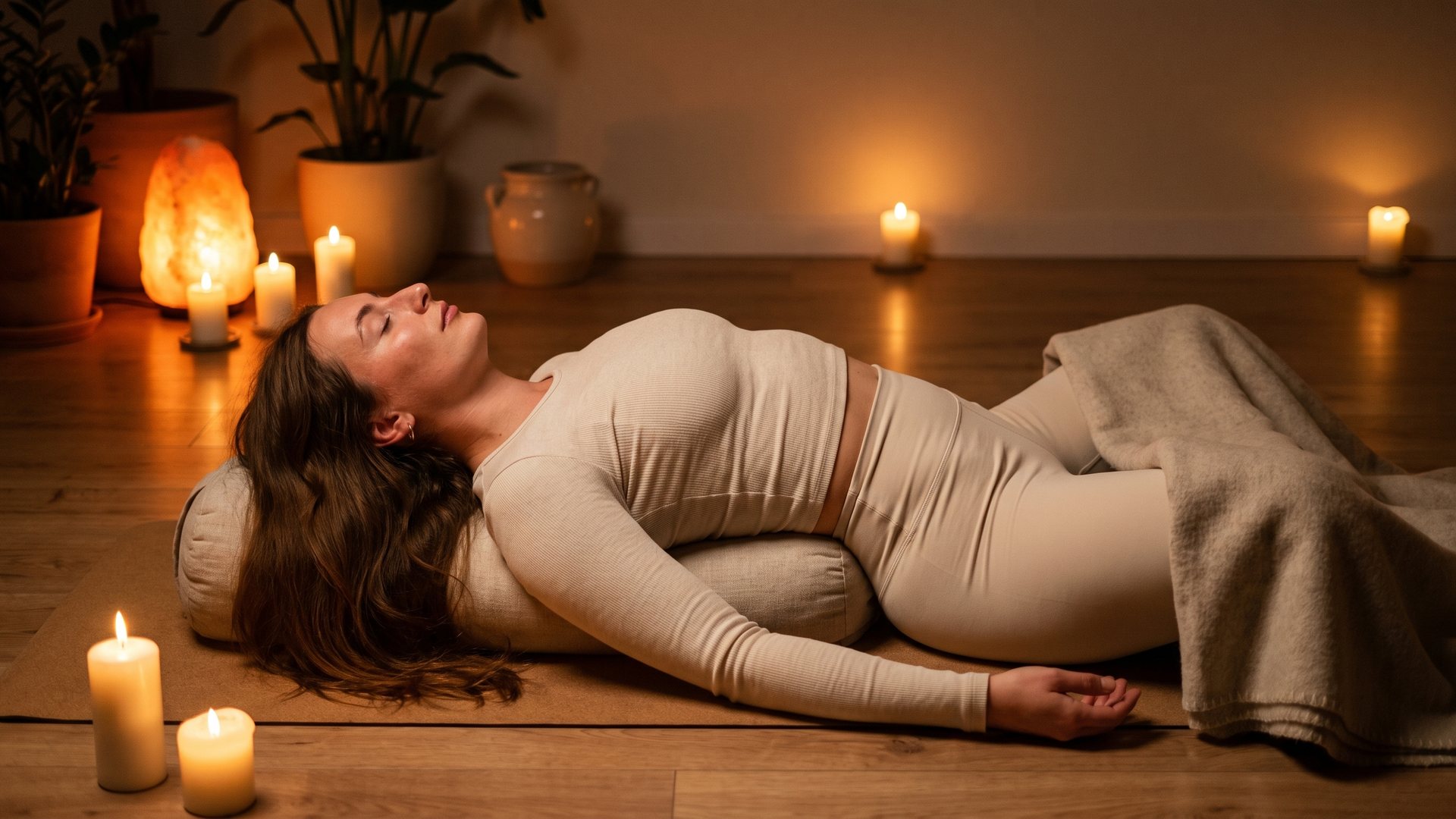
Shavasana (10-15 minutes):
– Complete relaxation
– Fully supported
– Full surrender
– Deepest parasympathetic activation
– Many fall asleep—this is fine
Key Sleep Poses
Supported Fish Pose: Opens chest and front body—areas where anxiety held—while being fully supported. Powerfully calming.
Legs-Up-the-Wall (Viparita Karani): One of yoga’s most restorative poses. Drains lymph, inverts perspective, activates parasympathetic. Often deeply relaxing.
Supported Child’s Pose: Safe, grounding, gently forward-folding. Signals nervous system safety.
Supine Twist: Wrings tension from spine and organs. Deeply releasing.
Reclined Butterfly: Opens hips and front body while lying supported.
Shavasana: Most important. Spent fully relaxed, this is where sleep preparation happens.
Pranayama for Sleep
Extended Exhale Breathing (Most Important):
– Inhale for 4 counts
– Exhale for 6-8 counts
– Practice 10+ minutes
– Most direct nervous system hack for sleep
Bee Breath (Bhramari):
– Profound calming
– Creates meditative state
– Use 5-10 minutes before bed
Alternate Nostril Breathing:
– Balances nervous system
– 5-10 minutes
– Calming
Simple breath awareness:
– Just observe breath
– Lengthening exhales naturally
– No forcing
Your Evening Sleep Ritual
Beyond specific poses, create an evening ritual signalling sleep to your body:
3 Hours Before Bed
- Finish heavy exercise
- Begin dimming lights
- Reduce stimulation
2 Hours Before Bed
- Attend yoga class or practice at home
- Physical practice builds heat, then cools
1 Hour Before Bed
- Gentle stretching (10-15 minutes)
- Pranayama (10 minutes)
- Tea ritual (herbal, non-caffeinated)
- Journaling or reading
30 Minutes Before Bed
- Meditation or Shavasana
- Lights very dim
- Room cool
- Sounds minimal
In Bed
- Body prepared, nervous system calm
- Mind quiet
- Sleep comes naturally
This ritual, practised consistently, retrains your nervous system to expect and prepare for sleep.
Home Sleep-Support Practice (30 minutes)
For nights before bed:
- Warm-up (3 minutes): Gentle cat-cows, shoulder rolls
- Hip openers (10 minutes): Pigeon, Butterfly, gentle lunges
- Cooling poses (8 minutes): Supported Fish, forward folds, twists
- Pranayama (5 minutes): Extended exhale breathing
- Shavasana (4 minutes): Complete relaxation
Even 30 minutes significantly supports sleep that night.
Lifestyle Factors Supporting Sleep
Yoga is most effective when combined with good sleep habits:
Circadian Rhythm Support
- Consistent sleep schedule: Sleep and wake same time daily
- Morning light: Exposure to natural light in morning
- Evening darkness: Dim lights in evening, no screens 1 hour before bed
Physical Environment
- Cool room: 65-68°F optimal
- Dark room: Blackout curtains
- Quiet room: White noise if needed
- Comfortable bed: Supportive mattress and pillows
Behavioural Habits
- No screens 1 hour before bed: Blue light suppresses melatonin
- No large meals 2-3 hours before bed: Digestion interferes with sleep
- No caffeine after 2 PM: Even small amounts can disrupt sleep
- No alcohol before bed: Disrupts sleep architecture
- Avoid sleep medications: Try yoga first; medication is last resort
Daytime Habits Supporting Night Sleep
- Morning yoga practice: Prepares nervous system
- Daily exercise: Supports sleep (but not close to bedtime)
- Sunlight exposure: Regulates circadian rhythm
- Stress management: Ongoing yoga practice reduces accumulated stress
Common Sleep Problems & Yoga Solutions
Difficulty Falling Asleep
Cause: Mind racing, nervous system still activated
Yoga solution:
– Evening Yin yoga class
– 10+ minutes extended exhale breathing
– Meditation or Shavasana before bed
Frequent Waking
Cause: Incomplete parasympathetic activation; possibly residual physical tension
Yoga solution:
– Hip openers releasing tension
– Deeper Yin practice
– More extensive pranayama
Unrefreshing Sleep (Sleep but Not Rested)
Cause: Light sleep, not reaching deep restorative stages
Yoga solution:
– Longer evening yoga practice
– Extended Shavasana (15-20 minutes)
– Consistent nightly practice for 2-3 weeks to retrain sleep
Early Morning Awakening
Cause: Cortisol spike, anxiety, unprocessed stress
Yoga solution:
– Consistent evening practice
– Trauma-informed yoga (if anxiety rooted in trauma)
– Emotional release practices like Yin yoga
Yin Yoga Class Impact on Sleep
Many students report that a single Yin yoga class dramatically improves sleep that night and for several nights after. This is because:
- Immediate parasympathetic activation from deep relaxation
- Emotional release from tension held in hips and tissues
- Nervous system reset at the deepest level
- Physical relaxation allowing comfortable sleep
Attending Yin yoga 1-2x weekly creates consistent sleep improvement.
Integration: Yoga Beyond Evening
While evening practice is crucial, consistent daytime yoga practice also improves sleep:
Morning Hatha practice:
– Sets tone for day
– Builds resilience for daily stress
– Prevents stress accumulation
Daytime movement:
– Walking
– Stretching
– Breathing practices
– Short meditation
Evening Yin practice:
– Deep relaxation
– Emotional release
– Nervous system reset
This complete integration—not just evening yoga but yoga throughout day—creates optimal sleep support.
Getting Started: Your Sleep Transformation
Week 1: Establish Evening Practice
- Commit to 30-60 minutes evening yoga 3x this week
- Use poses and sequence provided in this article
- Notice any sleep changes
Week 2: Add Pranayama
- Include 10+ minutes extended exhale breathing each evening
- Practice in bed or just before
- Notice deepening sleep effects
Week 3: Add Tea Ritual
- After evening practice, herbal tea ritual
- Calming herbs (chamomile, passionflower, valerian)
- Mindful sipping
- Notice nervous system deepening into sleep mode
Week 4: Join Classes
- Attend Yin yoga class 1-2x weekly
- Experience group energy and expert guidance
- Notice more dramatic sleep improvement
Week 5-8: Consistent Practice
- Maintain evening practice 4-5x weekly
- Notice cumulative effects
- Sleep typically improves dramatically by 2-3 months
Ongoing: Integration
- Continue evening practice indefinitely
- Sleep improvement sustains with practice
- May eventually need less practice to maintain benefits
The Deeper Truth About Sleep & Yoga
Sleep isn’t something you “get” or “don’t get.” Sleep is your natural state when your nervous system feels safe. Modern life makes nervous systems feel unsafe. Yoga restores safety.
When you practise yoga—especially evening yoga designed for rest—you’re not forcing sleep. You’re creating conditions where sleep naturally happens. You’re signalling your nervous system that the day is over, that danger has passed, that it’s safe to rest.
This is profoundly different from forcing sleep through willpower or medication.
About Tanya
Tanya is a Yoga Alliance RYS 200-certified Hatha and Yin yoga teacher (Reg. ID 252157), trained at Devvrat Yoga School in Varkala, India (200-hour intensive, December 2025) under Rakesh Kumar. She teaches small-class, ritual-led Hatha and Yin yoga in Golders Green, NW11 London — integrating singing-bowl sound healing in Shavasana and a post-class herbal tea ritual.
Read more about Tanya · See the weekly schedule · Enquire about private sessions