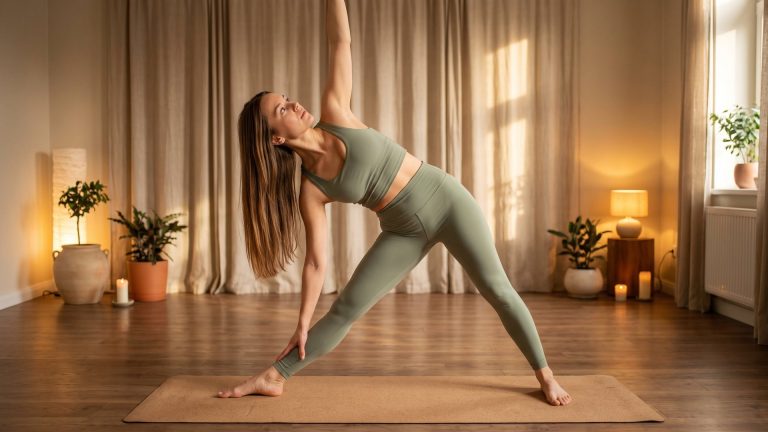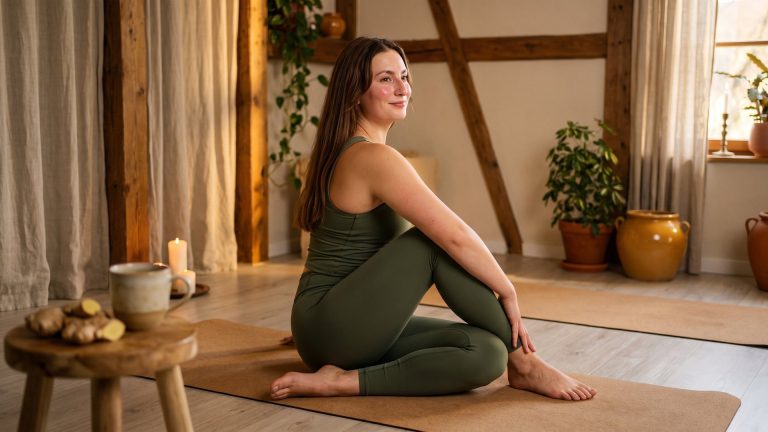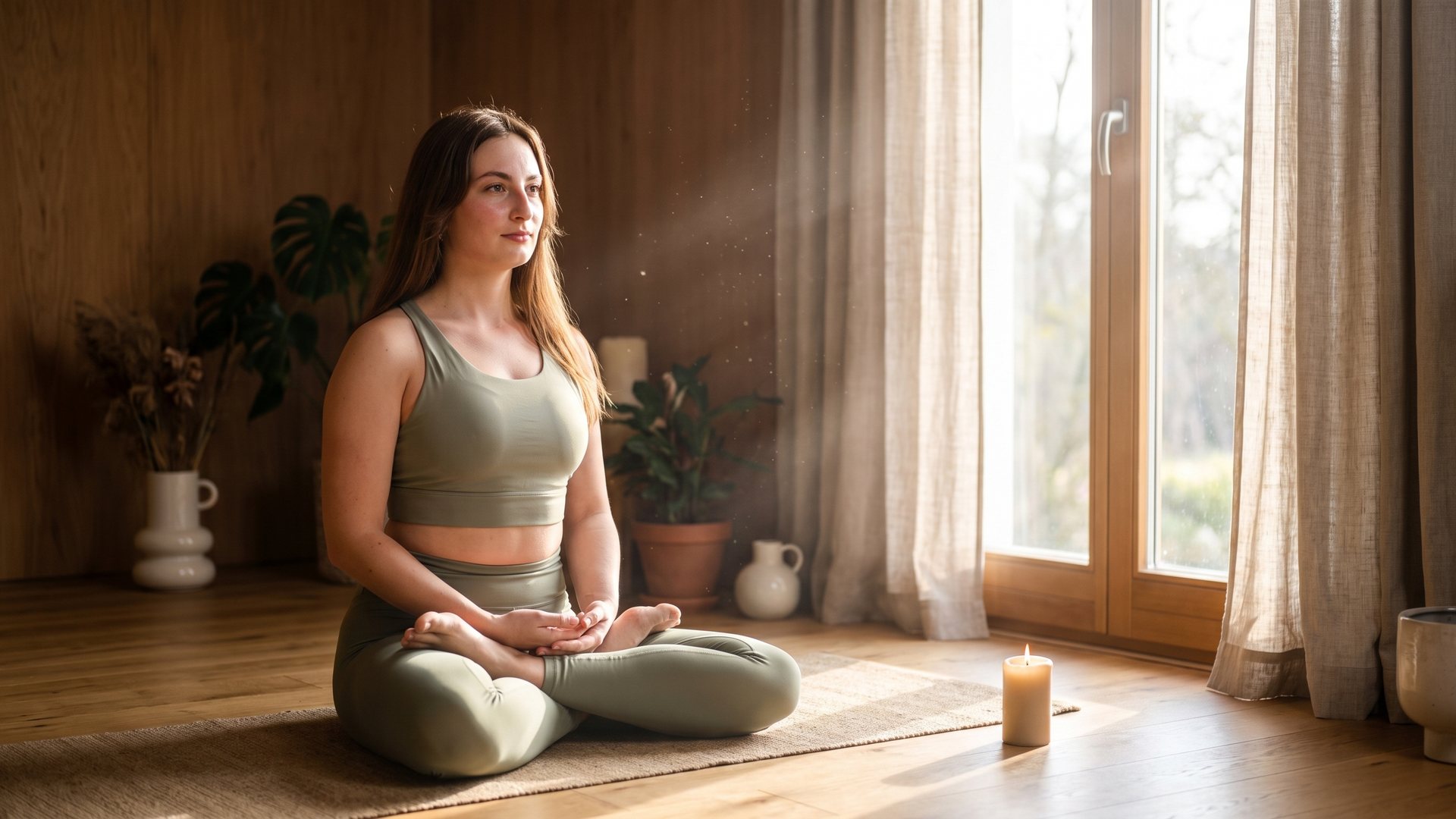
Your mind is rarely where your body is.
You’re eating dinner but thinking about work. You’re with your family but scrolling your phone. You’re walking but mentally rehearsing tomorrow’s meeting. You’re in bed but ruminating about the past.
This constant absent-mindedness is the default state for modern people. We’re physically present but mentally somewhere else. We miss our actual lives while anxiously projecting into futures that haven’t happened.
This is the core problem yoga and mindfulness address: the absence of presence.
When you practise yoga with genuine mindfulness, you’re not just exercising your body—you’re developing the capacity to be actually present with your life. You’re training your mind to reside in the only moment that actually exists: now.
In this article, I’ll explain what mindfulness is, how yoga develops it, specific practices for cultivating presence, and how to extend mindfulness beyond the mat into daily life.
What Is Mindfulness? Ancient Wisdom, Modern Validation
Mindfulness is simply paying attention to the present moment without judgement.
That’s it. No mysticism, no special belief required. Just attention.
Breaking Down Mindfulness
Attention: You’re consciously noticing something rather than operating on autopilot.
Present moment: You’re focused on what’s actually happening now, not lost in past rumination or future anxiety.
Without judgement: You’re observing without labelling as good/bad, right/wrong. You’re simply noticing.
That’s mindfulness. And it’s radical because we so rarely do it.
Why Mindfulness Matters
When you’re not present, you’re suffering. You’re anxious about the future or regretful about the past. You’re disconnected from the actual experiences of your life.
Mindfulness reverses this. By being present, you:
– Reduce anxiety (which always involves imagined futures)
– Reduce regret (which always involves reviewing past)
– Actually experience your life
– Appreciate what’s actually here
– Make better decisions (from present clarity, not reactive emotion)
– Find peace (the present moment is inherently peaceful)
This isn’t positive thinking or denial. It’s seeing what’s actually true right now, with clear eyes.
How Yoga Develops Mindfulness
Yoga is, at its core, a practice in presence. Every element of yoga training develops mindfulness:
Breath Awareness
At the foundation of yoga practice is conscious breathing. You’re not just breathing automatically—you’re paying attention to your breath.
This simple practice—noticing your breath—is the most direct doorway to presence. Your breath only exists in the present moment. When your attention is on your breath, you’re automatically in the present.
In every yoga class, breathing practice naturally develops this capacity.
Focused Attention
Yoga poses require attention. You can’t safely practice complex poses while thinking about tomorrow’s meeting. Your mind must focus on your body.
This focused attention is like mental strength training. Each time you bring your wandering attention back to the present, you’re strengthening your capacity for mindfulness.
Body Awareness (Proprioception)
Yoga develops deep awareness of your body in space. You feel where your feet are contacting the ground. You notice subtle weight shifts. You become attuned to your body’s signals.
This body awareness is fundamentally present-focused. You can’t feel your body while lost in thought. You can only feel it when present.
Sensory Awareness
During yoga, especially Yin yoga, you learn to notice subtle sensations: stretching, warmth, vibration, tingling, release. You’re training yourself to notice sensory details rather than being lost in mental abstraction.
This sensory attentiveness naturally extends into daily life. You notice flavors while eating, textures while touching, sounds while listening.
Emotional Awareness
Yoga often brings emotions to the surface. As you release physical tension, the emotions stored in your body surface. Rather than suppressing or reacting to emotions, you learn to observe them with curiosity.
This equanimous observation of emotions—not rejecting them, not being overwhelmed by them—is core mindfulness practice.
The Meditation Aspect
Many yoga classes include meditation or extended final relaxation (Shavasana). In this stillness, your mind naturally settles. You’re training your mind to be quiet, to rest, to be present without constantly creating mental activity.
This stillness becomes increasingly accessible through regular practice.
Mindfulness Practices In Yoga Class
While practising Poses
The foundational practice: As you move through poses, maintain continuous awareness of your breath and body sensations.
Don’t just move mechanically. Bring conscious attention to:
– How each muscle feels as it engages
– The quality of your breath in each pose
– Subtle sensations of stretching and releasing
– Your nervous system state
– Any emotions arising
This transforms “doing yoga” into “practising presence.”
Breath Observation
Between poses or during held poses, simply observe your breath:
– Notice the temperature of the air as you inhale
– Feel the movement of your ribs expanding
– Sense the subtle pause between inhale and exhale
– Notice how your breath changes with emotions
This simple practice anchors you in the present moment.
Body Scanning
During Shavasana or slow poses, mentally scan your body:
– Start at your feet
– Progressively notice sensations in each area
– Don’t try to change anything—just notice
– This body-focused awareness keeps you present
Mindful Transitions
Notice the transitions between poses:
– How you move from one pose to another
– The sensation of standing after floor work
– The moment when you shift from activity to relaxation
– These transition moments are rich opportunities for presence
Meditation During Class
Many classes include meditation. During meditation:
– Notice your thoughts without engaging them
– Observe them like clouds passing in the sky
– Gently return attention to your breath when mind wanders
– This is mental training in presence and non-reactivity
Extending Mindfulness Beyond the Mat
The ultimate purpose of yoga practice isn’t to be mindful on the mat—it’s to develop mindfulness that extends into daily life, transforming how you experience everything.
Mindful Eating
Transform meals into presence practice:
1. Before eating, pause
2. Notice the colours, aromas, textures of your food
3. Eat slowly
4. With each bite, notice flavors and sensations
5. Chew thoroughly
6. Feel gratitude for the nourishment
This transforms eating from automatic consumption to genuine nourishment and presence.
Mindful Walking
Transform any walk into presence practice:
1. Feel your feet contacting the ground
2. Notice your posture
3. Feel your legs moving
4. Notice your surroundings—colours, sounds, sensations
5. Coordinate your breath with your steps
6. Simply be present with the experience of walking
This transforms walking from destination-focused to presence-focused.
Mindful Listening
Transform conversations into presence practice:
1. Give the person your full attention
2. Notice their words, tone, facial expressions
3. Listen to understand, not to respond
4. Feel the connection between you
5. Don’t mentally rehearse your response while they’re talking
6. Be genuinely present with them
This transforms conversations from performance-focused to connection-focused.
Mindful Work
Transform work tasks into presence practice:
1. Give full attention to the task at hand
2. Notice the details of your work
3. Feel the process, not just the outcome
4. Take breaks for deep breathing
5. Transition mindfully between tasks
6. Practice presence even in routine tasks
This transforms work from stressful goal-chasing to engaging presence.
Mindful Rest
Transform leisure into presence practice:
1. Rather than distracting yourself, be genuinely present with rest
2. Feel your body relaxing
3. Notice what genuine relaxation feels like
4. Don’t feel guilty for resting—be present with it
5. Put away devices during true rest time
This transforms rest from distraction into genuine restoration.
The Science of Mindfulness
Research increasingly validates mindfulness practice:
Brain changes:
– Regular meditation increases grey matter in brain areas involved in attention, emotional regulation, and self-awareness
– These changes are visible on brain scans after just 8 weeks of practice
Stress reduction:
– Mindfulness practice reduces cortisol and stress hormones
– Effects comparable to medication for some anxiety disorders
Emotional regulation:
– Mindfulness improves emotional regulation—the capacity to experience emotions without being overwhelmed
– Reduces reactivity and emotional dysregulation
Anxiety & depression:
– Mindfulness-based interventions rival medication for anxiety and depression treatment
– Particularly effective for preventing relapse
Sleep:
– Regular mindfulness practice improves sleep quality
– Reduces insomnia
Pain:
– Chronic pain decreases with mindfulness practice
– Not by making pain disappear, but by changing relationship with pain
Cognitive function:
– Attention, focus, and memory improve
– Benefits extend into daily life
Longevity:
– Some research suggests mindfulness practice supports longevity
– Stress reduction supports all aspects of health
Common Mindfulness Challenges & Solutions
“My mind won’t stop thinking”
Reality: Mind-wandering is normal. Mindfulness isn’t about stopping thoughts—it’s about noticing when your mind wanders and gently returning attention.
Solution: Each time you notice your mind wandering (in yoga or meditation), celebrate it—you’ve noticed. That’s the practice. Gently redirect attention.
“I don’t feel anything during meditation”
Reality: Mindfulness benefits accumulate over time. You might not feel dramatic effects initially.
Solution: Continue practising consistently (8 weeks is typical for noticeable changes). Trust the process.
“I’m too busy for mindfulness practice”
Reality: Mindfulness doesn’t require extra time—it’s bringing present attention to activities you’re already doing.
Solution: Start with one mindfulness practice (eating, walking, listening) and integrate it into your existing life.
“My mind immediately wanders when I try to meditate”
Reality: Wandering minds are universal—especially for beginning practitioners. Mind-wandering isn’t failure.
Solution: Meditation is not about clearing your mind. It’s about noticing when your mind wanders and bringing it back. The “bringing back” is the practice.
“I don’t see how this helps with my real problems”
Reality: Mindfulness doesn’t solve problems directly. But it changes your relationship with problems—reducing reactivity and opening creative solutions.
Solution: Practice for 4-8 weeks, then notice how you’re responding to challenges differently.
Creating Your Mindfulness Practice
In-Class Mindfulness
Every yoga class is mindfulness training:
1. Arrive early, settle into the space
2. Set an intention for presence
3. Throughout class, maintain attention on breath and body
4. Notice when your mind wanders and gently return attention
5. During Shavasana, practice complete presence
6. After class, carry awareness forward
Formal Meditation Practice
Beyond yoga classes, add dedicated meditation:
10-minute daily practice:
1. Sit comfortably
2. Close your eyes
3. Focus on your breath
4. When mind wanders (it will), gently return attention
5. Consistency matters more than duration
Best time: Morning establishes presence for the day; evening calms the nervous system.
Informal Mindfulness Practice
Integrate mindfulness into daily activities:
– Mindful eating (one meal daily)
– Mindful walking (one walk daily)
– Mindful listening (in one conversation daily)
– Mindful work (one task with full attention)
– Mindful transitions (between activities, pause and breathe)
Progressive Deepening
Week 1-2: Practice presence during yoga class and one daily activity
Week 3-4: Add 10-minute daily meditation
Week 5-8: Extend mindfulness to multiple daily activities
Weeks 9+: Notice cumulative effects—baseline presence increases, reactivity decreases, peace deepens
Mindfulness as Lifestyle
Ultimately, mindfulness isn’t just practices—it’s a way of being. Over time, presence becomes your natural state rather than something you have to remember to do.
You notice your mind is largely quiet. You experience peace in everyday moments. You’re genuinely present with people you love. You find joy in simple activities.
This isn’t achievement—it’s actually easier than the stressed, anxious way most people live. Presence requires less mental energy than constant planning and worrying.
The Deeper Truth
Mindfulness reveals something profound: the present moment is fundamentally okay. Right now, in this moment, you’re likely safe. Your actual reality is different from your anxious imaginings about the future.
When you consistently practice presence, you discover that most of your suffering isn’t from present circumstances—it’s from mental time travel to pasts and futures that don’t exist.
By returning to the present through yoga and mindfulness, you return to where life actually is.
About Tanya
Tanya is a Yoga Alliance RYS 200-certified Hatha and Yin yoga teacher (Reg. ID 252157), trained at Devvrat Yoga School in Varkala, India (200-hour intensive, December 2025) under Rakesh Kumar. She teaches small-class, ritual-led Hatha and Yin yoga in Golders Green, NW11 London — integrating singing-bowl sound healing in Shavasana and a post-class herbal tea ritual.
Read more about Tanya · See the weekly schedule · Enquire about private sessions