Written by Tanya — Yoga Alliance RYS 200 (ID 252157), trained at Devvrat Yoga School, Varkala, India (December 2025). Tanya teaches Hatha and Yin yoga at Your Ritual Yoga in Golders Green, NW11.
Downward-facing dog appears in almost every yoga class on earth. If you have tried a single session — online, in a studio, from a book — you have almost certainly been in this shape. And yet for all its familiarity, most people never quite find ease in it.
That is not a personal failing. It is simply that the pose asks your body to do several things simultaneously: lengthen the spine, open the hamstrings, stabilise the shoulders, and distribute load evenly through wrists, hands, and feet. When any one of those ingredients is missing, the whole thing collapses into effort.
This guide is here to help you find the pose beneath the straining. Whether you are brand new to yoga or have been practising for years, there is almost always something to refine in downward-facing dog — and refining it tends to change how every other pose feels too.
What the Pose Is Actually Doing
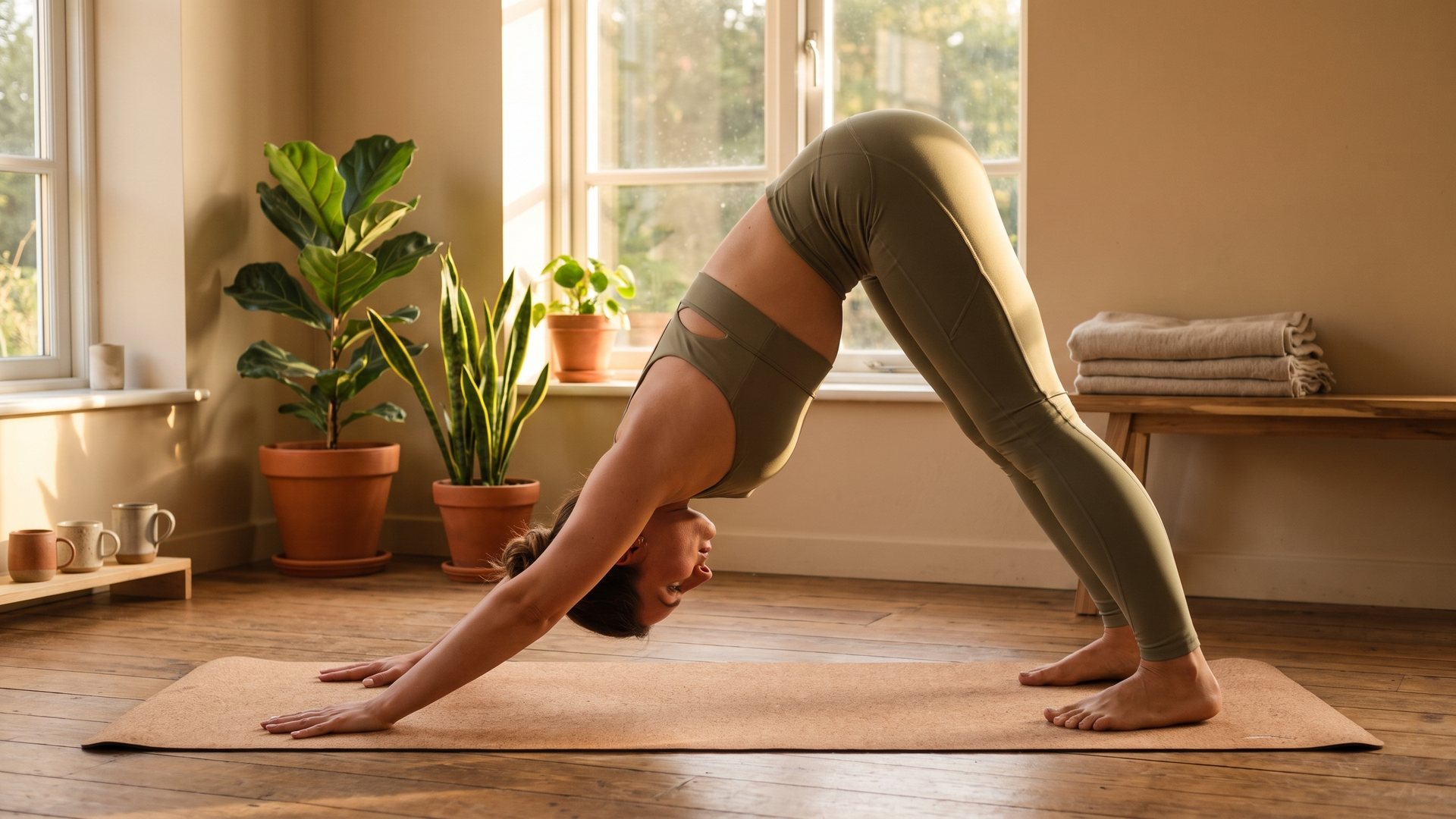
Downward-facing dog — Adho Mukha Svanasana in Sanskrit — is what teachers call an inversion, but only mildly so. Your hips rise above your heart, your head drops below your heart, and the spine lengthens into a gentle inverted-V shape.
What is the body doing while you hold this shape?
The hamstrings and calves are being asked to lengthen. The thoracic spine — the middle and upper back — is invited to extend. The shoulders rotate outward so the upper arms can draw away from the ears. The wrists carry a significant proportion of body weight, and the hands grip the mat to prevent sliding.
From a nervous-system perspective, the mild inversion and the rhythmic nature of the breath in this pose can support a shift from activation towards calm. It is one reason teachers often return to downward dog repeatedly in a Hatha sequence: it acts as a reset point between more demanding postures.
It is not, despite appearances, a resting pose — at least not until the body has developed the strength and flexibility to make it one. Many beginners find it tiring. That is completely normal.
Step-by-Step Alignment
Begin on all fours. Hands are shoulder-width apart, fingers spread wide, middle fingers pointing forward. Knees are hip-width apart, toes tucked under.
Press firmly through the base of your index finger and thumb — this prevents collapsing into the wrist joint. Spread the weight across all four corners of both palms.
On an exhale, lift your knees away from the mat. Do not rush to straighten the legs. Let the hips rise first, spine lengthening.
Reach your sitting bones up towards the ceiling. This is the action that creates length in the spine. If you focus only on pushing the floor away with your hands, the lower back tends to round.
Draw your shoulder blades gently towards each other and down your back. Think of widening across the collarbones. The ears move away from the shoulders rather than sinking between them.
Let the head hang heavy. The neck is a continuation of the spine — there is no need to crane upward or tuck the chin sharply down. Simply release.
Stay for five to eight breaths. With each exhale, see if the spine can lengthen a fraction more. With each inhale, soften any gripping in the face, jaw, or hands.
Bent Knees vs Straight Legs
Straight legs are not the goal. A long spine is the goal.
If straightening the legs causes the lower back to round — which it will in most people with tight hamstrings — keep a generous bend in the knees. A bent-knee downward dog with a flat back is considerably more beneficial than a straight-leg version with a rounded spine.
Over time, as hamstrings lengthen, the legs will naturally begin to straighten. Allow this to happen gradually rather than forcing it.
Heels do not need to touch the floor either. For many people, especially those with shorter Achilles tendons, the heels simply hover. That is fine. You can press them gently towards the mat as an active stretch without requiring them to land.
Three Modifications
Forearm Dog (Dolphin) Alternative
For those with wrist pain or injury, forearm dog — sometimes called Dolphin — is a valuable alternative. Rather than placing the hands on the mat, lower the forearms. Elbows are directly under the shoulders, forearms parallel or hands interlaced. From here, lift the hips exactly as you would in the full version.
This removes all weight from the wrists while preserving the spinal and hamstring benefits of the pose.
Wrist Pain?
If you feel discomfort across the wrists in downward dog, the first question is whether weight is distributed evenly. Most people inadvertently push more load through the heel of the hand, which compresses the wrist joint. Redistributing weight towards the fingertips usually helps immediately.
Rolled or folded mats beneath the heel of the hand can also reduce the angle of wrist extension and ease discomfort. Our yoga for wrist pain guide explores this in more detail.
Shoulder Issues?
For shoulder instability or impingement, focus on the external rotation of the upper arm. Turn the inner elbow creases gently to face forward, or slightly towards each other. This action engages the rotator cuff and draws the shoulders away from a compressed position. If this shape still causes pain, forearm dog is a kinder alternative while the shoulder heals.
Common Mistakes
Collapsing into the wrists. The most common issue. Hands need to be active, not passive. Grip the mat, press through all four corners of the palm, and redistribute weight away from the heel of the hand.
Rounding the lower back. Usually caused by tight hamstrings. The fix is to bend the knees until the spine can lengthen. No amount of pressing through the hands will compensate for a collapsed lumbar spine.
Shoulders creeping towards the ears. This happens when the muscles that stabilise the shoulder blade are not engaged. Draw the shoulder blades gently towards the spine and down the back before and during the pose.
Holding the breath. The pose should follow the breath, not fight it. If you find yourself holding, this is a signal to soften somewhere — perhaps bend the knees more, or reduce the time you spend in the shape.
Gripping the face and jaw. Many people tighten their face when a pose becomes challenging. Notice this. Let the jaw soften. Allow the eyes to be quiet.
When to Skip It
Downward-facing dog is a weight-bearing pose on the wrists and shoulders. There are circumstances in which it is better replaced or avoided entirely.
Carpal tunnel syndrome or acute wrist injury — the forearm dog variation is a good substitute, but even that may need to be modified depending on the severity. Speak to your teacher.
Uncontrolled high blood pressure or glaucoma — mild inversions can increase intracranial and intraocular pressure. Until your condition is managed, seek guidance from your GP before practising inversions.
Late pregnancy — the uterus may put pressure on the diaphragm and vena cava in this shape. Many pregnant practitioners modify or omit it. Your midwife or a specialist prenatal teacher can advise.
Shoulder impingement or rotator cuff tear — the forearm version may work, but acute tears require rest and medical clearance first.
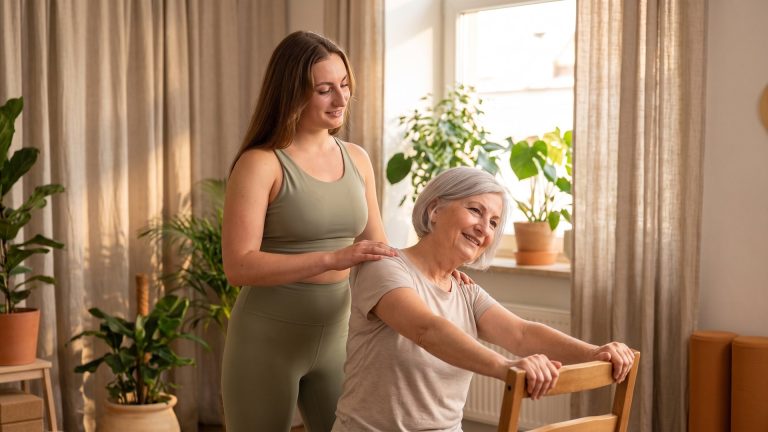
When in doubt, ask. A good teacher would always rather offer you a modification than have you push through something that does not feel right. A Hatha class with small group numbers means there is genuinely enough space and attention for that conversation.
Frequently Asked Questions
Is downward-facing dog a resting pose?
It is often described as one, but most beginners find it demanding. It becomes restful over time as the body develops the strength and flexibility it requires. For now, treat it as an active pose and rest in child’s pose whenever you need to.
My hamstrings are very tight — will I ever be able to straighten my legs?
Yes, for most people. Hamstring flexibility responds well to consistent, patient practice. Keeping the knees bent while focusing on spinal length is the correct approach — do not force the legs straight. Regular practice tends to create gradual, lasting change over weeks and months.
How long should I hold downward-facing dog?
In a Hatha class, five to eight breaths is typical. In a Yin practice, it would not usually appear because it is an active rather than passive shape. Listen to how your body responds and come out earlier if needed.
Why do my wrists hurt in this pose?
Usually because too much weight is falling through the heel of the hand. Spread the fingers wide, press firmly through the base of the index finger and thumb, and try to shift weight forward towards the fingertips. If wrist discomfort persists, explore the forearm variation.
Should I look between my hands or at my navel?
Neither directive is universally correct. The aim is a neutral neck — a continuation of the spine. For most people, the gaze falls naturally towards the thighs or the floor just behind the hands. If you find yourself craning the neck to look forward, let the head drop a little more.
Ready to work on your alignment with someone in the room who can actually see you? A Hatha class at Your Ritual Yoga in Golders Green offers hands-on guidance in a small, unhurried group. Your first class is the place to ask every question you have been holding. Book your place.
About the author
Tanya is a Yoga Alliance RYS 200 certified yoga teacher (ID 252157), trained at Devvrat Yoga School in Varkala, India (December 2025). She teaches Hatha and Yin yoga at Your Ritual Yoga in Golders Green, NW11 — a small, intentional studio where every class includes sound healing with Himalayan singing bowls and a post-class herbal tea ritual. www.ritual-yoga.co.uk