Written by Tanya — Yoga Alliance RYS 200 (ID 252157), trained at Devvrat Yoga School, Varkala, India (December 2025). Tanya teaches Hatha and Yin yoga at Your Ritual Yoga in Golders Green, NW11.
Summer yoga in London is a different proposition to yoga in October. The city heats up in ways it was never quite designed for, and the body — accustomed to cool grey winters — takes time to adapt. What feels energising in February can feel exhausting in July. The mat that beckoned at 7:00 AM in April suddenly seems less appealing when the bedroom has not dropped below 22 degrees overnight.
This is not a failure of motivation. It is physiology. And it is a prompt to adapt.
Classical yoga philosophy speaks directly to this. Ayurveda — the traditional Indian system of medicine closely linked to yoga — teaches that summer corresponds to the pitta dosha: fire and water, heat and intensity. A pitta-excess state can manifest as irritability, inflammation, and restlessness. The prescription is not more heat and intensity. It is cooling, softening, and slowing down.
For London yogis in July and August, this means adjusting the practice to work with the season rather than against it.
1. Why Your Practice Should Change in Summer
The instinct for many active practitioners is to push through the heat — or even to seek out more of it in hot yoga studios. For some bodies, at some times, this is appropriate. But for most people experiencing a London heatwave, the nervous system is already under a form of thermal stress: sleep is disrupted, concentration wavers, and the body is working harder simply to regulate its temperature.
Adding a vigorous, sweaty, heat-building practice on top of this tends not to produce the alertness or vitality that it does in cooler weather. Instead, it can compound the fatigue and leave students feeling depleted rather than refreshed.
The yogic response is counterintuitive to fitness culture but logical to the body: slow down, use cooling breath, choose restorative over dynamic, and practise in the cooler parts of the day.
2. Cooling Pranayama
Pranayama offers two specific techniques designed to lower the body’s perceived temperature. Both are accessible to beginners and produce a genuinely noticeable cooling effect within a few rounds.
Sheetali
Sheetali (sometimes written Shitali) is practised by curling the tongue into a tube shape — rolling the sides upward to form a channel. Inhale through the curled tongue, drawing the cool air across its surface. At the top of the inhale, close the mouth and exhale slowly through the nose. Repeat for 6–10 rounds.
The inhale through the curled tongue draws air across the moisture on the tongue’s surface, producing a genuine cooling sensation in the mouth and throat. Many students describe feeling noticeably cooler within a few rounds. Sheetali is traditionally recommended during summer, fever, and states of heat-related agitation.
Sheetkari
For students whose tongue does not curl (a genetic trait — approximately 25–30% of people cannot do it), Sheetkari offers the same cooling effect through a different method. Touch the tip of the tongue to the roof of the mouth and inhale through the teeth, drawing the air between them. The teeth act as a filter; the air moves across the tongue’s surface. Exhale through the nose.
Sheetkari is also appropriate for students with sensitive teeth or those who find the Sheetali curl uncomfortable. The two techniques have equivalent effects; use whichever is available to your anatomy.
Both practices are best avoided in cold or very polluted air, as the filtering function of the nose is bypassed.
3. Pose Choices for Heat
Yin Over Hot Yoga in Heatwaves
During a London heatwave, a Yin yoga class is, counterintuitively, a more supportive choice than hot yoga. Here is why:
Yin yoga is practised on the floor, at a slow pace, with minimal effort. The room is not heated. The body stays close to the ground, where air is marginally cooler. The practice activates the parasympathetic nervous system — the system responsible for cooling, digesting, and restoring — rather than the sympathetic system (fight-or-flight, heat-generating, activating) that a vigorous practice engages.
Hot yoga in a London heatwave stacks thermal load on a body already managing elevated temperatures. For most students, this increases the risk of heat fatigue and produces a recovery requirement that a cool-body practice does not.
Floor-based Yin poses that work well in summer:
– Supported Butterfly (Baddha Konasana) — opens the inner thighs and groin, allows the belly to soften
– Legs Up the Wall (Viparita Karani) — reverses venous blood flow, calms the nervous system, and is deeply cooling
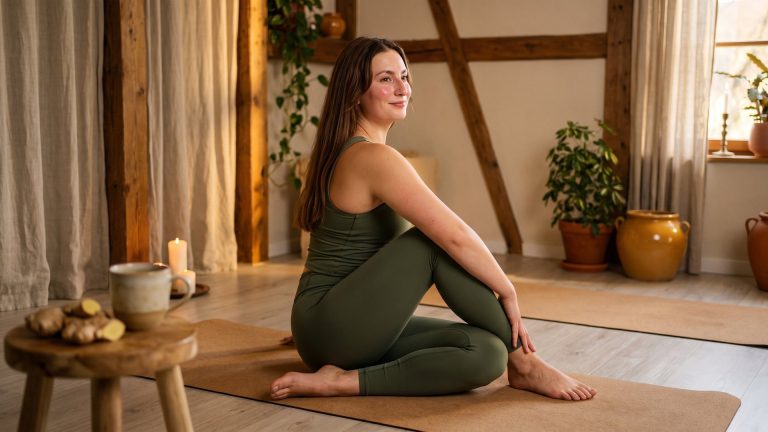
– Reclined Twist — releases the spine and abdomen; the horizontal position reduces heat accumulation
– Child’s Pose — forehead to earth: grounding and genuinely cooling
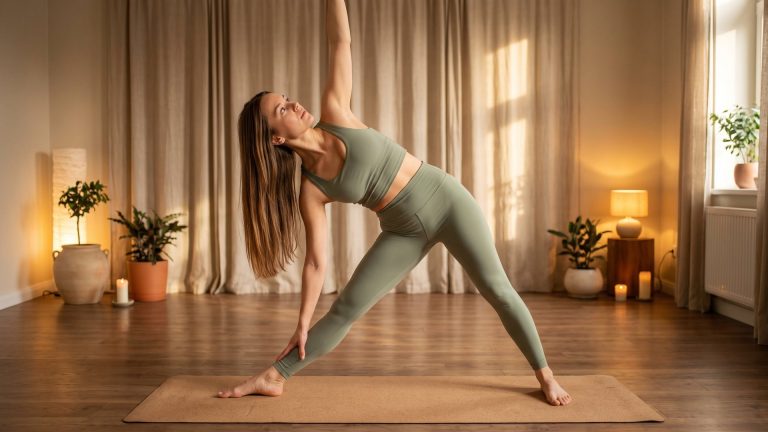
For standing and active poses in summer Hatha classes, forward folds and gentle inversions are preferable to backbends (which are warming and activating) and intense standing sequences.
4. Hydration and Timing
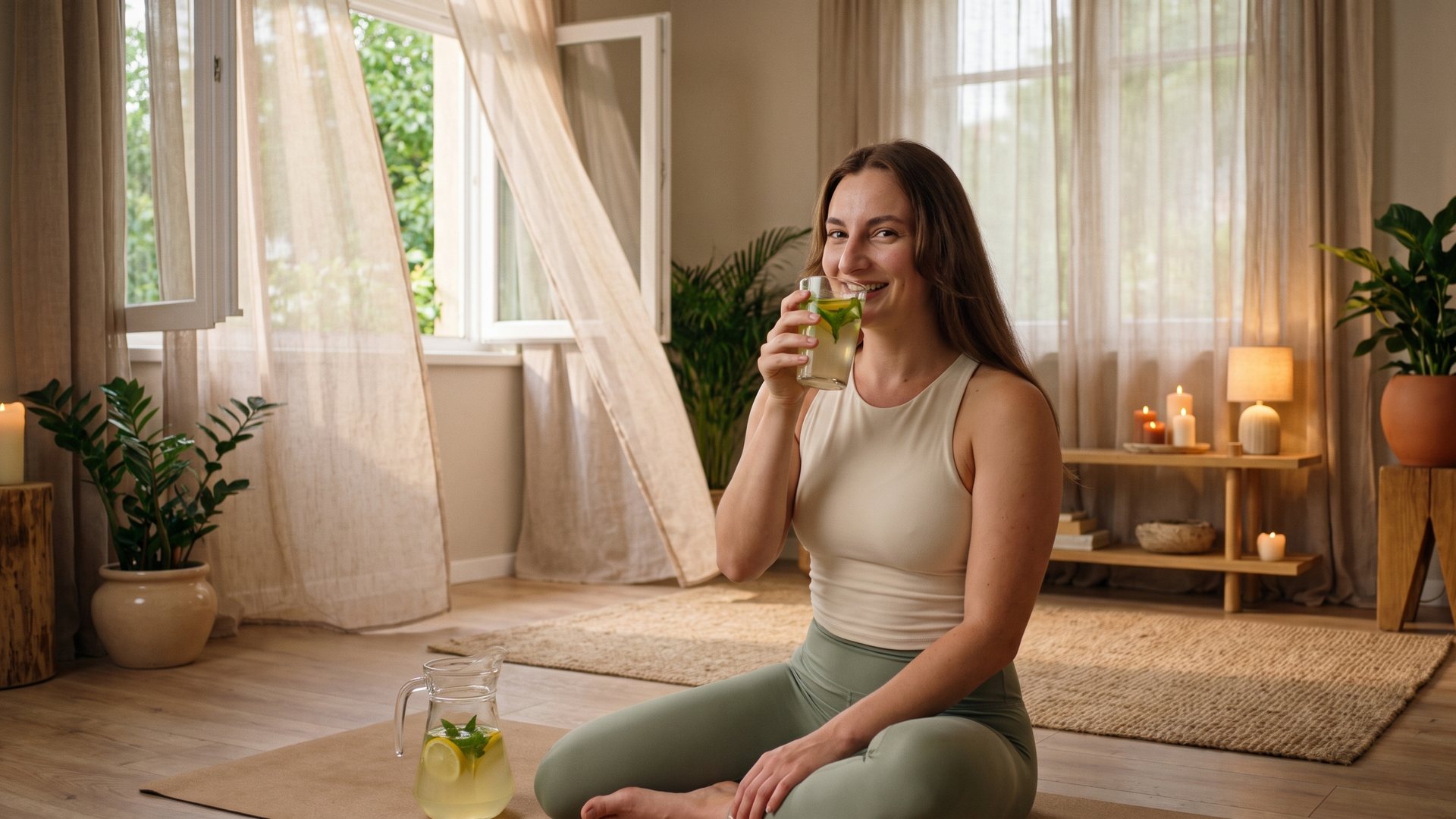
Hydration — drink water before and after class. During Yin or gentle Hatha, most students do not need to drink during the session itself. For those who run hot or are practising in warm conditions, a small water bottle nearby is sensible. Avoid very cold water immediately before or after class; room temperature or slightly cool is better received by the digestive system.
Timing — the two coolest windows of a summer day are early morning (before 9:00 AM) and evening (after 7:00 PM, once the sun has moved off the hottest surfaces). A 10:00 AM Hatha class in July is noticeably more comfortable than the same class at 2:00 PM. If your schedule allows it, shifting your practice to these windows makes the summer transition much more manageable.
Avoid practising immediately after spending time in direct sunlight. Allow the body twenty to thirty minutes to begin cooling before stepping onto the mat.
5. A Summer Weekly Template
This is a suggested template for a regular practitioner navigating a London summer. It is not prescriptive — adapt it to your schedule, your energy, and what your body asks for.
Monday — early morning or evening Hatha class. Cooling pranayama (Sheetali or Sheetkari) at the start. Forward-fold heavy sequence rather than backbend-heavy.
Wednesday — Yin yoga class. Floor-based, long holds, legs up the wall. This is the recovery and settling session for the week.
Friday — a shorter home practice (20–30 minutes). Supported Butterfly, Legs Up the Wall, and ten minutes of Sheetali. Optional: end with a cool shower or a cold cloth on the forehead and wrists.
Weekend — one longer class or a gentle walk in a park (Hampstead Heath, Golders Hill Park) in the early morning. The body benefits from movement; the key is to avoid the heat of the middle of the day.
Frequently Asked Questions
Q: Is it safe to practise yoga in the heat?
A: Gentle yoga — Yin, restorative, slow Hatha — is generally safe in warm conditions, particularly if the space is not additionally heated. Vigorous, fast-paced, or hot yoga in a London heatwave requires careful attention to hydration and may not be appropriate for everyone. Listen to your body and stop if you feel dizzy, nauseous, or unusually fatigued.
Q: Can I practise Sheetali if I can’t curl my tongue?
A: Yes — use Sheetkari instead. Inhale through the teeth with the tongue touching the roof of the mouth. The cooling effect is equivalent. Neither practice requires the tongue curl; it is simply one method of achieving the same result.
Q: Will summer yoga make my body more comfortable in the heat generally?
A: A consistent yoga practice may support nervous-system regulation, which is part of how the body manages thermal stress. Students who practise regularly often report sleeping better in warm weather and feeling less agitated during heatwaves — though this is not a guarantee, and individual responses vary.
Q: Are your classes air-conditioned?
A: Please contact the studio directly for current information on temperature management in the practice space. Classes are not hot yoga — the room is not additionally heated.
Join a cooling Yin yoga class this summer at Your Ritual Yoga. View the schedule and pricing and find a time that works for you.
About the author
Tanya is a Yoga Alliance RYS 200 certified yoga teacher (ID 252157), trained at Devvrat Yoga School in Varkala, India (December 2025). She teaches Hatha and Yin yoga at Your Ritual Yoga in Golders Green, NW11 — a small, intentional studio where every class includes sound healing with Himalayan singing bowls and a post-class herbal tea ritual. www.ritual-yoga.co.uk